FOLLOW THE EVIDENCE
A closer look at the sources.
The surviving evidence is rich, uneven, and often contradictory. Who produced it—and when—is part of the history.
Read the reconstruction.
The history book condenses the cited encyclopedia entries. The battle diagrams are original schematic illustrations based on the sources below, with reconstruction notes beside every phase. Terrain, force markers, and movement arrows do not claim surveyed positions or exact troop counts.
Every account has a perspective.
Herodotus, Thucydides, and Xenophon wrote with different purposes. Plutarch and Pausanias lived centuries after Classical Sparta. A later account can preserve earlier material, but its age and genre matter. Attributed sayings and legendary origins are identified as traditions.
The things people left behind.
Sanctuaries, objects, inscriptions, and regional surveys illuminate lives that literary authors often overlook. Excavation dates and interpretations can change. A surviving building may be much later than the institution or story associated with its site.
Keep the distinctions visible.
The articles distinguish rules from practice, citizens from other inhabitants, and early evidence from later reconstructions. Dates use BCE and CE, with “c.” for approximation. Publisher abstracts and previews are identified when full scholarship is not freely accessible.
A growing, reviewed publication.
The original encyclopedia is preserved alongside new weekly studies. Research and drafting use AI assistance; each weekly article and its illustrated newsletter receive the publisher’s review before release. Sources, image provenance, and material revisions are checked before publication. Dates distinguish the original collection from later studies.
THE REFERENCE LIBRARY
Texts, research & excavation
Numbered notes in each article link to its references. Highlighted terms connect to other entries in the encyclopedia.
Reference overview stressing conflicting sources, public and private education, and the difficulty of inferring Classical practice from Roman restorations.
Modern translation and interpretation of the maiden song; no verse is reproduced here.
The excavation project's account of the sanctuary's successive phases. Reconstruction and chronological interpretation remain matters of research.
William Ellis translation; 1303a, 1306b, and 1320b on Tarentine political change and institutions.
Benjamin Jowett translation, public domain. Aristotle evaluates the Spartan constitution critically, including property, women, offices, and common meals.
Excavation-project introduction to the Mycenaean settlement in the southern Spartan plain.
Archive account of the 1924–1927 excavations, including the theatre and evidence for later phases of the city.
University of Mannheim research resource collecting evidence for female participation in ancient Greek sport.
British School at Athens, 2022; Menelaion investigation and nearby Bronze Age remains.
Attic Inscriptions Online, RO 22 / IG II² 43, 378/377 BCE; contemporary inscribed policy.
Public-domain reference collecting ancient testimony. Older interpretations of origins and ritual should be distinguished from the underlying passages.
Public-domain reference assembling ancient festival testimony. Its older chronological reconstructions require comparison with modern scholarship.
William Smith's 1854 reference, public domain. Useful for ancient geographic descriptions; its historical interpretations should not replace modern research.
Describes a weaker wing avoiding battle and an oblique formation. Its narrative differs from Xenophon; the same passage also contains problematic details. Chapters 55–56 read; C. L. Sherman translation, public domain.
Scholarly analysis of how the council, ephors, and assembly interacted; interpretation of their powers remains debated.
Reference overview identifying the Karneia as a particularly significant festival of Dorian identity.
Oxford Research Archive record for a study combining the material and literary evidence for early Sparta.
Scholarly account emphasizing Lysander's dealings with Persian authorities and his military and political career.
Existing article reference retained as further reading. The accessible summary does not independently verify specific Leuctra maneuvers. Publisher summary and metadata only.
Museum-based presentation of Greek and Persian equipment for the Persian Wars commemorative exhibition.
Center for Hellenic Studies discussion of athletic ideals and their criticism in poets including Tyrtaeus.
A. D. Godley translation, public domain. Spartan royal ancestry and Aristagoras' visit, including the story of the young Gorgo.
Public-domain translation of the passage on the privileges, religious duties, and funerary honors of Spartan kings.
A. D. Godley translation; the nurse, Helen’s shrine, and Demaratus’s family.
A. D. Godley translation, public domain. The Thermopylae narrative and the account of Gorgo interpreting Demaratus' message.
Principal surviving narrative, written after the events; distinguishes some reports from the author’s own inferences. Relevant passage read in full; A. D. Godley translation, public domain.
A. D. Godley translation, public domain. The principal surviving narrative of the campaign and battle of Plataea.
Principal surviving narrative. Toponyms, contingent movements and reported totals require interpretation; speeches are narrative evidence, not transcripts. Relevant campaign and battle passages read; A. D. Godley translation, public domain.
Modern scholarly discussion of hero cult, Dorian identity, and the danger of projecting later ethnic politics backward.
Core drilling and geomorphology demonstrate major coastal change; this research does not license exact troop coordinates or a single certain pass width. Publisher abstract and full text consulted, especially pp. 189–196 and figures 2, 4 and 14.
Historical chronology and overview. Modern accounts differ slightly over accession and death dates.
Historical reconstruction discussing the sources and the arrangement of Lysander's second command.
Historical overview of Brasidas' career and the northern theater of the Peloponnesian War.
Jona Lendering's historical overview, with links to the ancient evidence.
Overview and linked chronology of the conflict, its phases, and principal sources.
Historical overview of the campaign and battlefield setting in Boeotia.
Historical overview of the Pylos operation and the surrender on the offshore island.
Historical and geographical overview of the pass and the Persian invasion.
Electronic Antiquity 14.2 (2011); rhetoric and the interpretation of cult.
Atti e memorie della Società Magna Grecia 7 (2016), 19–31; consulted the institutional abstract on gradual political change.
University of California Press, 1993, “Reckoning the Balance”; strategic context.
National Archaeological Museum of Taranto; chronology, settlement, and temple remains.
Publication record for the study of the Hyakinthia, Gymnopaidiai, and Karneia; specialist further reading on Spartan festivals.
Oxford Handbook chapter on childhood and education. Publisher overview; useful further reading on the relationship between family and public upbringing.
Journal of Hellenic Studies article; the publisher's abstract summarizes an argument about the formation of Messenian identity.
W. H. S. Jones and H. A. Ormerod translation; Spartan and Rhodian traditions.
W. H. S. Jones translation, public domain. Later Messenian history, exile, liberation, and the independent city.
W. H. S. Jones translation, public domain. Descriptions of athletic monuments at Olympia, including Cynisca's dedication.
Royal traditions and the description of Sparta. A Roman-era account, not a contemporary record of the Archaic period.
Messenian traditions, warfare, and remembered subjection. The long interval between events and their narration requires caution.
Benjamin Jowett translation, public domain. The discussion around 633b–c includes endurance practices associated with the krypteia.
Bernadotte Perrin translation, public domain. Compare this later biography with Xenophon's contemporary but admiring account.
Bernadotte Perrin translation; later biographical treatment and its reported motives.
Bernadotte Perrin translation, public domain. A later narrative of reform, social conflict, and the king's execution.
Bernadotte Perrin translation, public domain. A sympathetic later biography; compare its account of the war with Polybius.
Bernadotte Perrin translation, public domain. Written centuries after Classical Sparta; anecdotes and institutional origins are not independently verified by their inclusion.
Bernadotte Perrin translation, public domain. A later moral biography preserving traditions about naval command, patronage, and Spartan power.
Written centuries later; emphasizes Pelopidas’ rapid attack and a Spartan attempt to extend the right. Do not silently merge this sequence with Xenophon. Chapter 23 read; Bernadotte Perrin translation, public domain.
W. R. Paton translation, public domain. Sections 65–70 describe Sellasia; the surrounding narrative also criticizes the historian Phylarchus.
Fieldwork used UAV survey and geophysics to supplement literary reconstruction. The reported anomalies are not proof of exact battle lines. Repository abstract and metadata consulted, not the complete thesis. Degree awarded 2020; repository posting 2025.
Documents competing reconstructions of Leuctra and disagreement about the Sacred Band, diagonal movement, flank protection and Spartan maneuvers. This is a scholarly argument, not a consensus-certified map. Repository abstract and downloaded full-text pp. 27–31 consulted.
Revue des Études Anciennes study revisiting the different ancient testimonies and competing interpretations.
Scholarly investigation of the early alliance system and the problems of reconstructing its development; linked publication extract.
Publisher preview of the volume edited by Stephen Hodkinson and Ian Macgregor Morris; introduction to the changing reception of Sparta.
Scholarly volume containing a study of iron money as a monetary and historical problem; table of contents and publisher material.
Oxford Handbook chapter overview addressing athletic culture, equestrian competition, Cynisca, and the tensions between sport and military values.
Scholarly reassessment of property and inheritance; the publisher abstract highlights the significance of women's property rights.
H. L. Jones translation; the different Antiochus and Ephorus foundation traditions.
Scholarly analysis of Thucydides' military narrative and its reconstruction; linked publication extract.
Scholarly chapter on the common meals and their social interpretation; publisher abstract.
University research record for Massimo Nafissi's study of the Rhetra as a representation of Sparta's foundation.
Archaeology Data Service archive of the regional survey. Rural evidence complements descriptions centered on the citizen elite.
Museum collection record for surviving Greek bronze armor. A comparative Greek example, not an object securely attributed to a Spartan soldier.
Terracotta kylix attributed to the Boreads Painter, c. 570–560 BCE. Collection record, image, and object context.
Collection record for a Laconian votive figure, with context on dedications at regional sanctuaries.
Museum essay on Laconian pottery, metalwork, carving, and sculpture, with collection examples.
University of Liverpool research repository thesis on the communities often overshadowed by the Spartan citizen center.
Scholarly discussion of the difficult chronology and the deterioration of Athenian–Spartan relations; linked publication extract.
Scholarly discussion of the reforms and their subsequent fate; the linked publication extract frames the constitutional problem.
Scholarly discussion of the reform movement and its ideological setting. The linked extract summarizes the contrast between Agis and Cleomenes.
Richard Crawley translation, public domain. A contemporary source for the late fifth-century BCE conflict, with retrospective accounts of earlier events.
Greek nomination to the Tentative List, describing the foundation, fortifications, and archaeological remains. Tentative listing is not World Heritage inscription.
H. G. Dakyns translation, public domain. An admiring fourth-century BCE account of Spartan institutions.
Contemporary author, not an established eyewitness at Leuctra. Distinguish Xenophon’s text from the polemical nineteenth-century editorial introduction at Fordham. Full relevant passage read in H. G. Dakyns translation, public domain; Fordham extract checked.
Public-domain translated extract of Hellenica 6.4, with editorial introduction. A convenient focused reading of the principal contemporary narrative.
THE VISUAL COLLECTION
Photographs, objects & historical art
126 distinct images, with at least two selected for every article. Later depictions and uncertain identifications are labeled in their captions. Images have been resized and converted to WebP; thumbnails may crop or tone the image for display. The enlarged gallery preserves the full image.
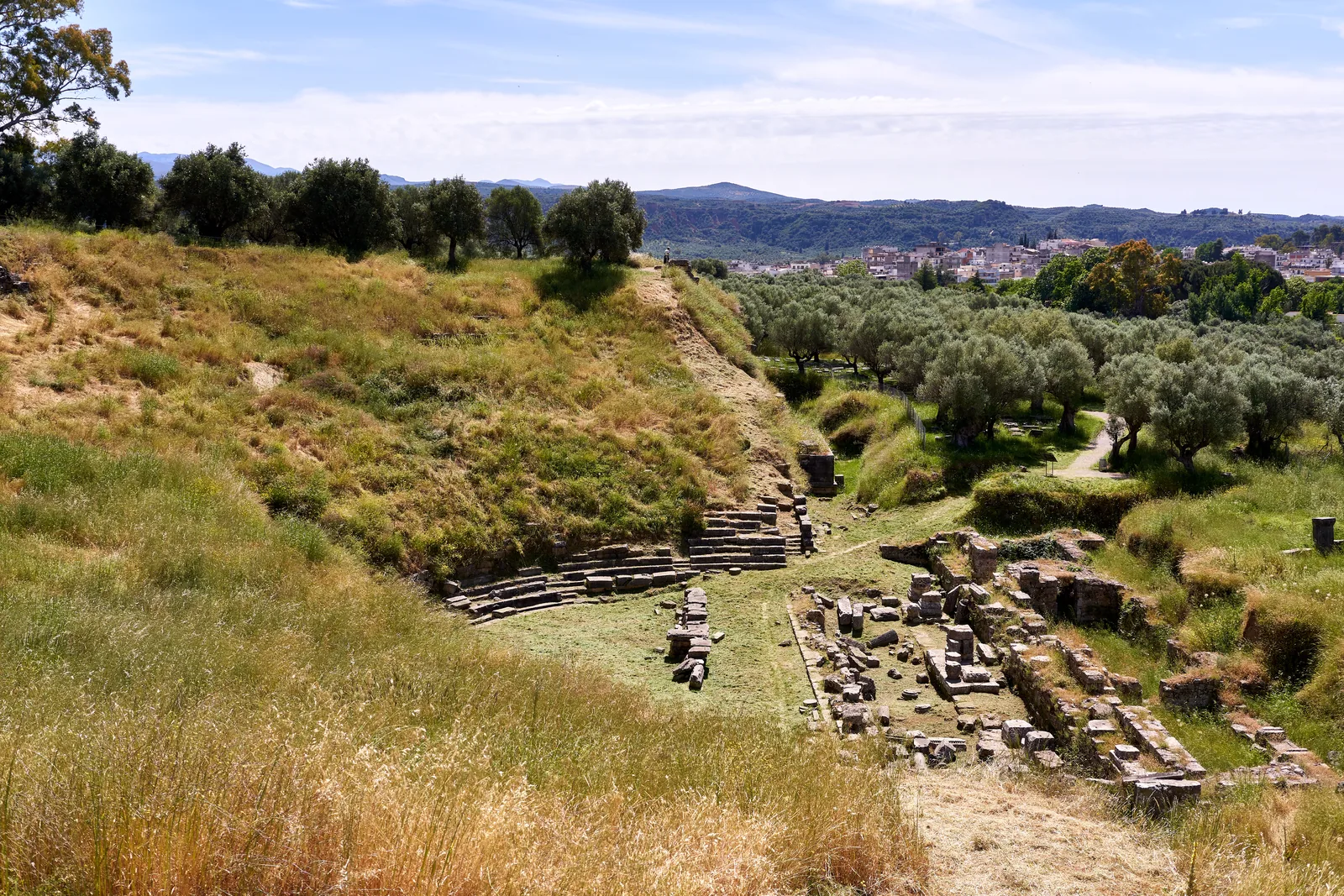
The excavated theatre at Sparta. The visible structure belongs chiefly to the Late Hellenistic and Roman city, after Sparta’s Classical peak.
George E. Koronaios, 15 May 2019, via Wikimedia Commons. CC0 1.0 Universal. Resized and converted to WebP. ↗CC0 1.0 Universal Public Domain Dedication. License terms ↗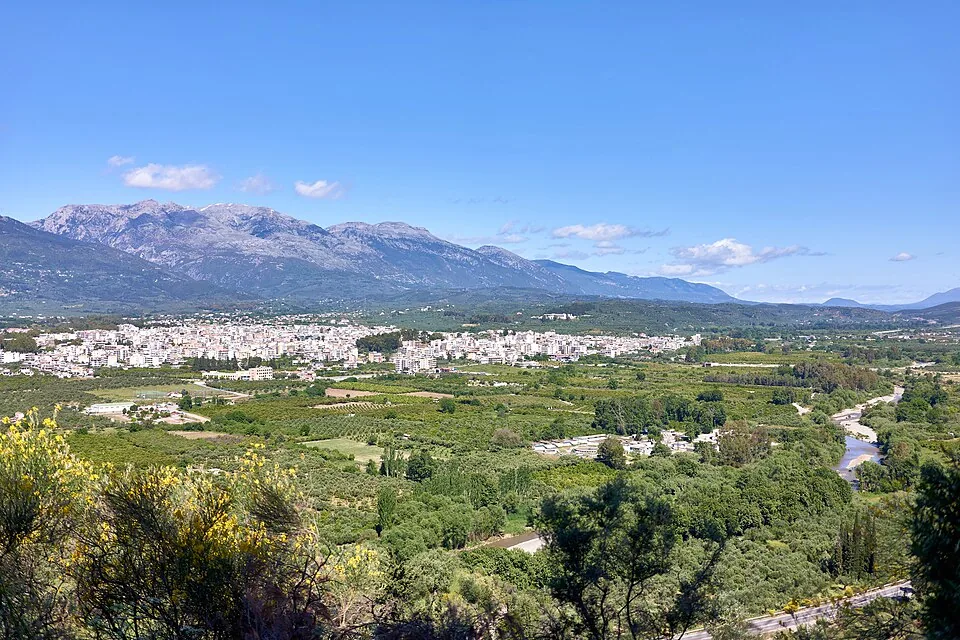
Modern Sparta and its valley seen from the Menelaion in 2019; a view of the city’s setting, not an ancient reconstruction.
George E. Koronaios. Via Wikimedia Commons. Resized and converted to WebP. ↗CC0. License terms ↗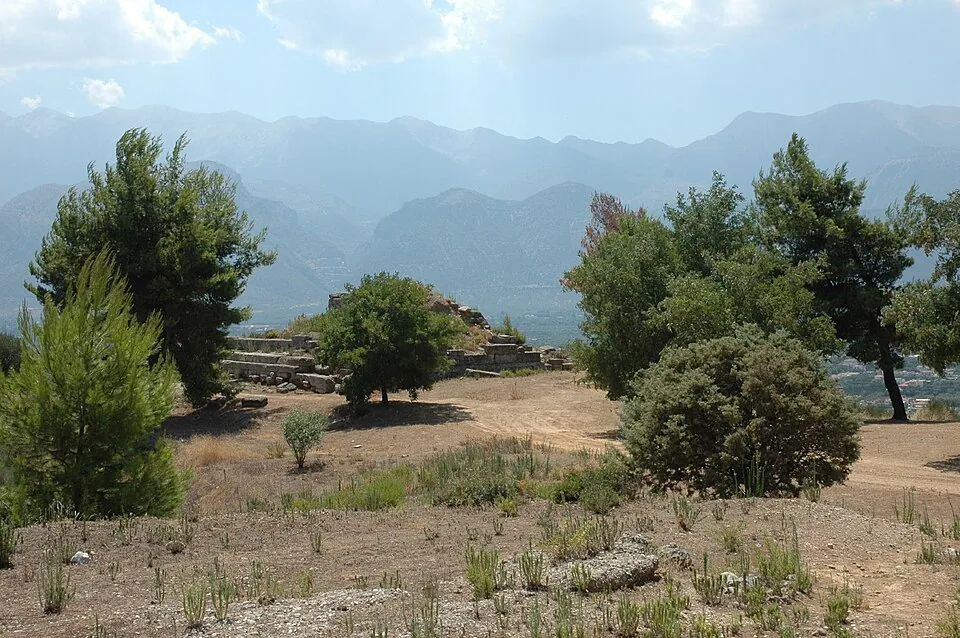
The sanctuary known as the Menelaion near Sparta, photographed in 2006. The surviving ruins offer evidence of Laconia’s sacred landscape.
Heinz Schmitz. Via Wikimedia Commons. Resized and converted to WebP. ↗CC BY-SA 2.5. License terms ↗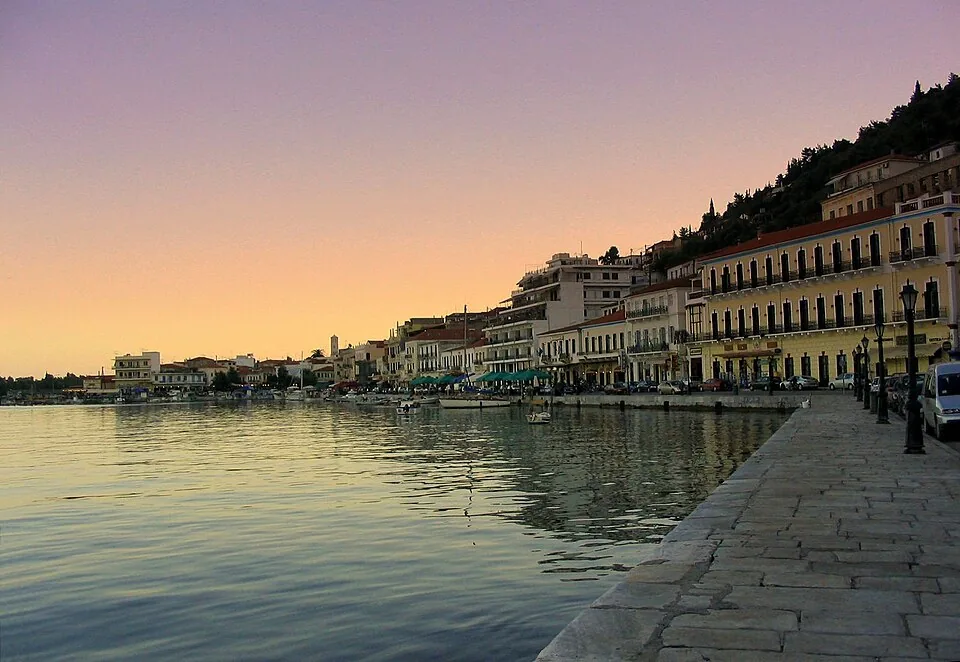
Modern Gytheio harbour at dusk. Its present buildings and boats illustrate the region’s coastal setting, not ancient harbor facilities.
Konstantinos Ntougkas. Via Wikimedia Commons. Resized and converted to WebP. ↗CC BY-SA 3.0. License terms ↗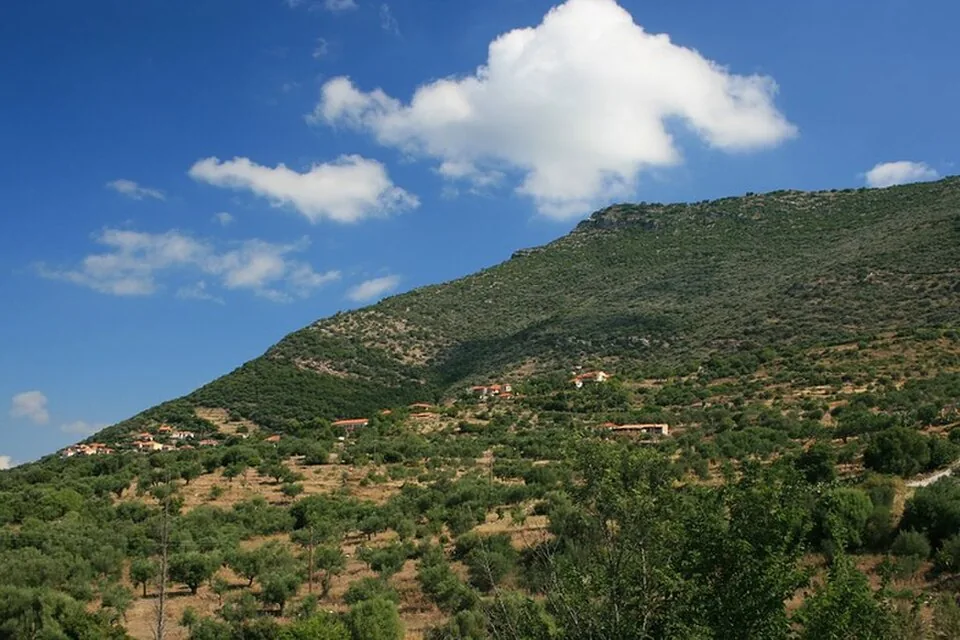
Mount Ithome in modern Messenia, overlooking the landscape of ancient Messene.
Stefan Artinger, Munich (München). Via Wikimedia Commons. Resized and converted to WebP. ↗CC0. License terms ↗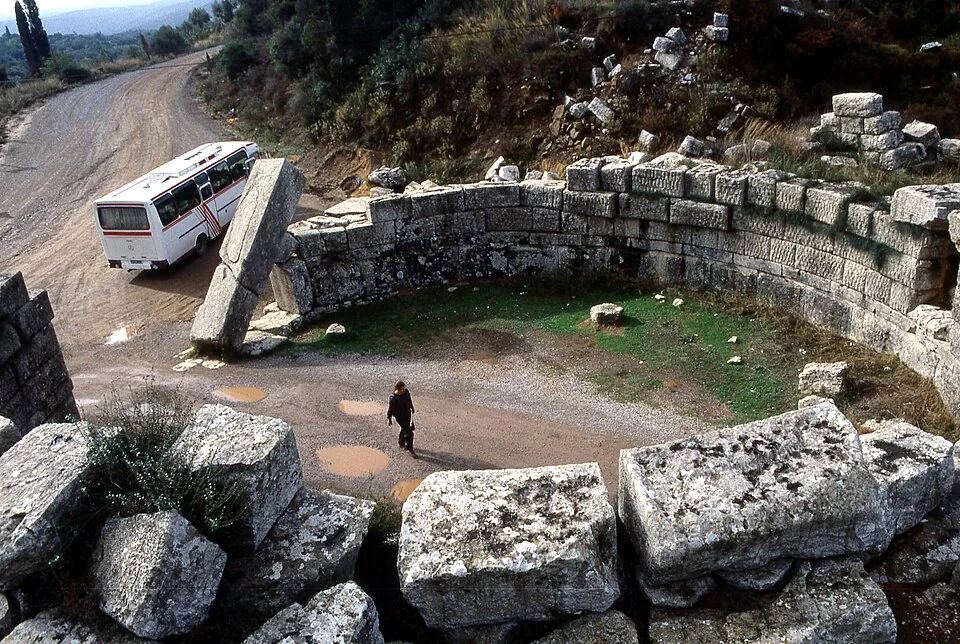
The surviving Arcadian Gate at ancient Messene, part of the fortified city founded after Messenian independence in the fourth century BCE.
Mark Landon (photographed in 1990; digitized in 2021). Via Wikimedia Commons. Resized and converted to WebP. ↗CC0. License terms ↗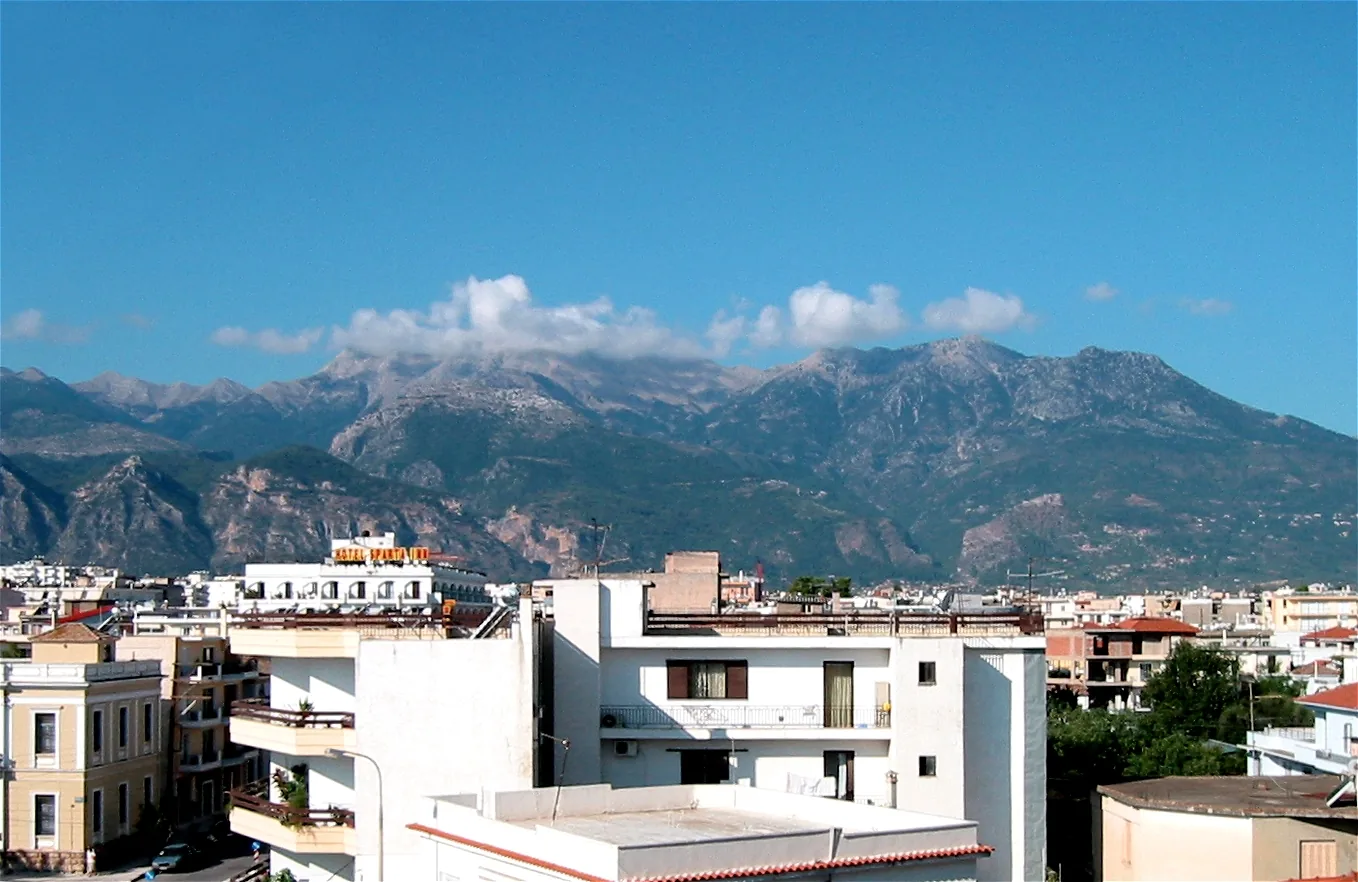
The Taygetus range above modern Sparta. The visible townscape is contemporary.
AlMare, via Wikimedia Commons. CC BY-SA 2.5. Resized and converted to WebP. ↗CC BY-SA 2.5. License terms ↗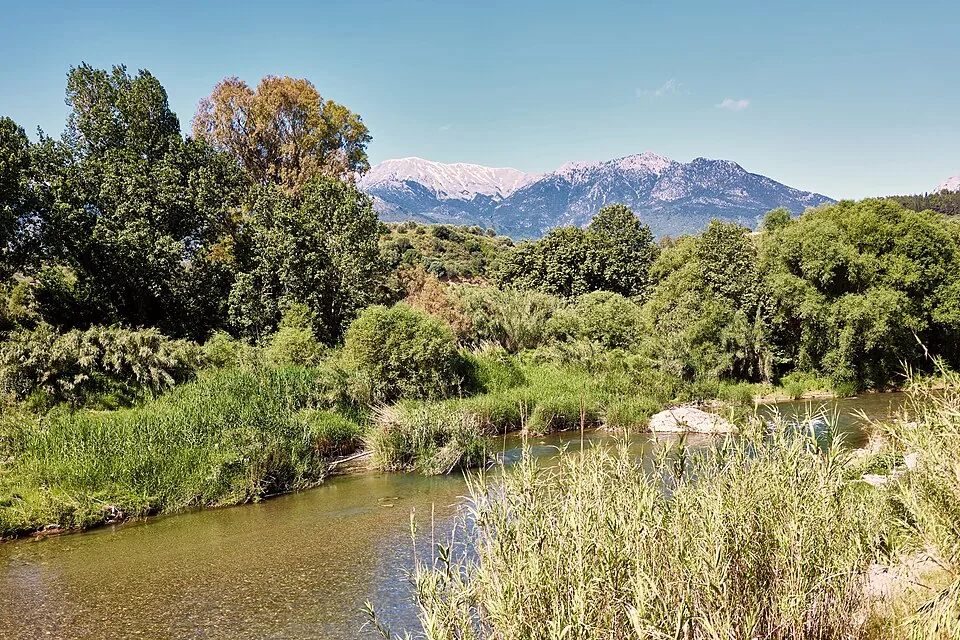
The River Eurotas at Sparta, photographed in May 2019. This modern view shows the valley’s river environment.
George E. Koronaios. Via Wikimedia Commons. Resized and converted to WebP. ↗CC0. License terms ↗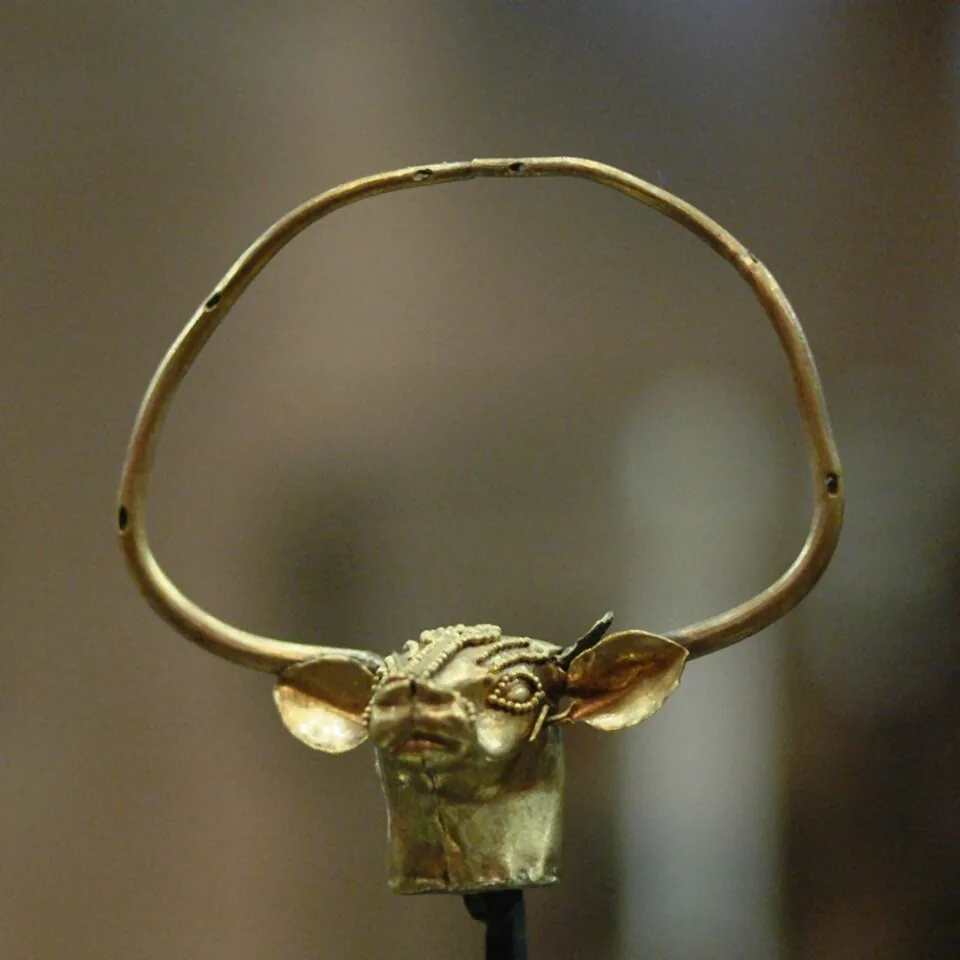
A gold bull’s head found at Amyklai, dated to the sixteenth century BCE and probably made in Crete. It predates Classical Sparta.
Photograph: Marie-Lan Nguyen (Jastrow), 2006. Louvre, Bj 2081. Public domain. Resized and converted to WebP. ↗Public domain. License terms ↗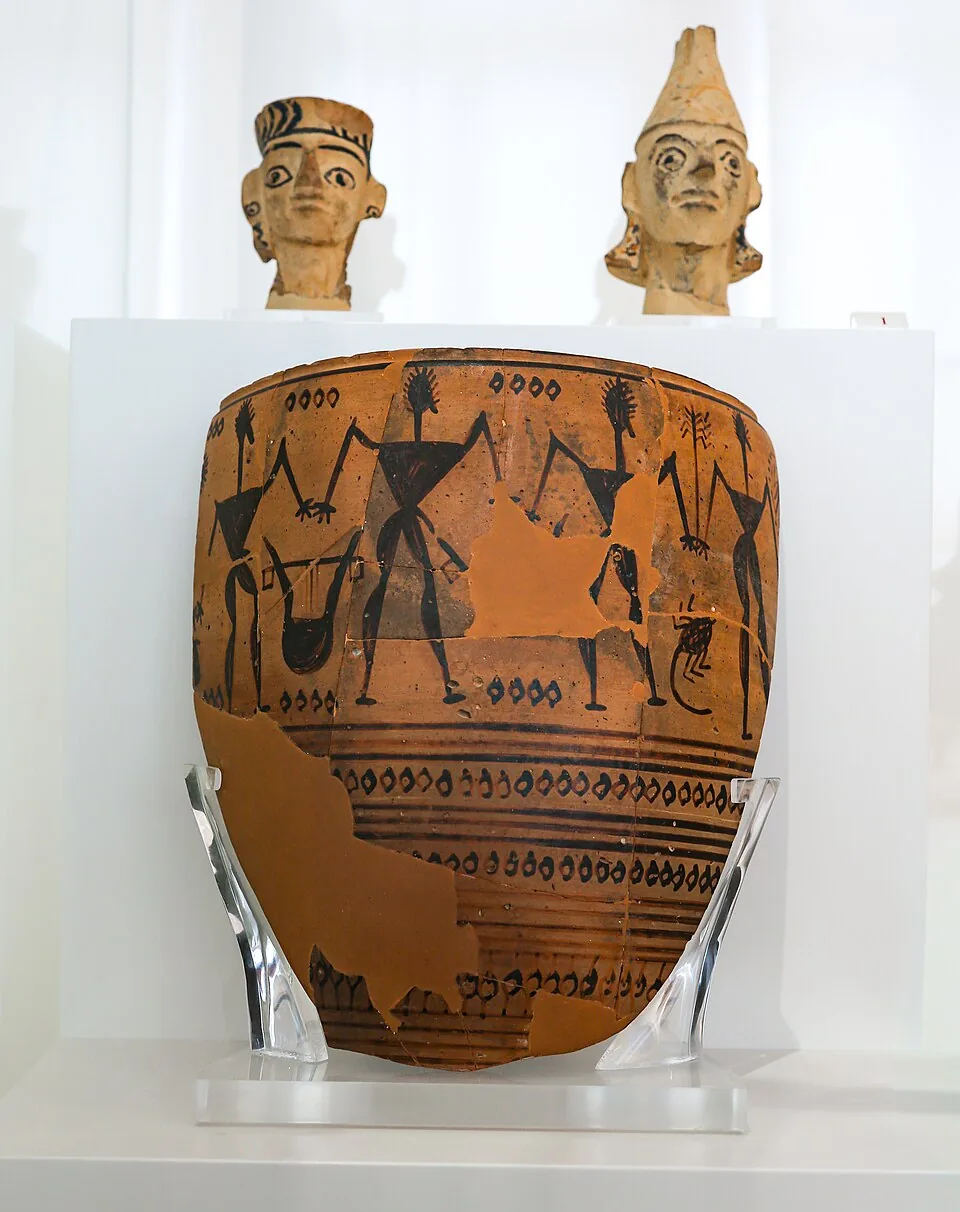
A Late Geometric Laconian skyphos fragment from the Amyklaion, decorated with a dance scene; evidence of the sanctuary’s early cultural life.
ArchaiOptix. Via Wikimedia Commons. Resized and converted to WebP. ↗CC BY-SA 4.0. License terms ↗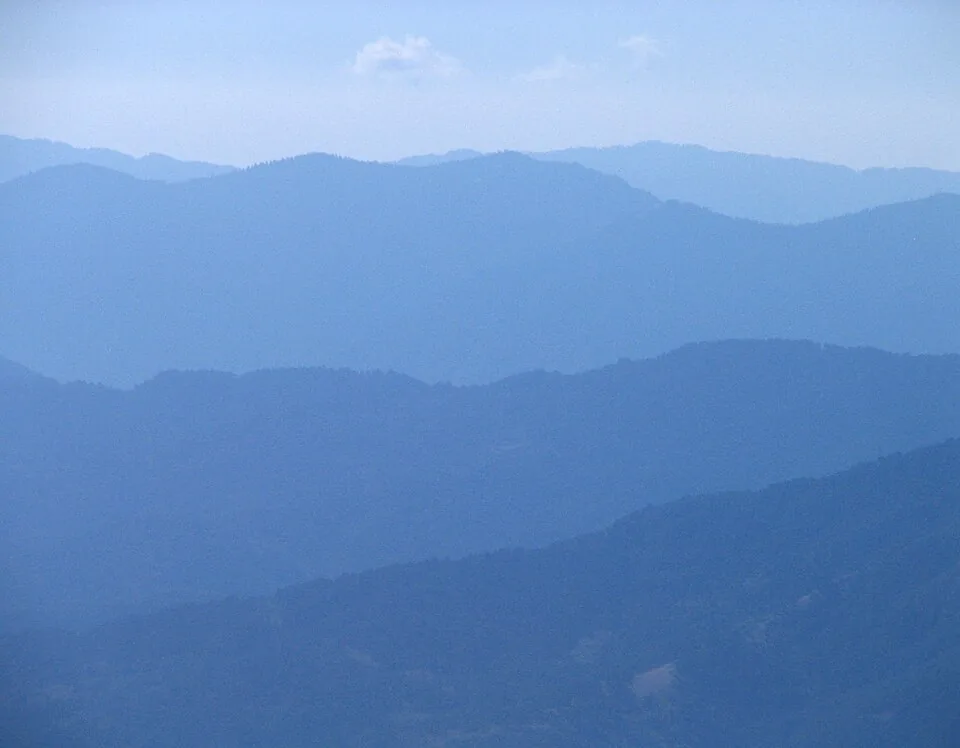
A modern view of the Pindus mountains, a region named in ancient traditions about the Dorians. Landscape photography does not establish a migration route.
Bogdan Giuşcă. Via Wikimedia Commons. Resized and converted to WebP. ↗CC BY-SA 3.0. License terms ↗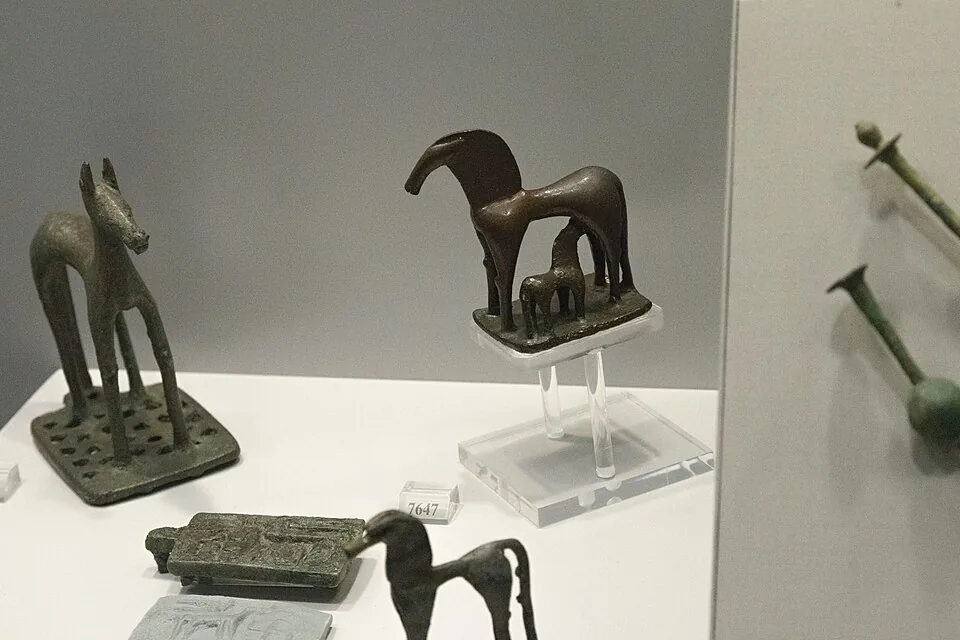
Eighth-century BCE bronze horses from Laconian and Argive workshops. Artistic connections are material evidence; they do not by themselves establish ethnic ancestry.
Zde. Via Wikimedia Commons. Resized and converted to WebP. ↗CC BY-SA 4.0. License terms ↗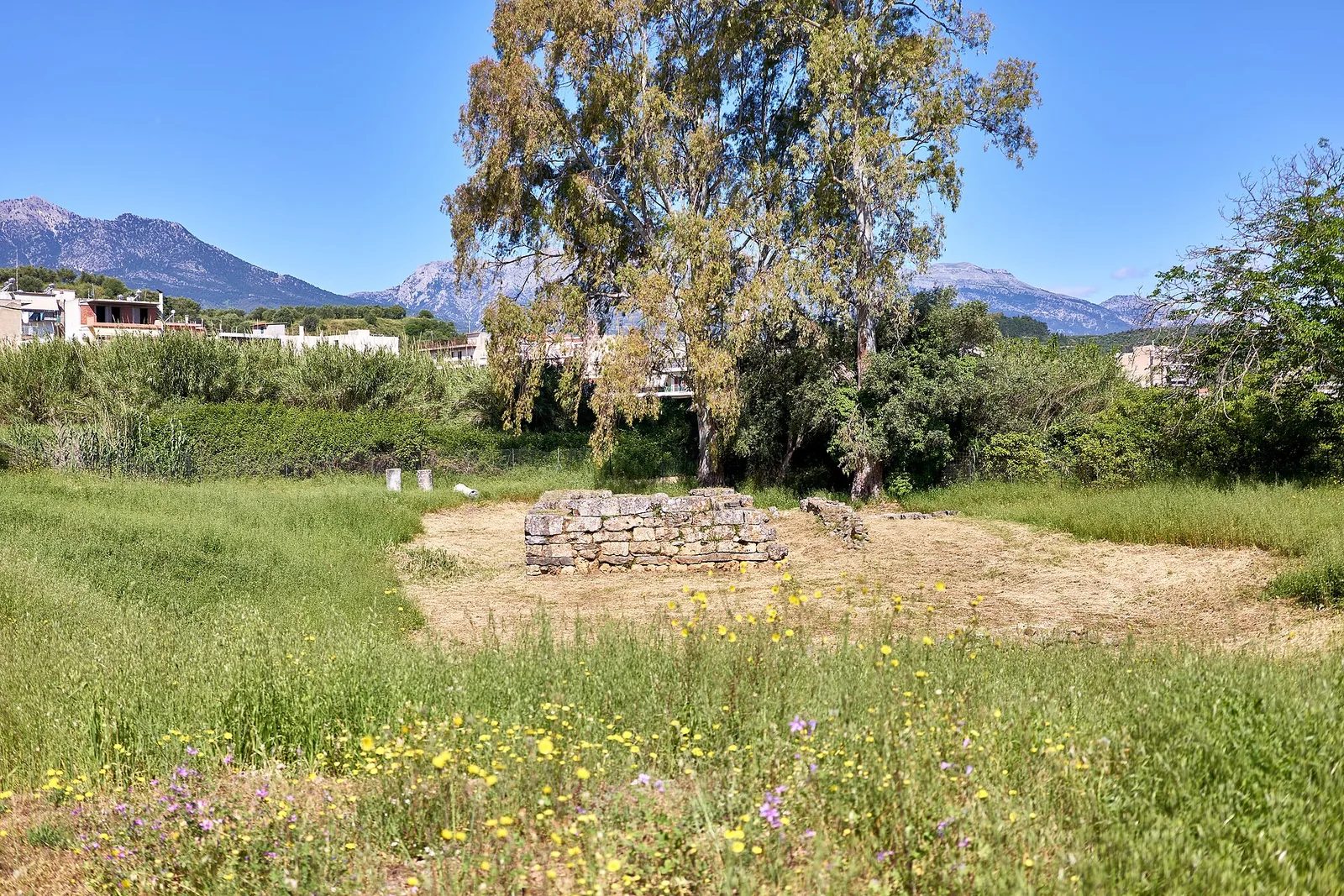
The remains of Artemis Orthia’s sanctuary at Sparta, photographed in 2019. The surviving site contains several periods of construction.
George E. Koronaios, via Wikimedia Commons. CC0. Resized and converted to WebP. ↗CC0. License terms ↗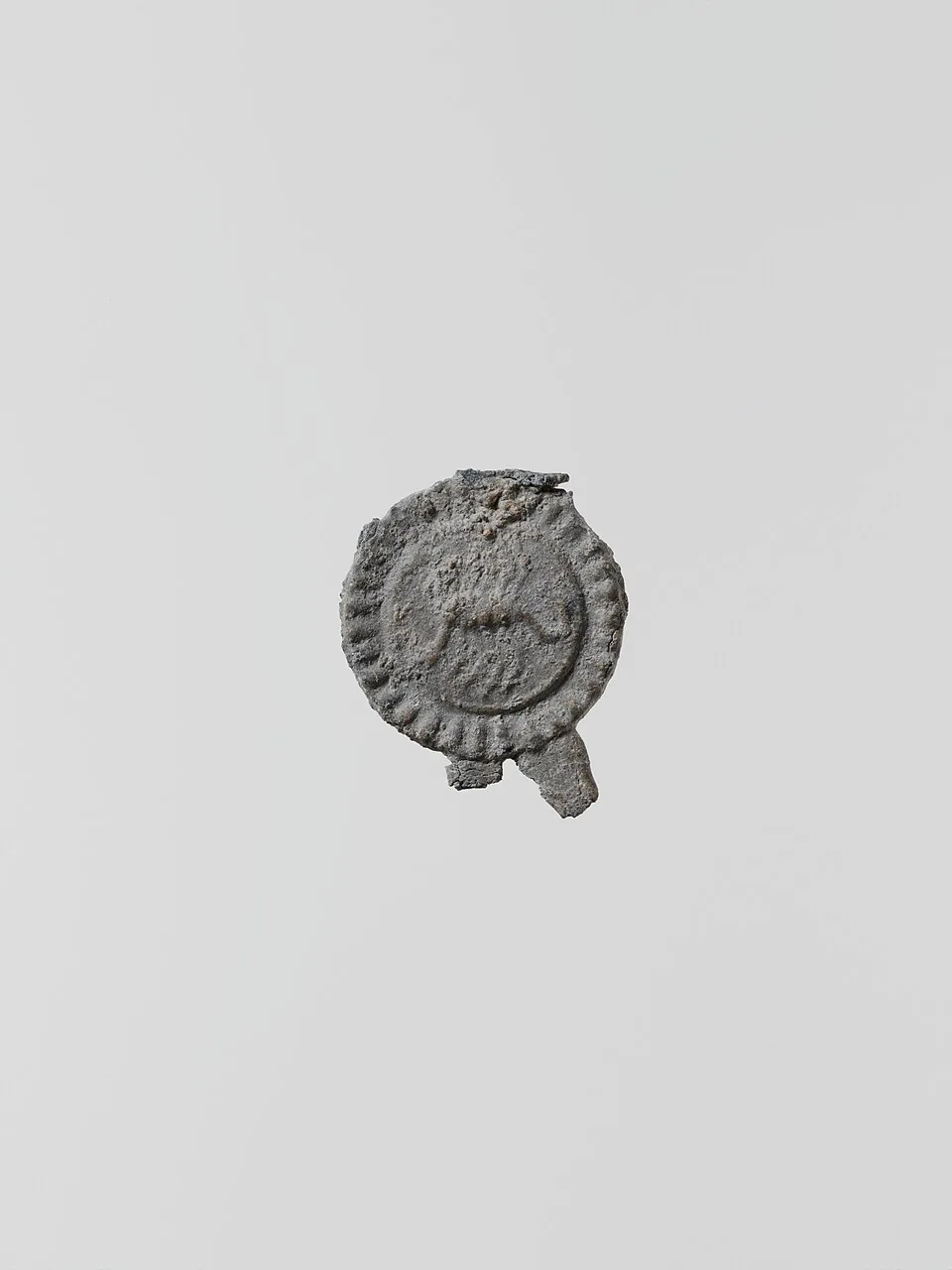
A small lead warrior figure from Laconia in The Met’s collection. Such votives reveal a material dimension of Spartan religious life.
The Metropolitan Museum of Art. Via Wikimedia Commons. Resized and converted to WebP. ↗CC0. License terms ↗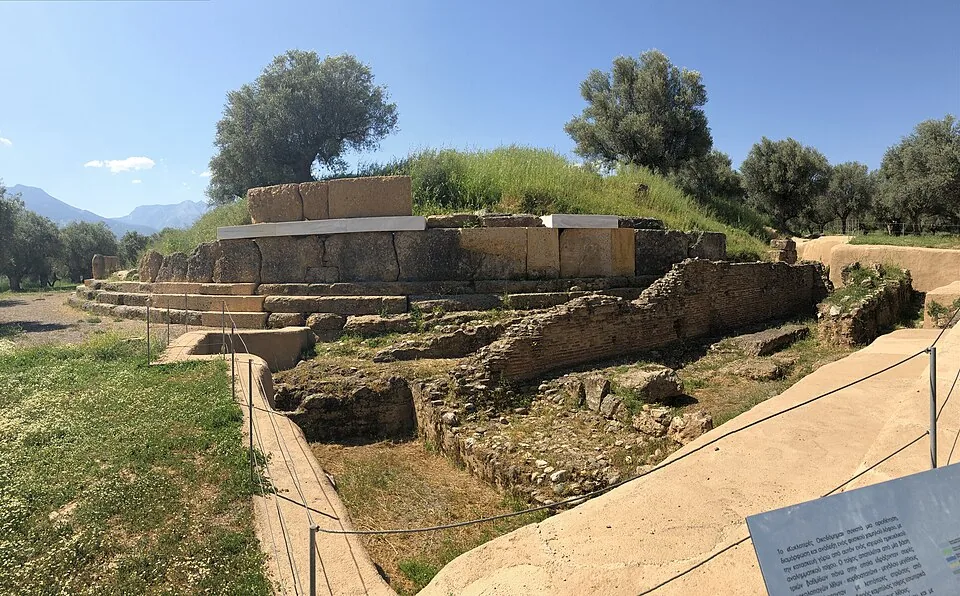
Excavated remains of the Roman stoa and adjacent round building at Sparta, seen in a modern photograph.
Davide Mauro. Via Wikimedia Commons. Resized and converted to WebP. ↗CC BY-SA 4.0. License terms ↗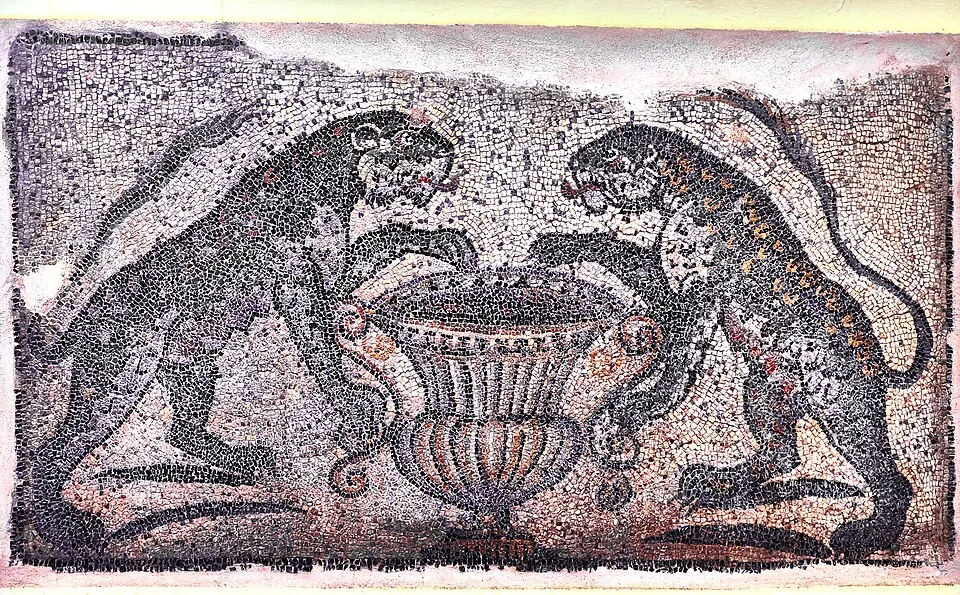
A third-century CE mosaic fragment in the Archaeological Museum of Sparta, showing the city’s Roman-period decorative culture.
George E. Koronaios. Via Wikimedia Commons. Resized and converted to WebP. ↗CC BY-SA 4.0. License terms ↗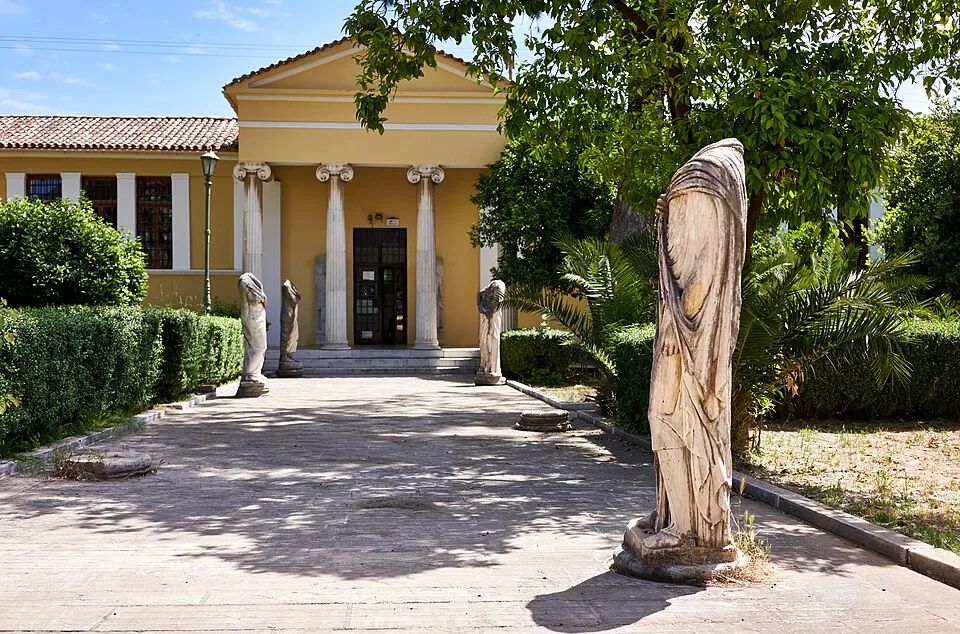
The entrance to the Archaeological Museum of Sparta, a modern institution preserving finds from the city and Laconia.
George E. Koronaios. Via Wikimedia Commons. Resized and converted to WebP. ↗CC BY-SA 4.0. License terms ↗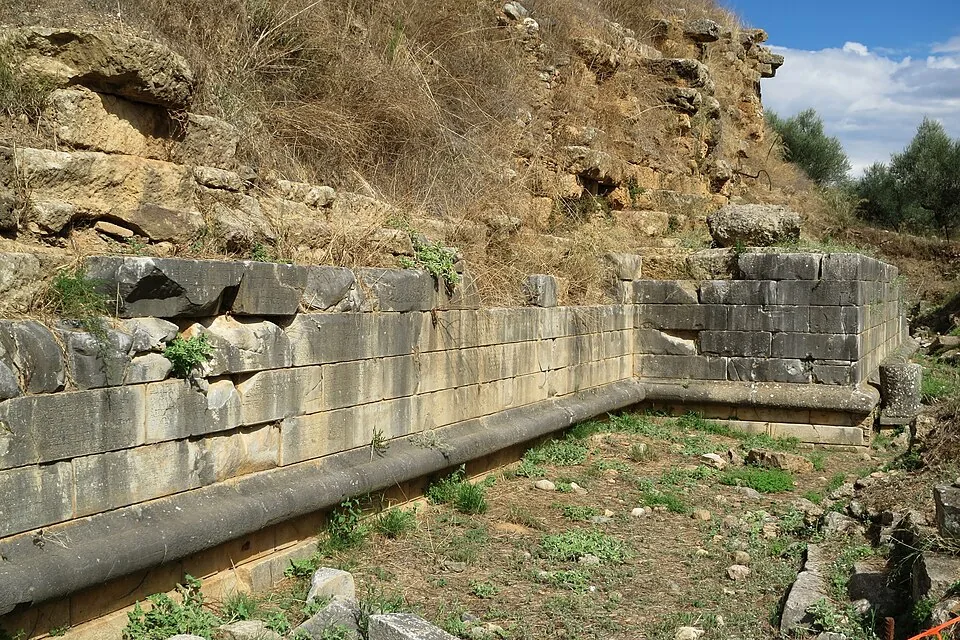
Ancient Greek inscriptions along the theatre wall at Sparta. Surviving texts complement excavated structures and artifacts as historical evidence.
StanTravels. Via Wikimedia Commons. Resized and converted to WebP. ↗CC BY-SA 4.0. License terms ↗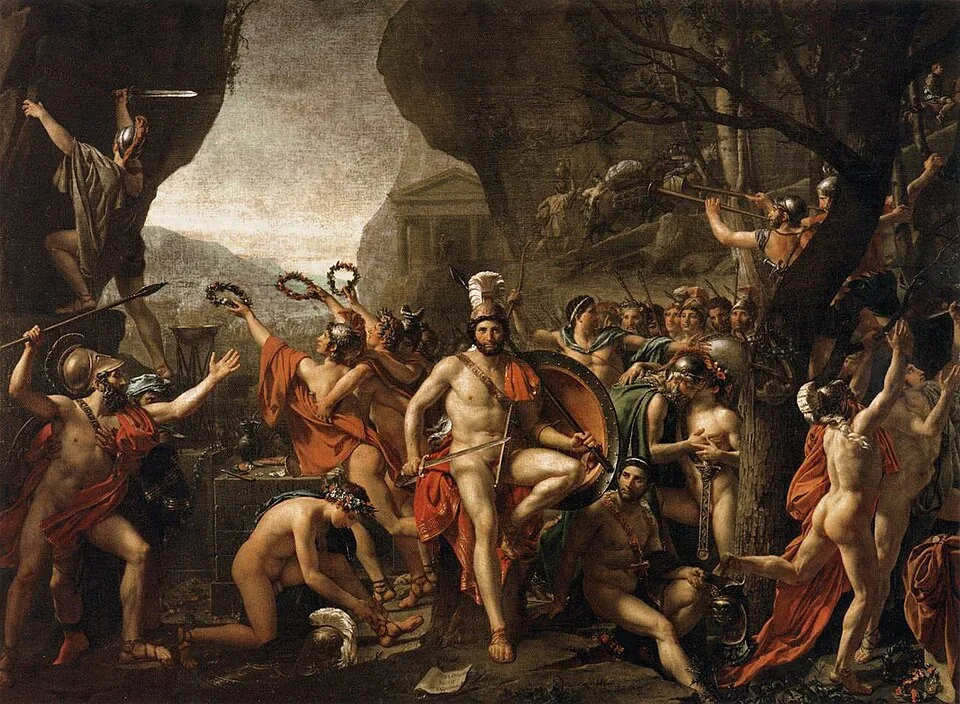
Jacques-Louis David’s Leonidas at Thermopylae (1814): a much later artistic vision of Spartan heroism, not a contemporary record.
Jacques-Louis David. Via Wikimedia Commons. Resized and converted to WebP. ↗Public domain. License terms ↗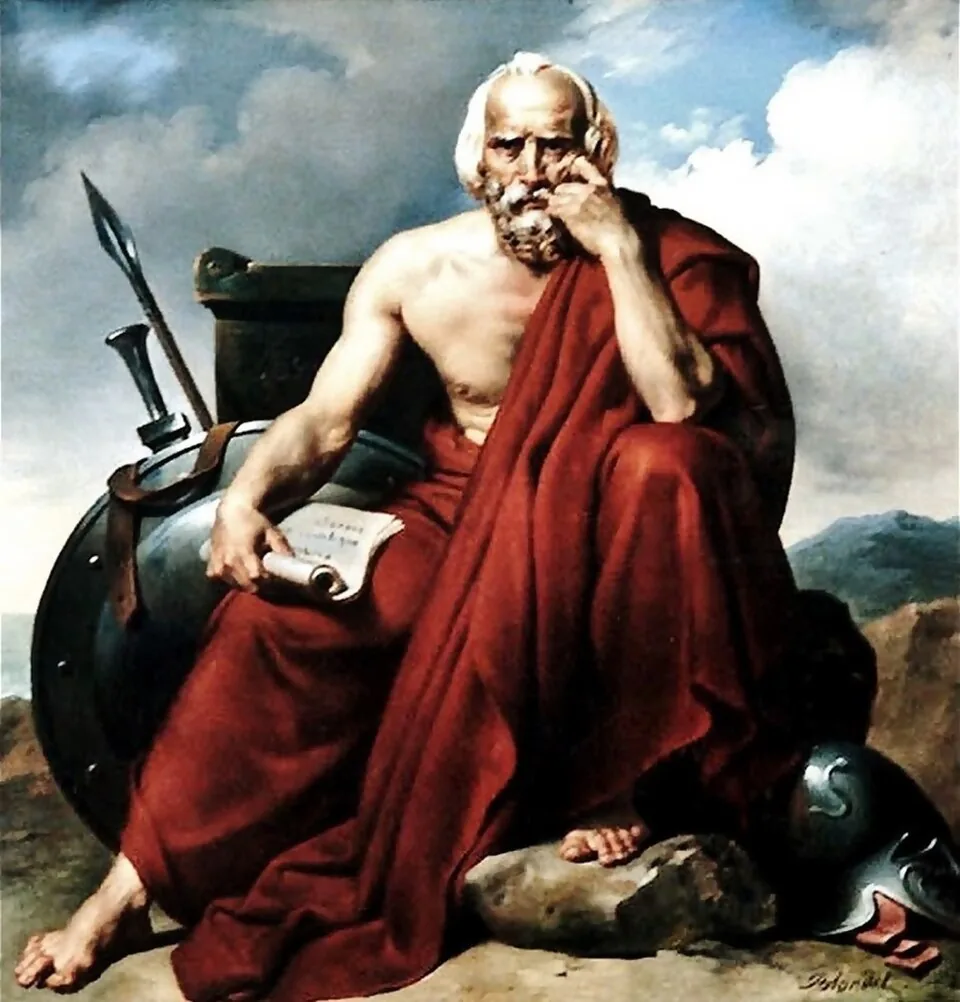
Merry-Joseph Blondel’s imagined Lycurgus (1828). This nineteenth-century portrait shows later ideals of Sparta, not reliable evidence of the lawgiver’s appearance.
Merry-Joseph Blondel. Via Wikimedia Commons. Resized and converted to WebP. ↗Public domain. License terms ↗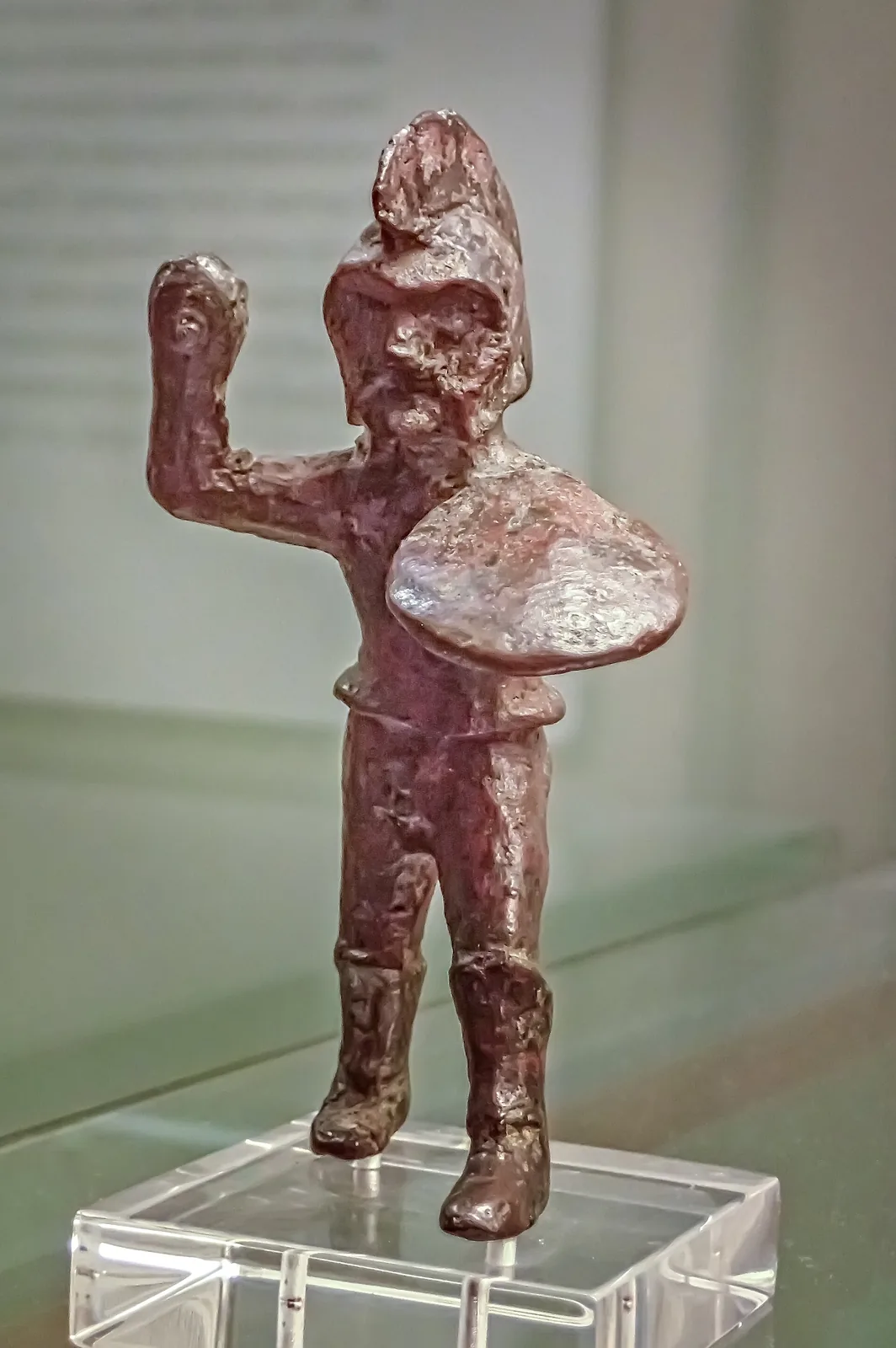
Bronze warrior from Sparta, sixth century BCE, now in the British Museum. It represents Laconian martial imagery rather than a securely identified individual citizen.
Mary Harrsch, via Wikimedia Commons. CC BY-SA 4.0. ↗CC BY-SA 4.0. License terms ↗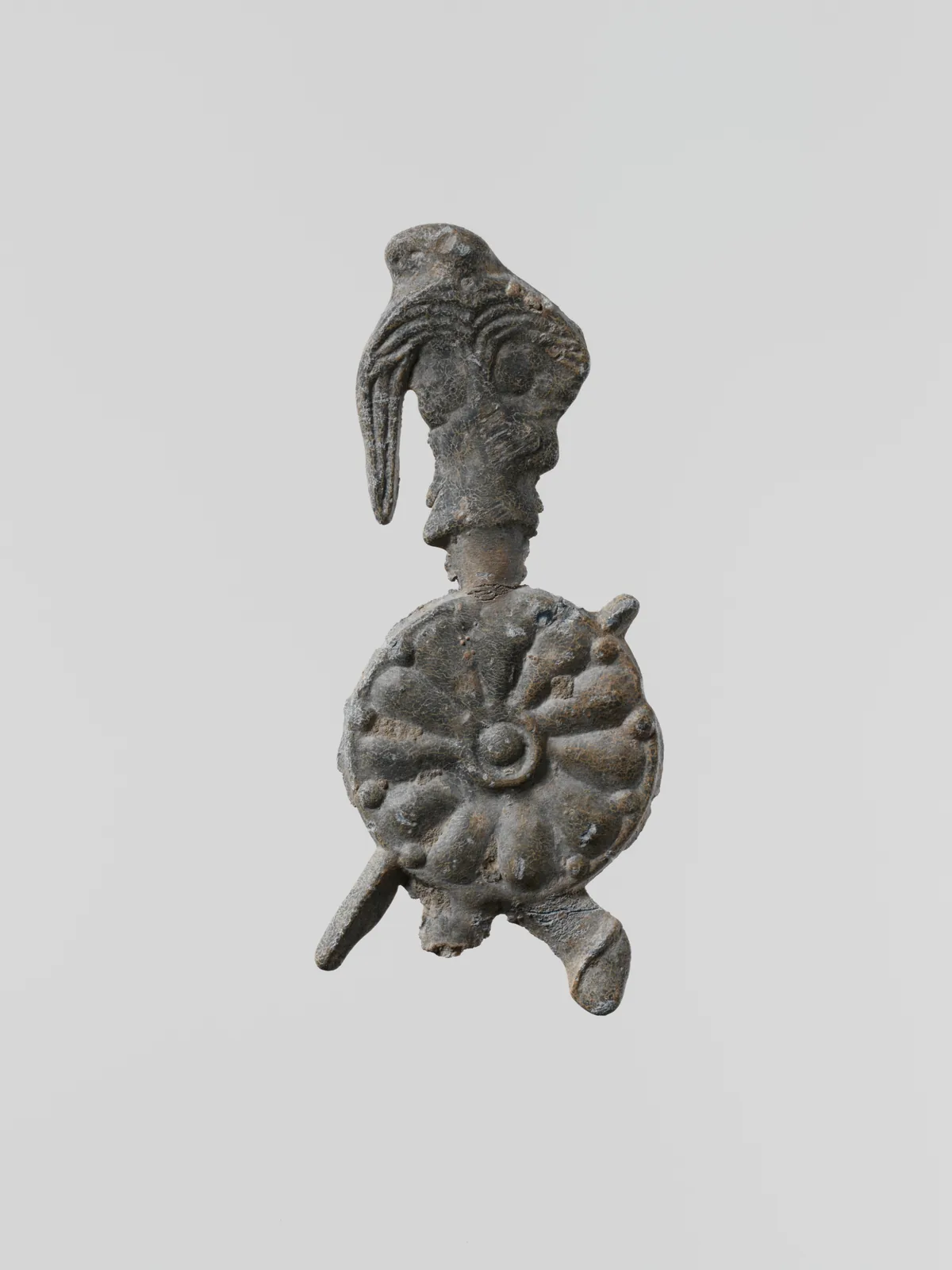
Laconian lead warrior with helmet, shield, and spear, sixth–fifth century BCE. A votive image of the armed male ideal; it does not establish the legal status of the person represented.
The Metropolitan Museum of Art, Gift of A. J. B. Wace, 1924, 24.195.60. Public domain (CC0). ↗CC0 1.0 / Public domain. License terms ↗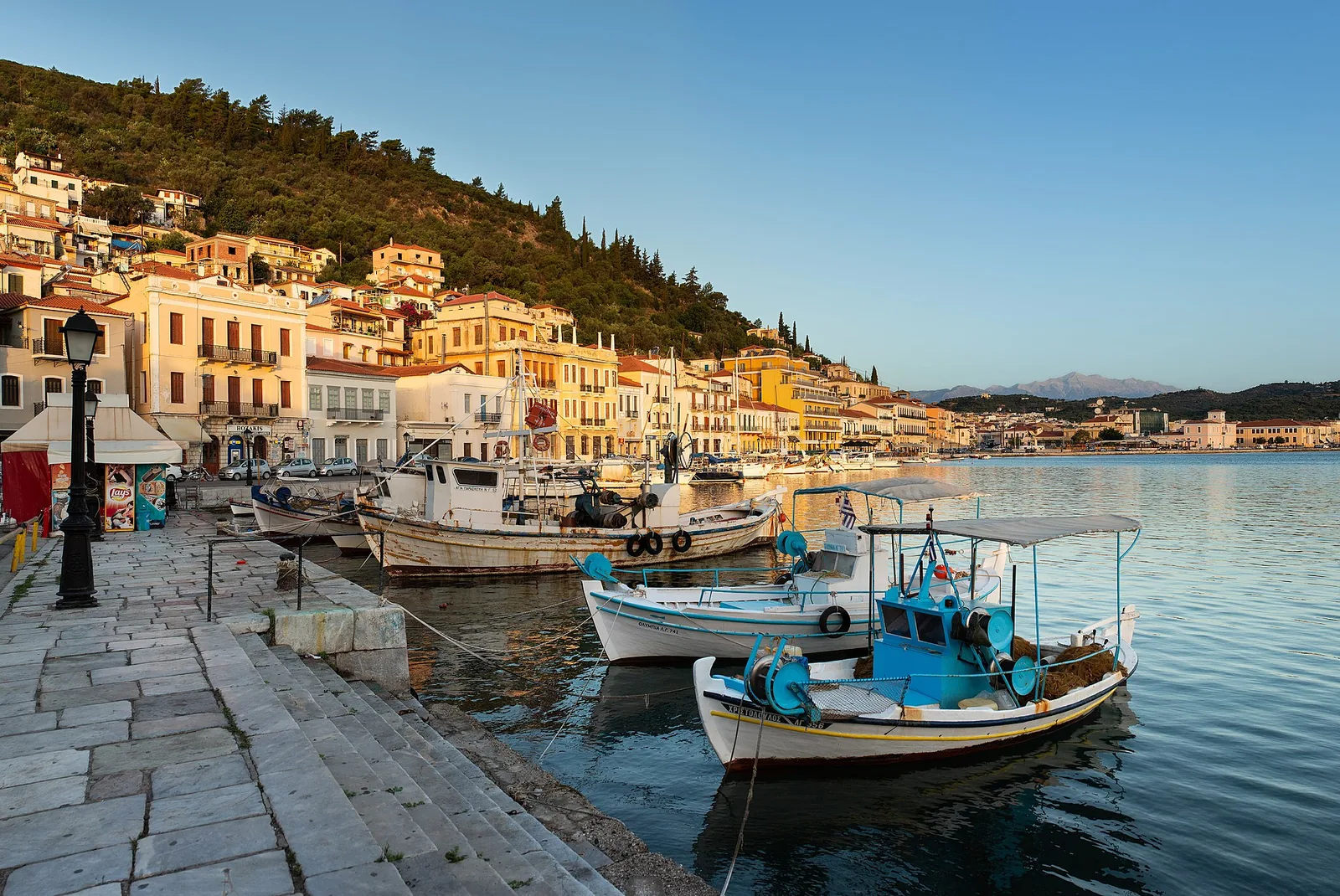
The modern port of Gytheio. Ancient Gytheion was an important Laconian coastal community; the present waterfront is geographic context, not a reconstruction of its ancient appearance.
David Iliff (Diliff), via Wikimedia Commons. CC BY-SA 4.0. ↗CC BY-SA 4.0. License terms ↗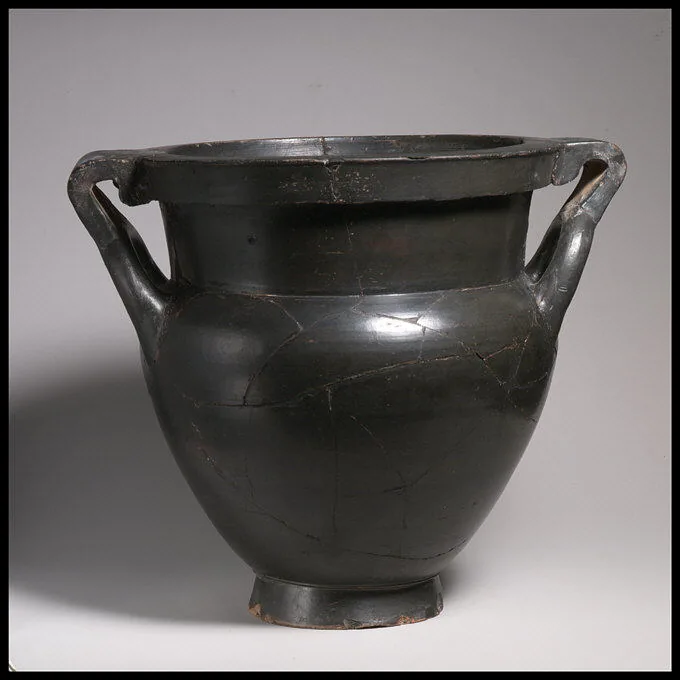
Laconian column-krater for mixing wine and water, second half of the sixth century BCE. Laconian craftsmanship provides context for the regional economy; the maker's civic status is unknown.
The Metropolitan Museum of Art, Rogers Fund, 1966, 66.11.16. Public domain (CC0). ↗CC0 1.0 / Public domain. License terms ↗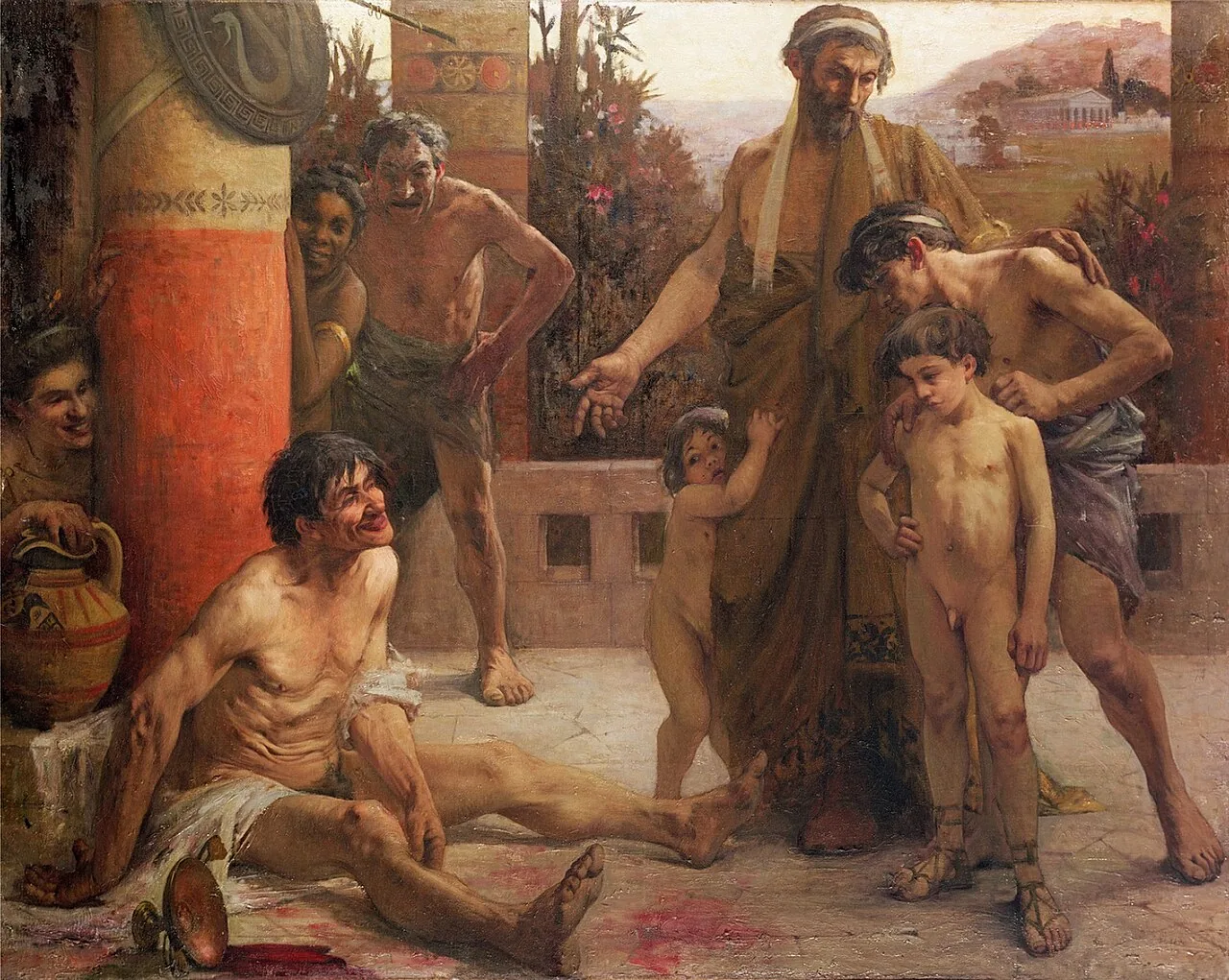
Fernand Sabatté's 1900 painting imagines the ancient literary account of a Spartan showing his sons a drunken helot. It records modern reception of the story, not an observed ancient scene.
Fernand Sabatté, via Wikimedia Commons. Public domain. ↗Public domain. License terms ↗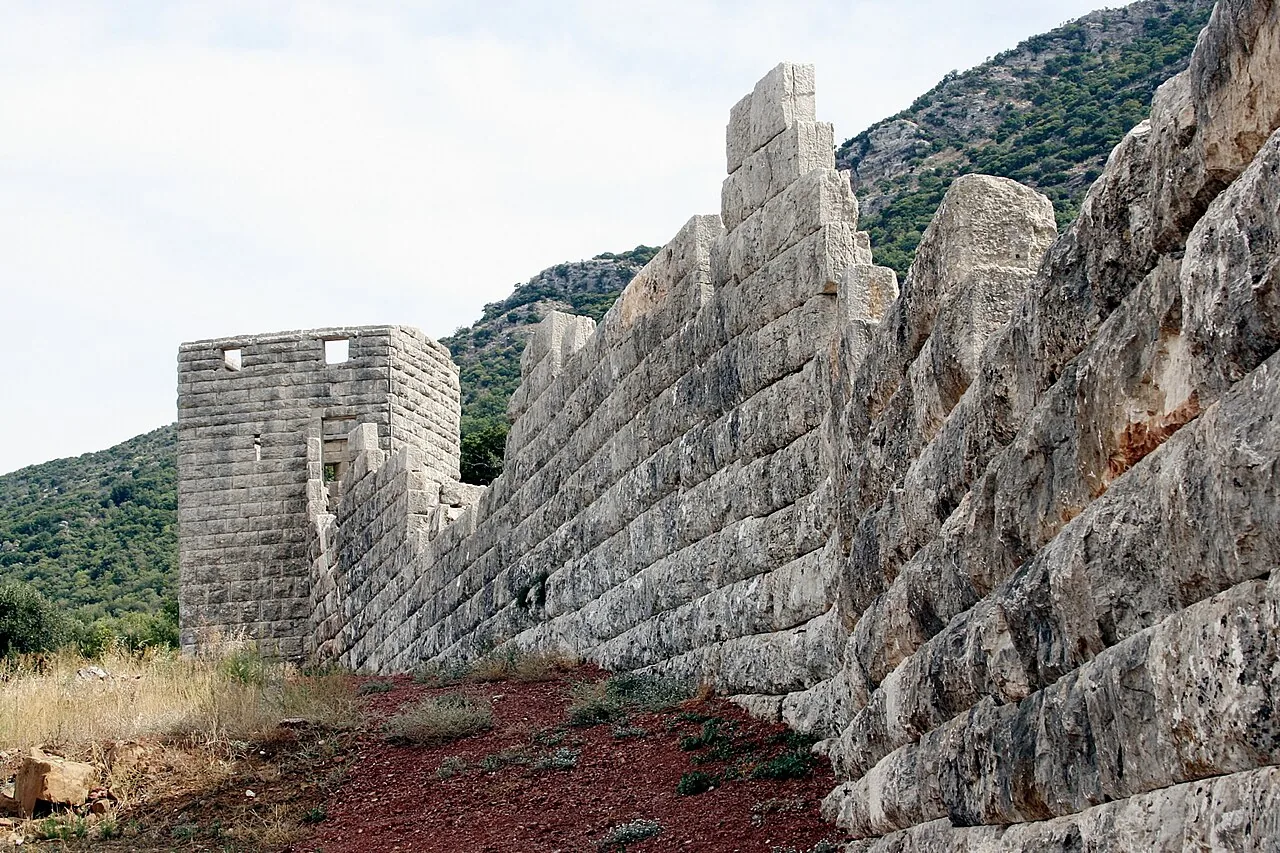
The walls of ancient Messene near the Arcadian Gate. The independent city founded after Spartan rule provides a later setting for the history of the Messenian helots.
Herbert Ortner, Vienna, Austria, via Wikimedia Commons. CC BY 2.5. ↗CC BY 2.5. License terms ↗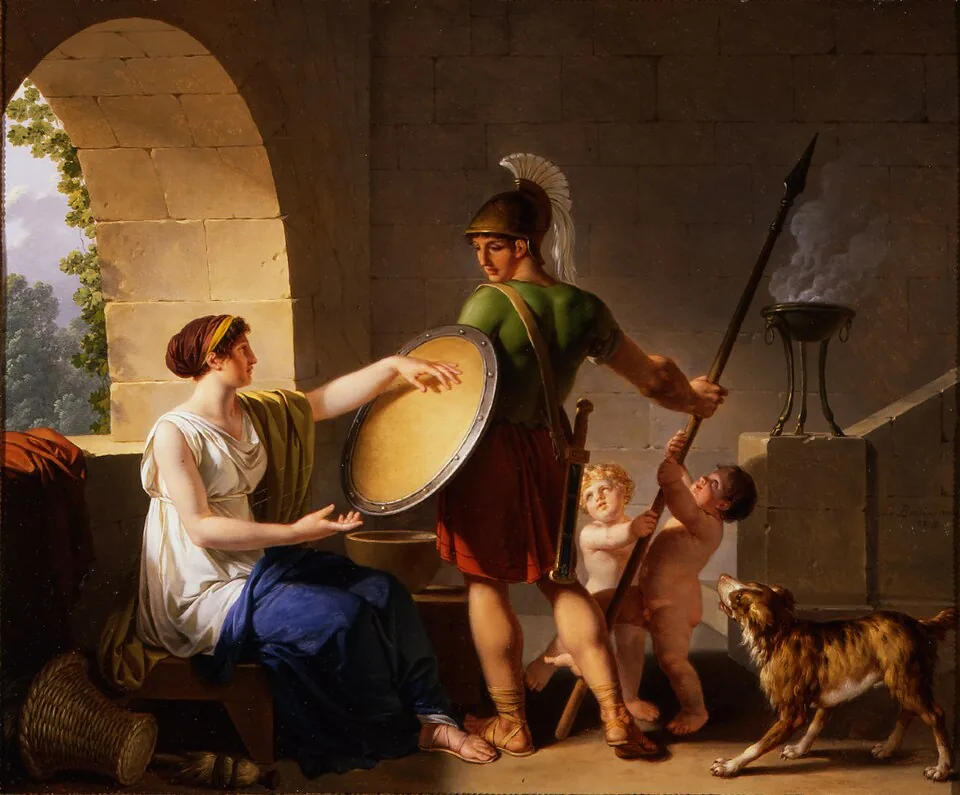
Jean-Jacques-François Le Barbier's A Spartan Woman Giving a Shield to Her Son, 1805. A later artistic interpretation of the Spartan maternal ideal.
Jean-Jacques-François Le Barbier, via Wikimedia Commons. Public domain. ↗Public domain. License terms ↗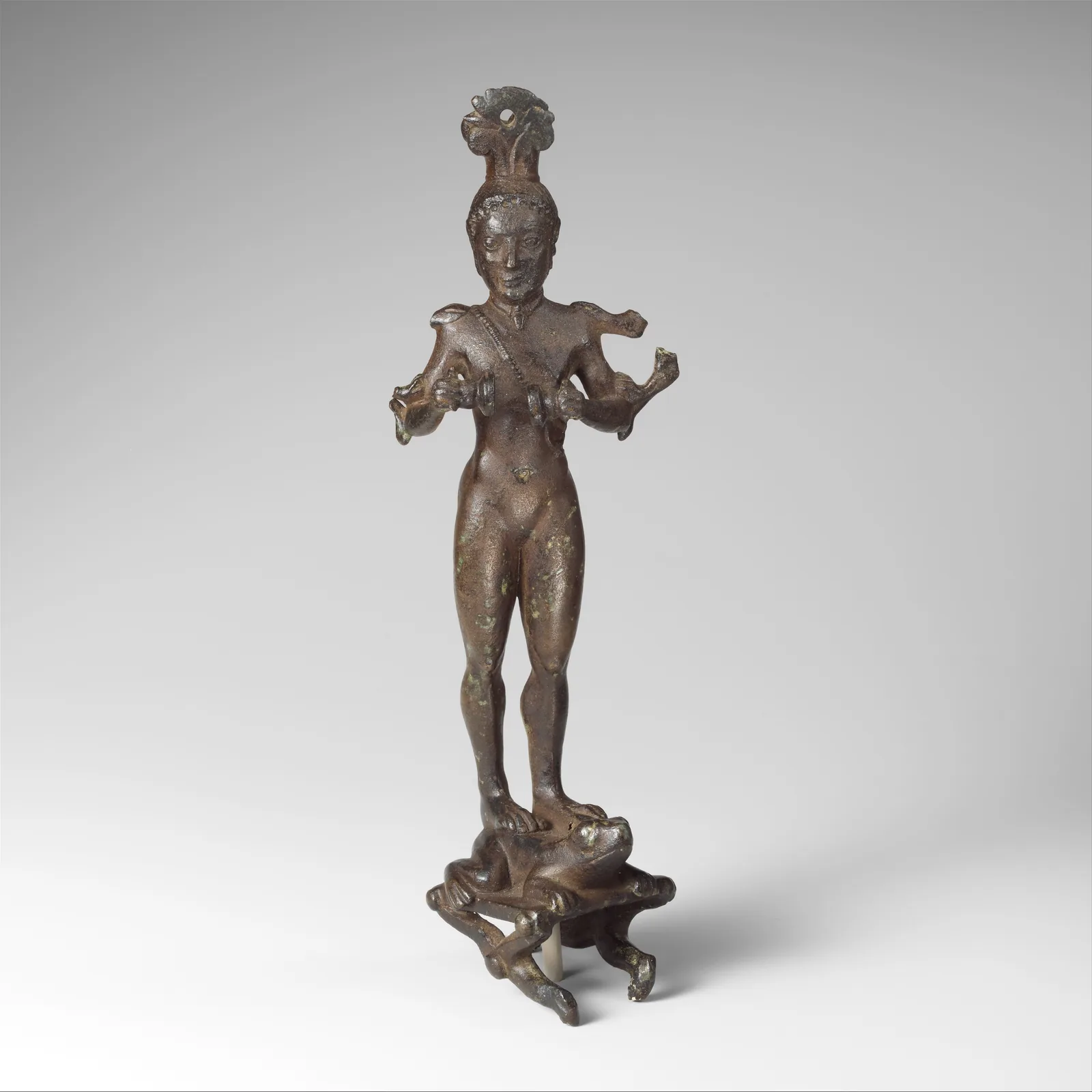
Laconian bronze mirror support in the form of a girl, about 540–530 BCE. An example of female imagery in Spartan-region metalwork.
The Metropolitan Museum of Art, The Cesnola Collection, Purchased by subscription, 1874–76, 74.51.5680. Public domain (CC0). ↗CC0 1.0 / Public domain. License terms ↗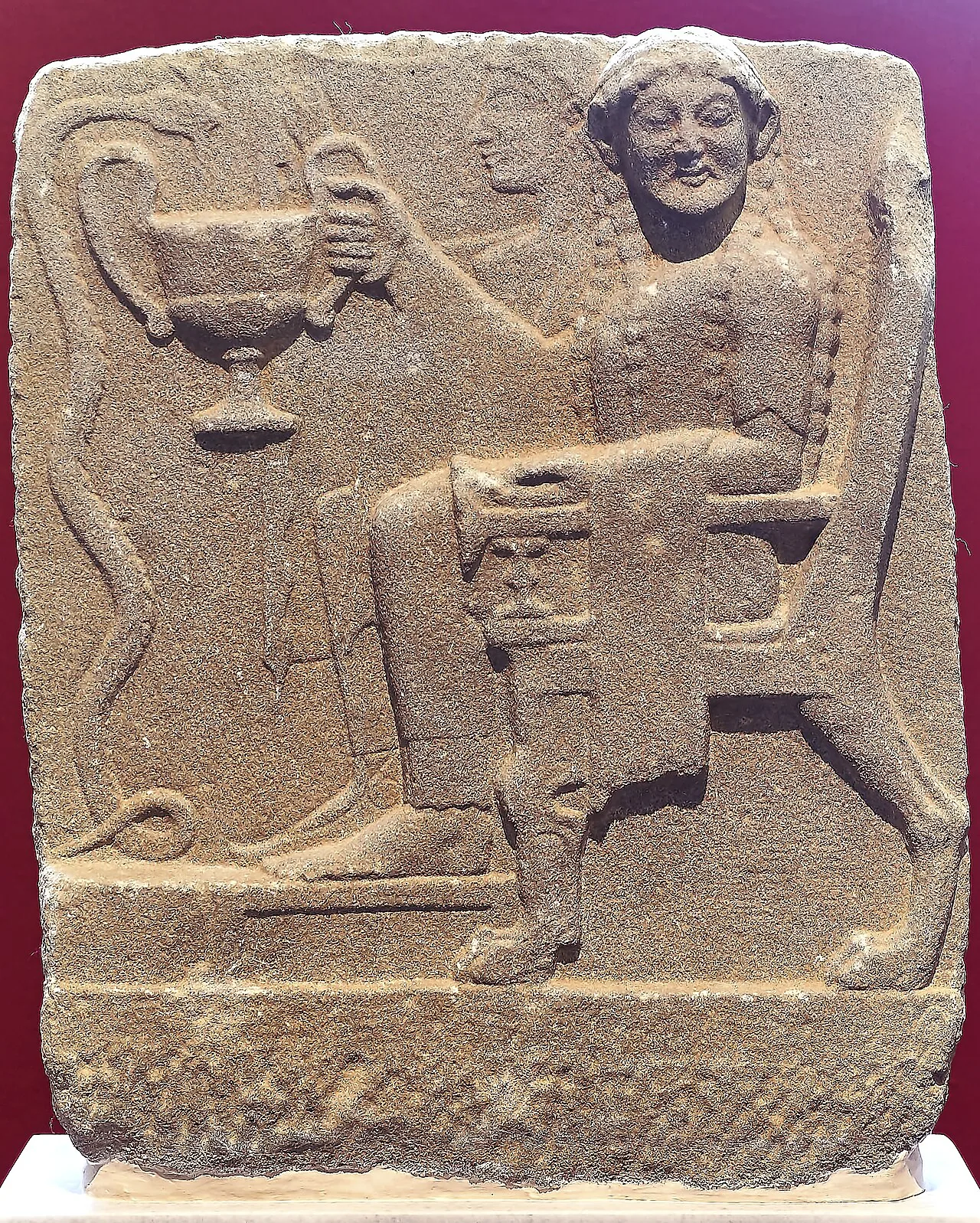
Sixth-century BCE Laconian relief interpreted as heroized mortals or underworld deities. It offers context for household and ancestral imagery, rather than a securely identified Spartan family portrait.
George E. Koronaios, via Wikimedia Commons. CC BY-SA 4.0. ↗CC BY-SA 4.0. License terms ↗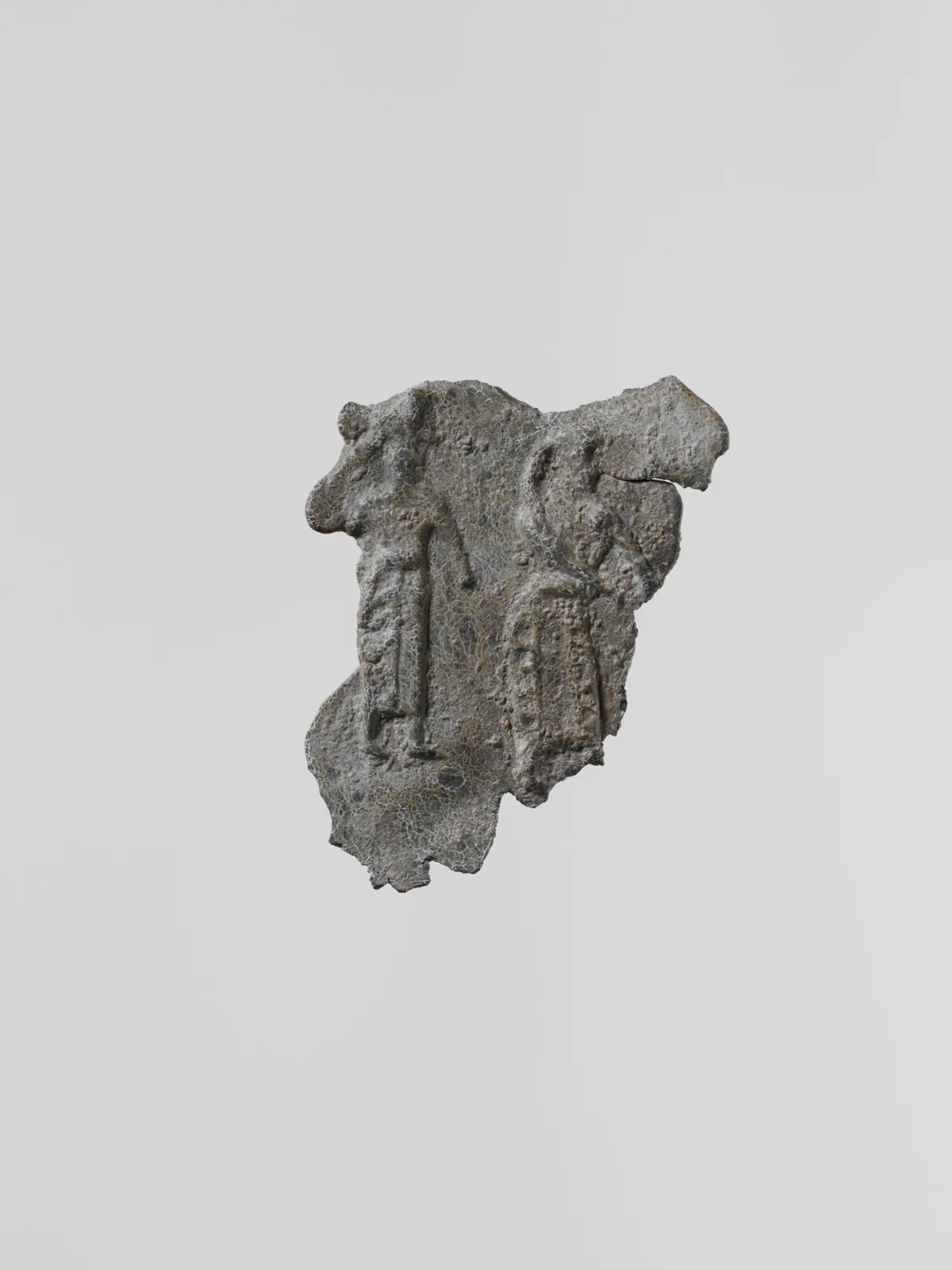
Laconian lead plaque showing two women, sixth century BCE. This votive object offers material context for female representation, rather than a documented family portrait.
The Metropolitan Museum of Art, Gift of A. J. B. Wace, 1924, 24.195.33. Public domain (CC0). ↗CC0 1.0 / Public domain. License terms ↗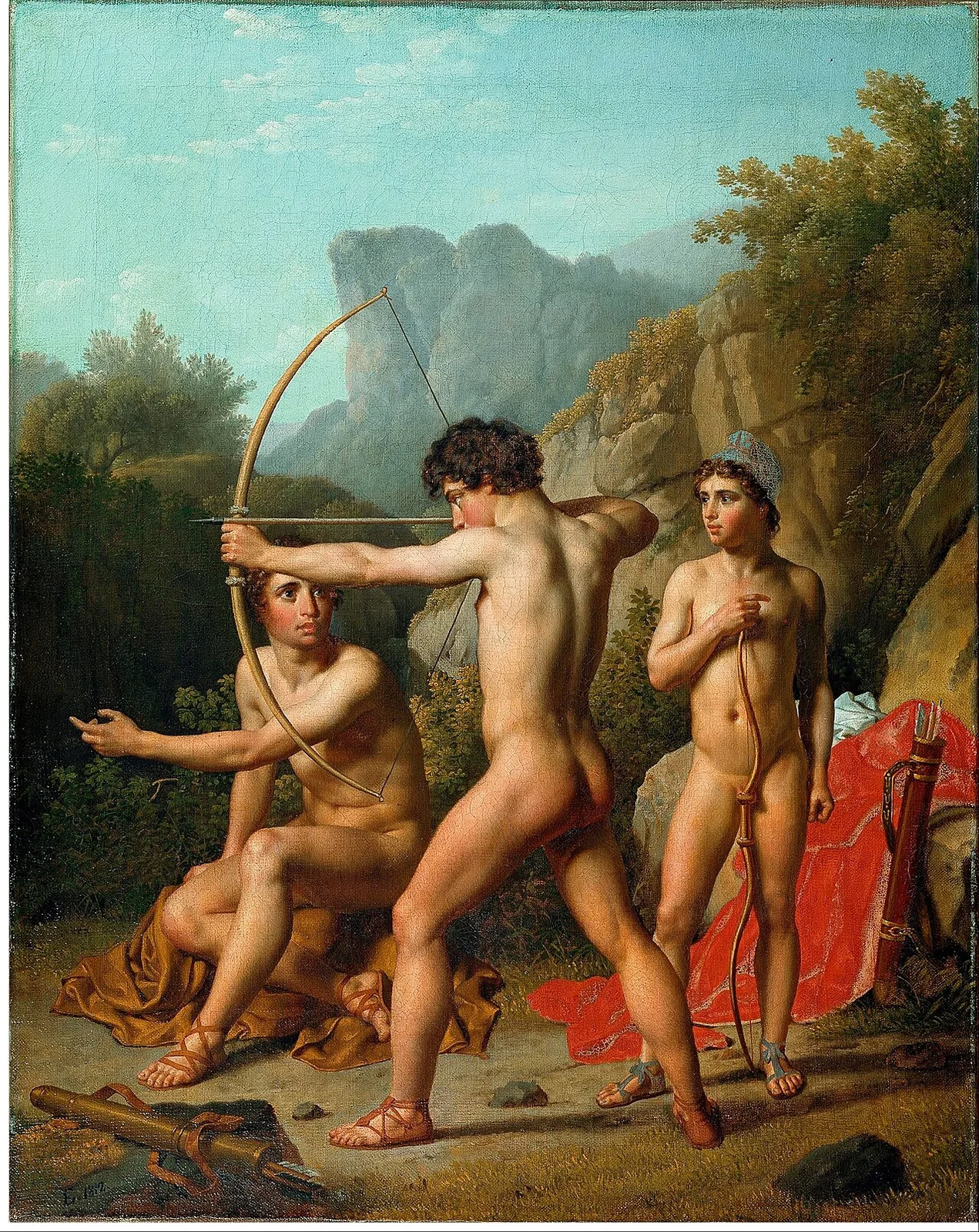
Christoffer Wilhelm Eckersberg's Three Spartan Boys Practising Archery, a later artistic reconstruction of Spartan childhood.
Christoffer Wilhelm Eckersberg; Google Art Project, via Wikimedia Commons. Public domain. ↗Public domain. License terms ↗
Attic terracotta jug showing a seated boy, fourth century BCE. This is comparative Greek imagery of childhood, not an object identified as Spartan.
The Metropolitan Museum of Art, Rogers Fund, 1941, 41.162.42. Public domain (CC0). ↗CC0 1.0 / Public domain. License terms ↗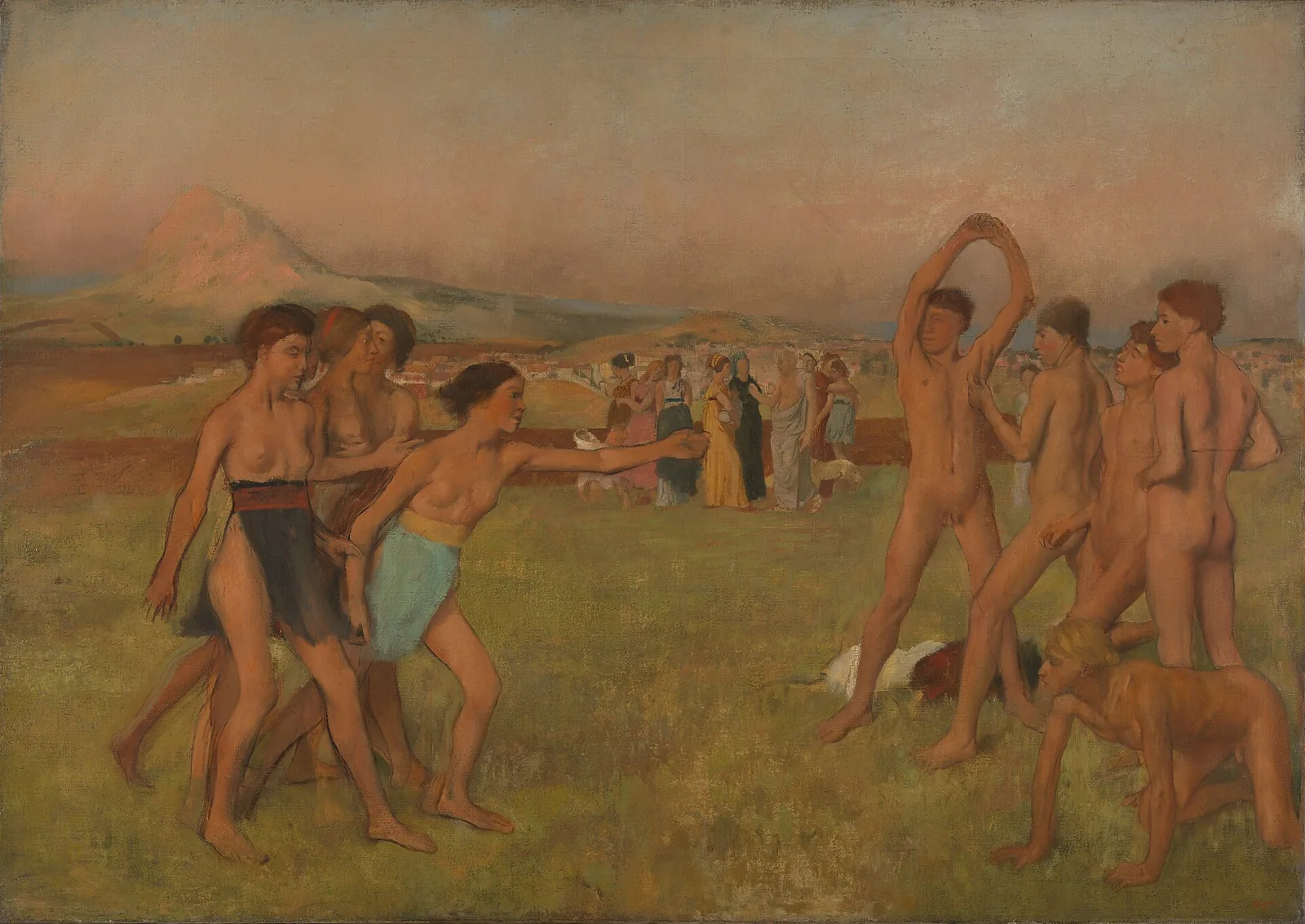
Edgar Degas's Young Spartans Exercising, about 1860. This nineteenth-century imagining of Spartan youth is not documentary evidence for the agoge.
Edgar Degas, via Wikimedia Commons. Public domain. ↗Public domain. License terms ↗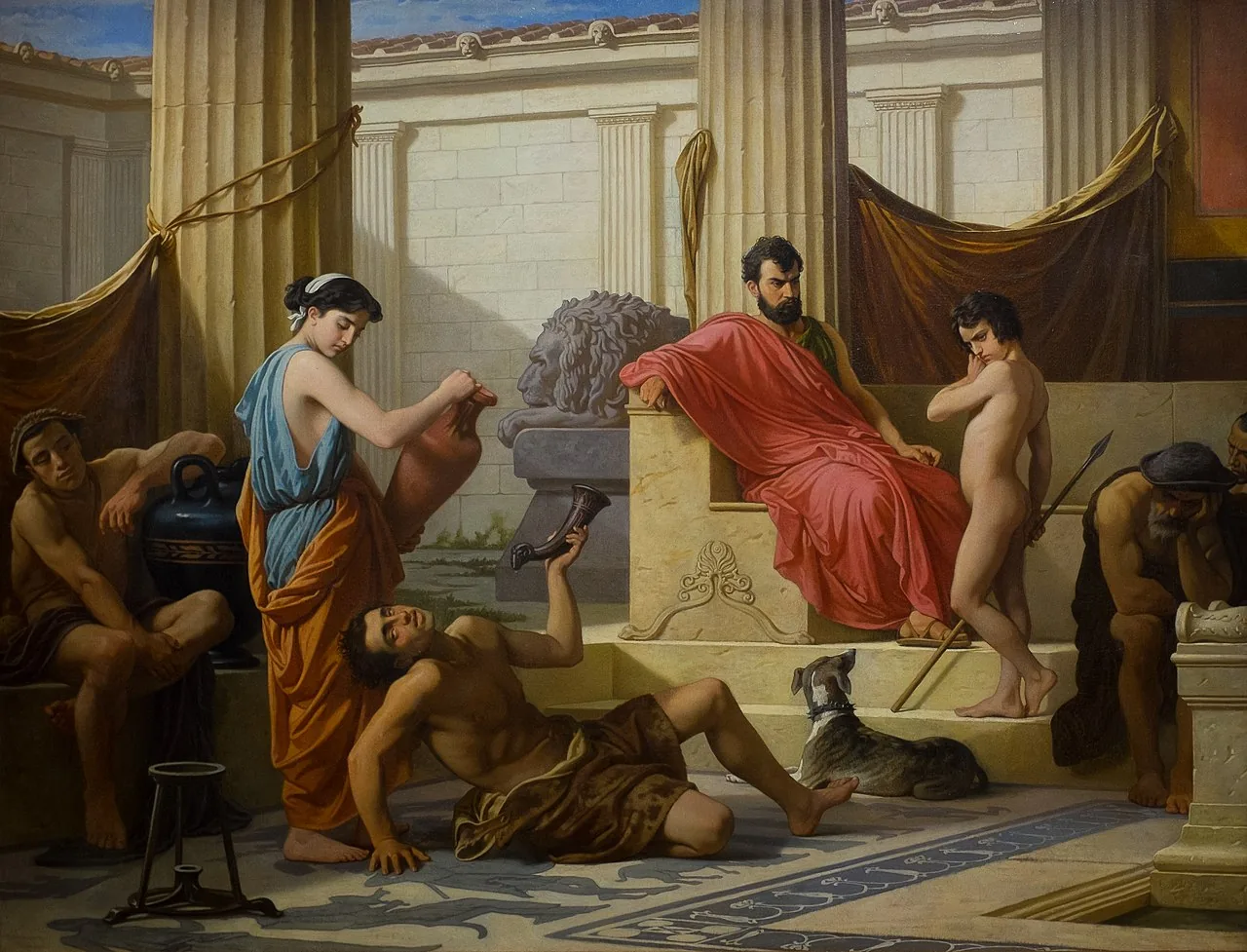
Luigi Mussini's Education in Sparta, a nineteenth-century painting shaped by ancient literary traditions and modern artistic choices.
Luigi Mussini; photograph by Pierre-Selim Huard, via Wikimedia Commons. Public domain. ↗Public domain. License terms ↗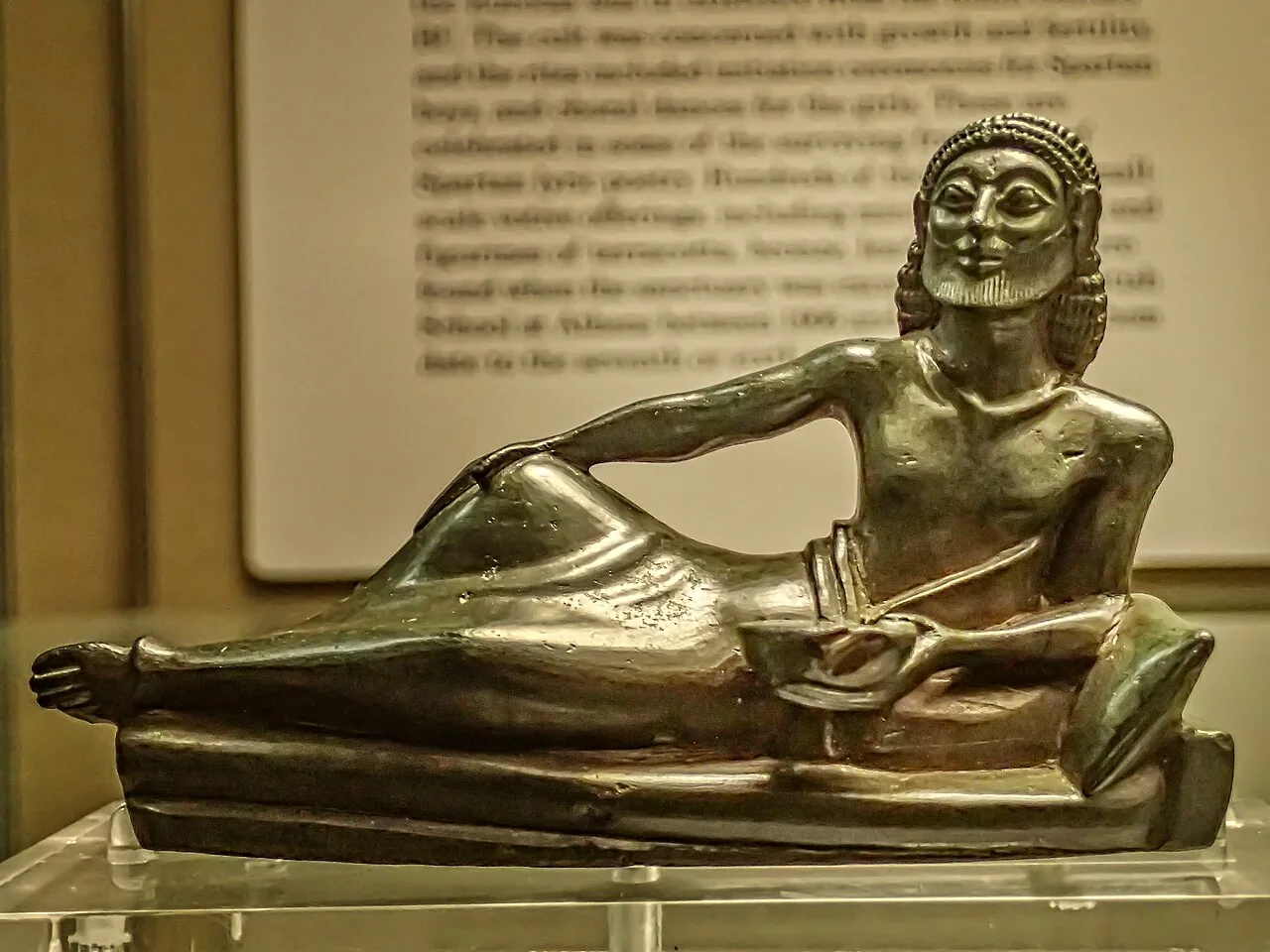
Laconian bronze banqueter from a bowl support, about 530–500 BCE, found at Dodona. Banquet imagery supplies context for communal dining; the object does not depict a documented syssition.
Mary Harrsch, via Wikimedia Commons. CC BY-SA 4.0. ↗CC BY-SA 4.0. License terms ↗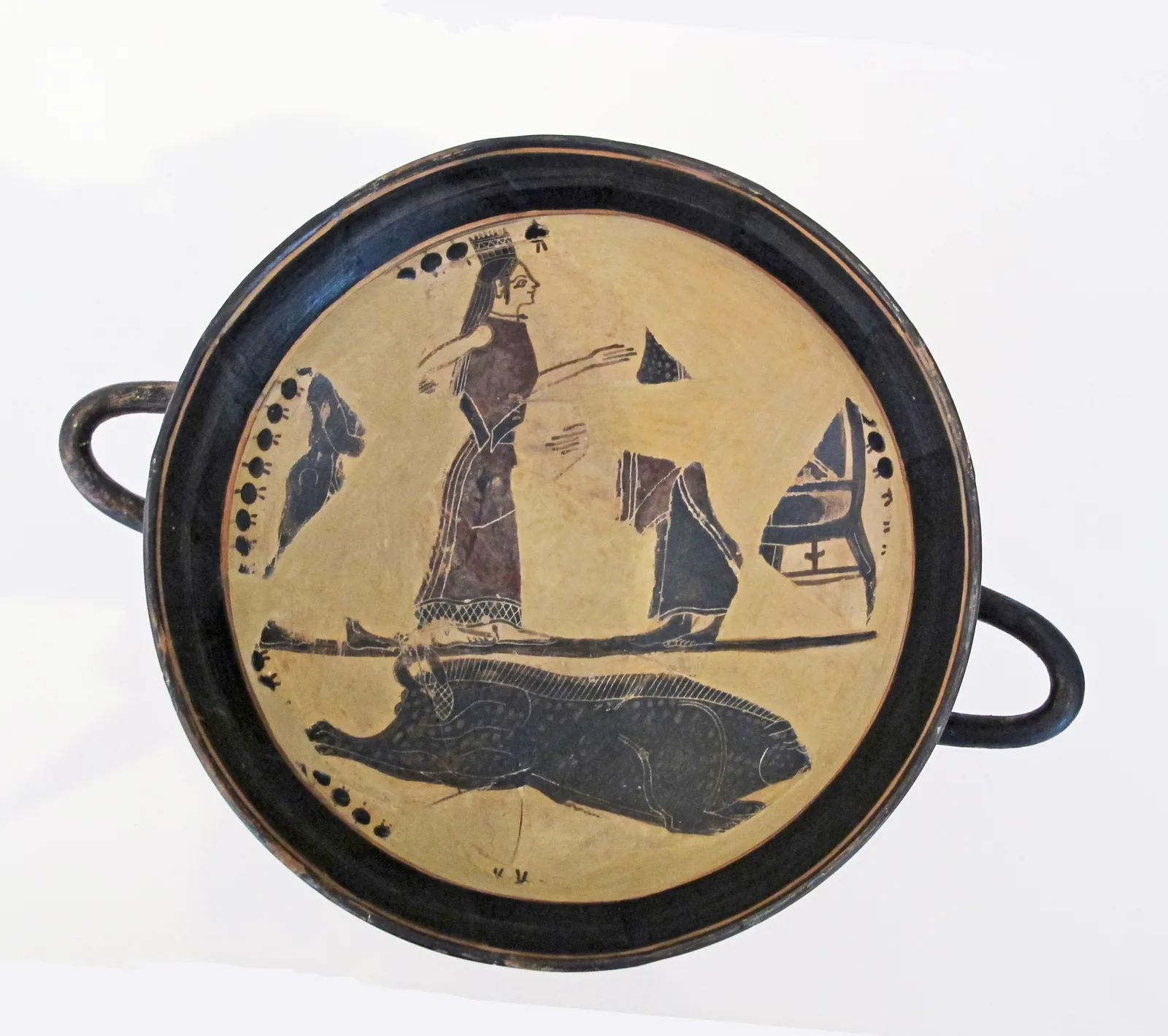
Laconian drinking cup, attributed to the Boreads Painter, ca. 570–560 BCE. Its interior depicts the apotheosis of Herakles. Drinking vessels provide material context for dining; this scene does not show a syssition.
The Metropolitan Museum of Art, Rogers Fund, 1950, 50.11.7. Public domain (CC0). ↗Public domain; The Met Open Access, Creative Commons Zero (CC0). License terms ↗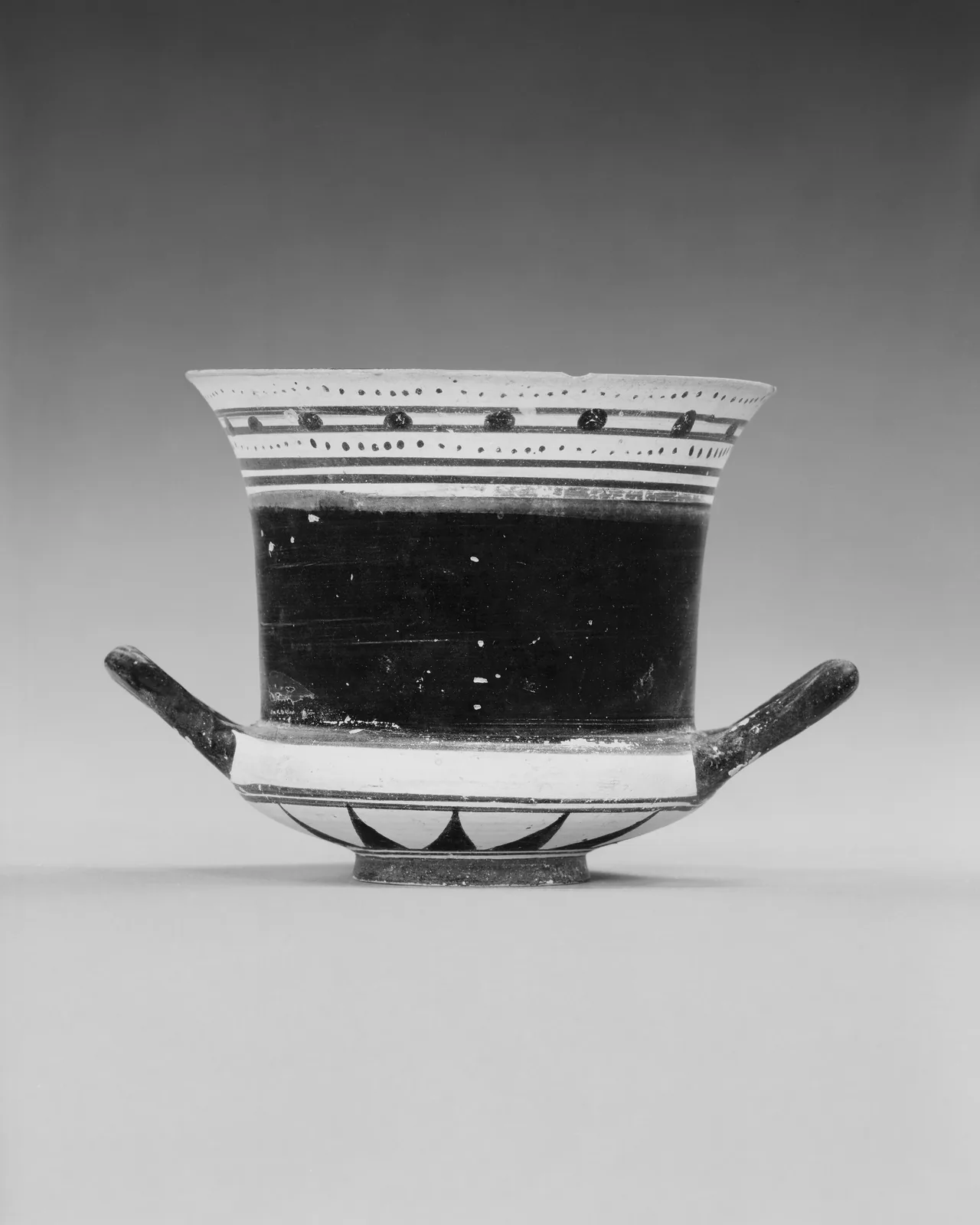
Laconian terracotta lekaina, a two-handled drinking cup, sixth century BCE.
The Metropolitan Museum of Art, The Bothmer Purchase Fund, 1986, 1986.11.7. Public domain (CC0). ↗CC0 1.0 / Public domain. License terms ↗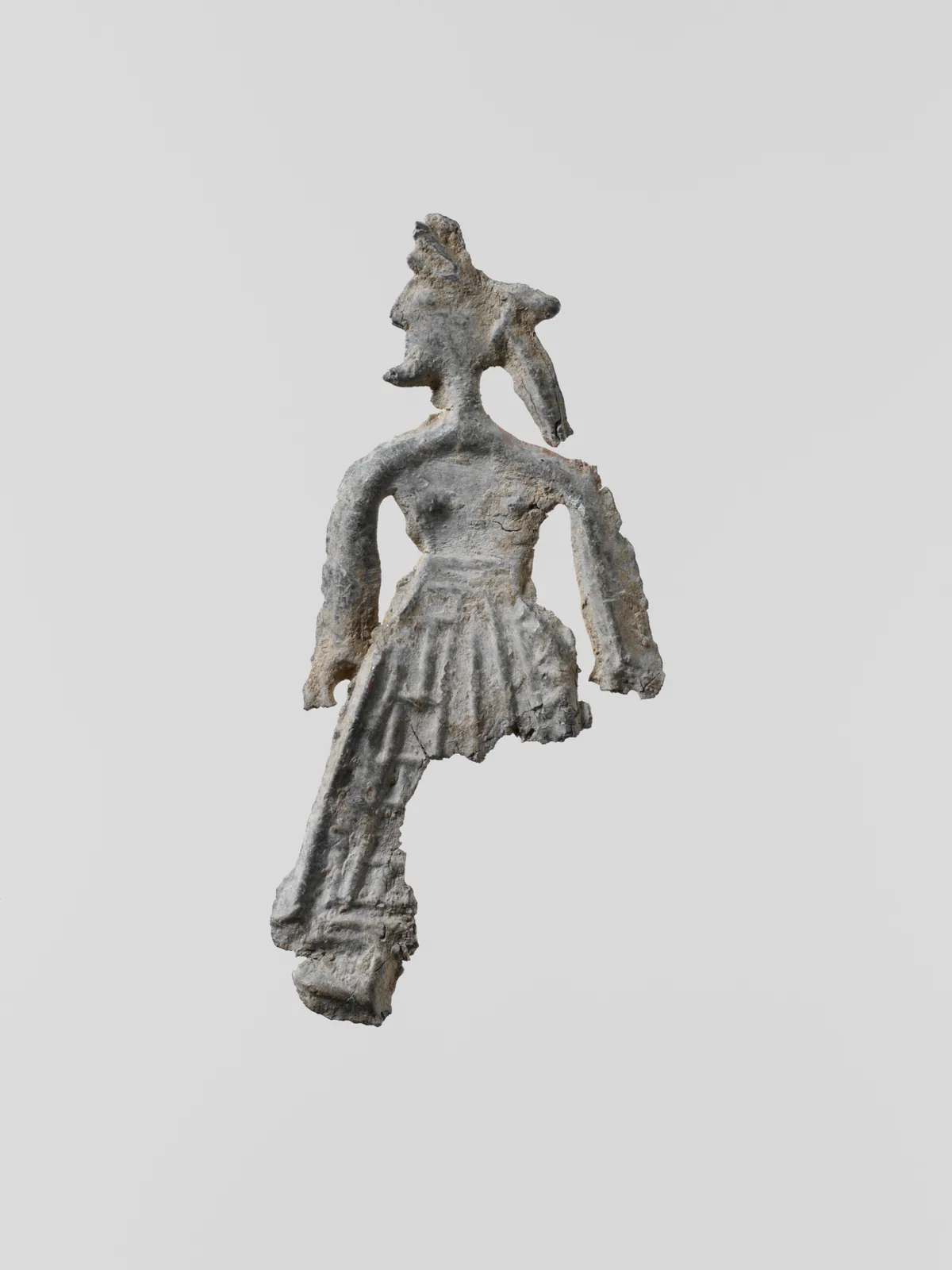
Laconian lead figure of a woman, late seventh–sixth century BCE, showing the stylized dress of a votive figure.
The Metropolitan Museum of Art, Gift of A. J. B. Wace, 1924, 24.195.11. Public domain (CC0). ↗CC0 1.0 / Public domain. License terms ↗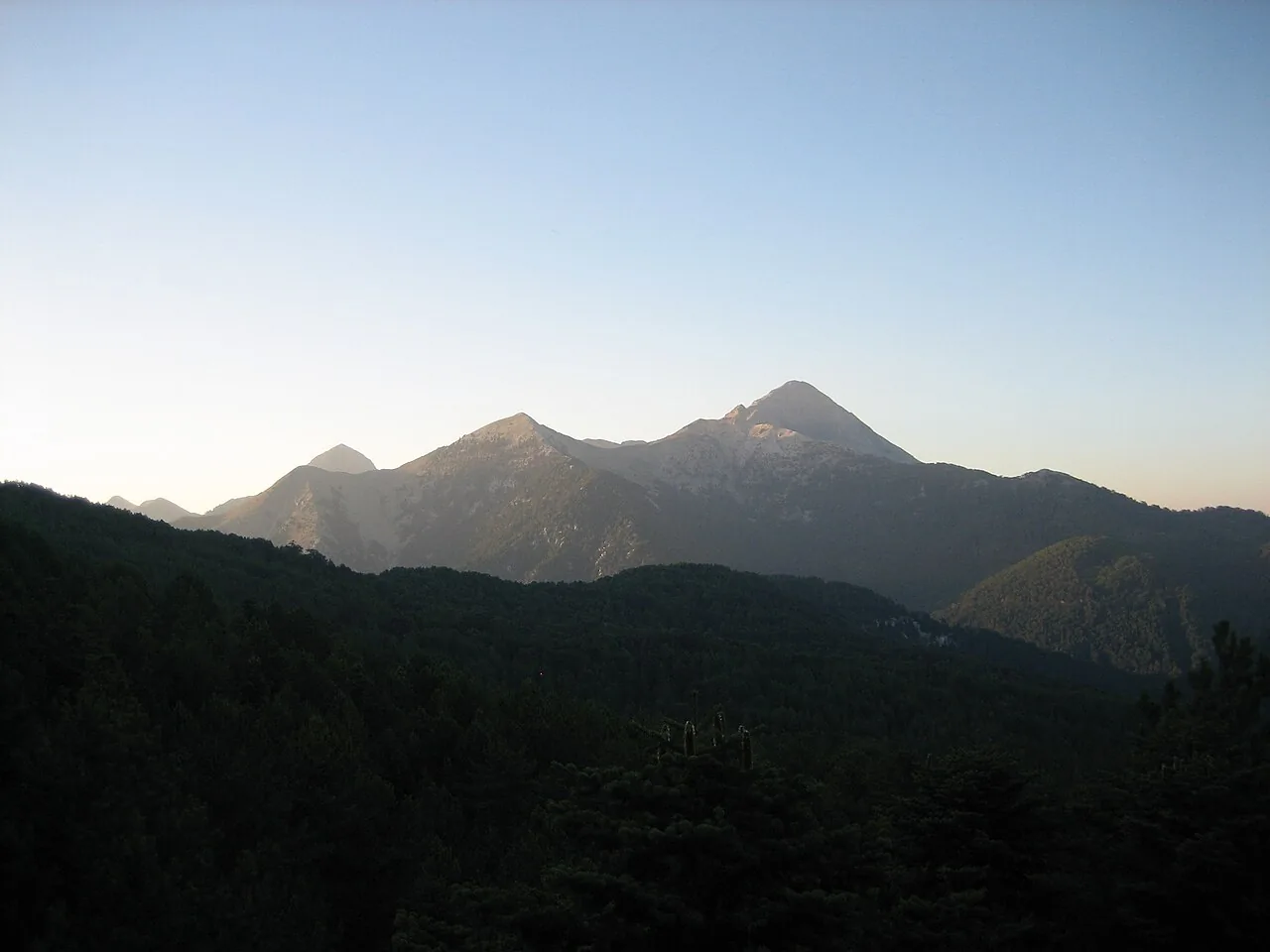
Mount Taygetus seen from the Vassiliki forest. This modern photograph provides Laconian landscape context; it does not identify a known location of krypteia activity.
Athens2004, via Wikimedia Commons. CC BY-SA 3.0. ↗CC BY-SA 3.0. License terms ↗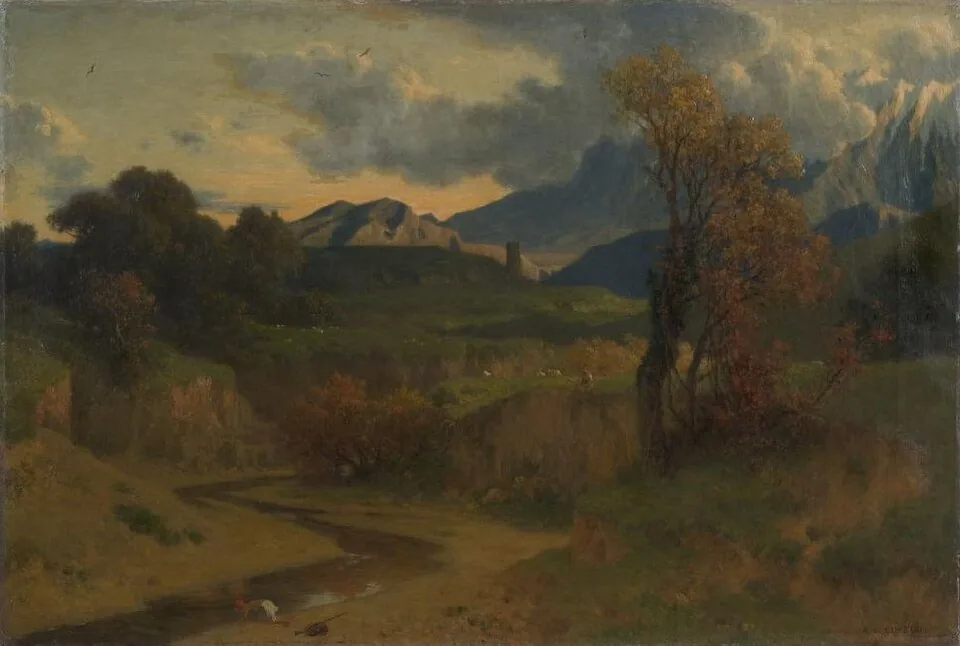
A historical view of the countryside around Sparta. It supplies landscape context for accounts of the krypteia; no known ancient illustration securely depicts that institution.
Alfred de Curzon, via Wikimedia Commons. Public domain. ↗Public domain. License terms ↗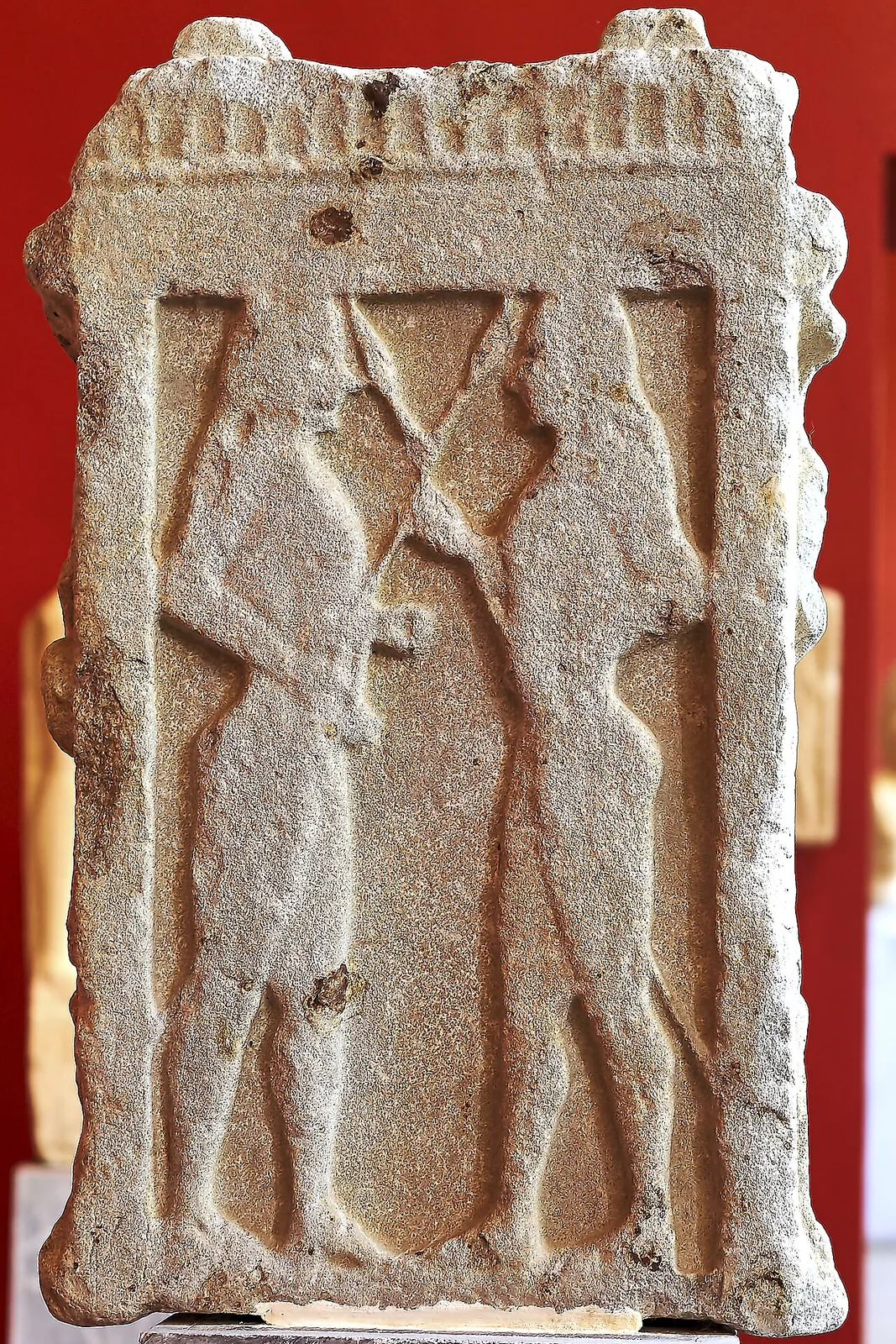
Spartan votive relief of the Dioscuri, about 575–550 BCE. The divine twins were important to Spartan religion and royal symbolism; the relief does not portray two historical kings.
George E. Koronaios, via Wikimedia Commons. CC BY-SA 4.0. ↗CC BY-SA 4.0. License terms ↗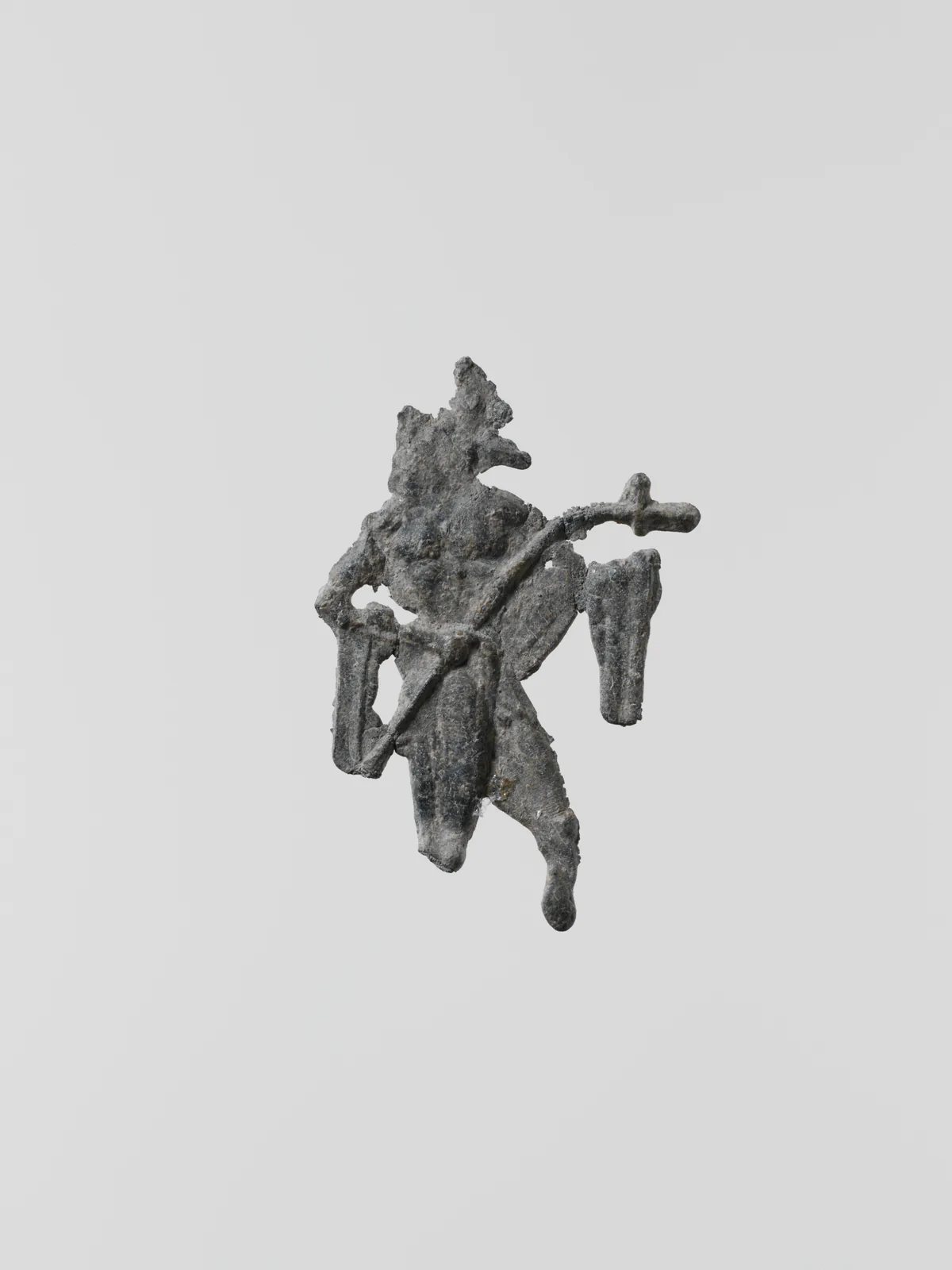
Laconian lead figure of a man holding a spear or scepter, sixth–fifth century BCE. The ambiguous attribute illustrates the limits of identifying royal authority in surviving figurines.
The Metropolitan Museum of Art, Gift of A. J. B. Wace, 1924, 24.195.90. Public domain (CC0). ↗CC0 1.0 / Public domain. License terms ↗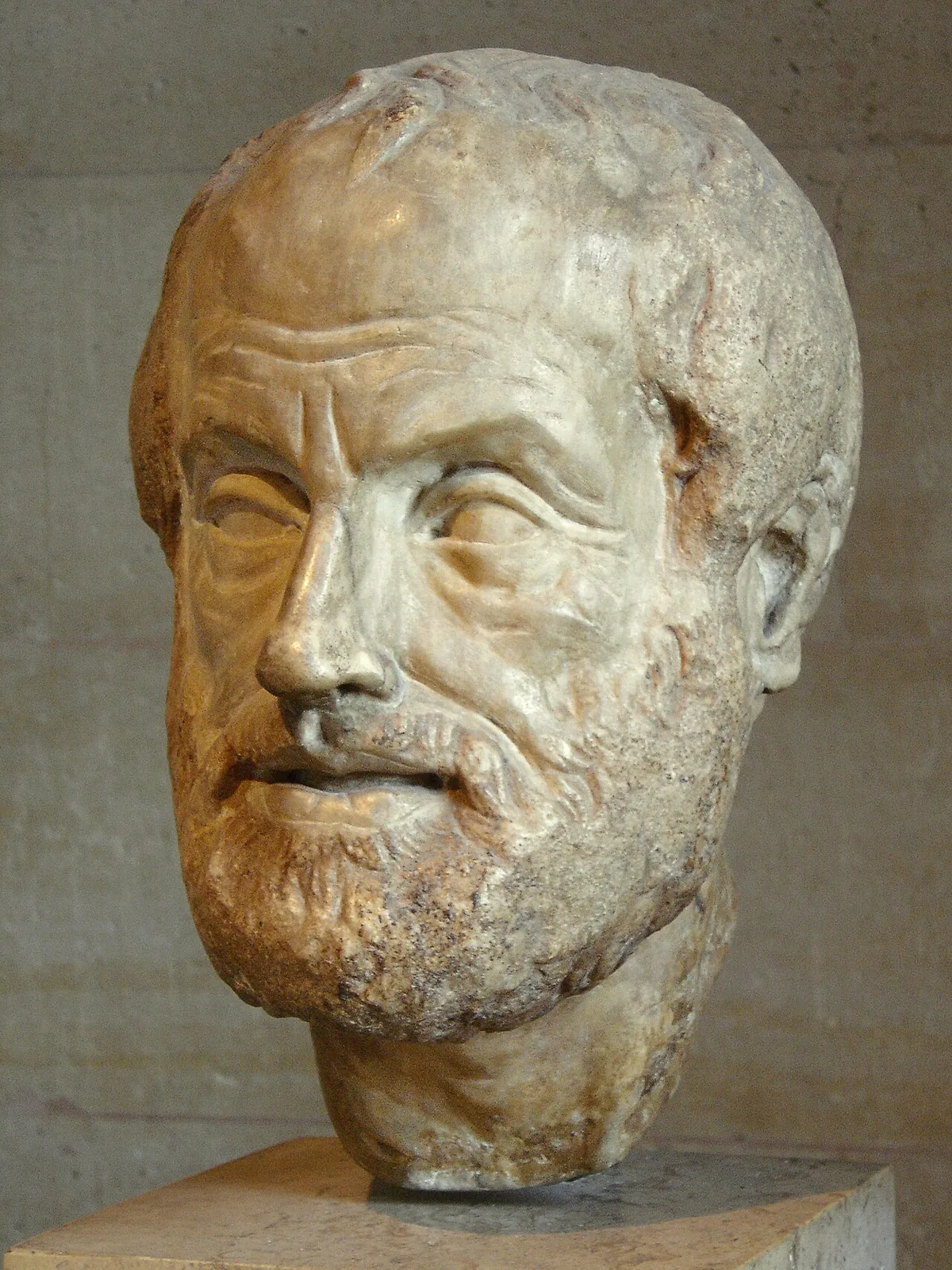
Roman marble portrait of Aristotle after a Greek original. Aristotle's Politics is a major critical source for Sparta's council of elders and constitution.
Eric Gaba (User:Sting), via Wikimedia Commons. CC BY-SA 2.5. ↗CC BY-SA 2.5. License terms ↗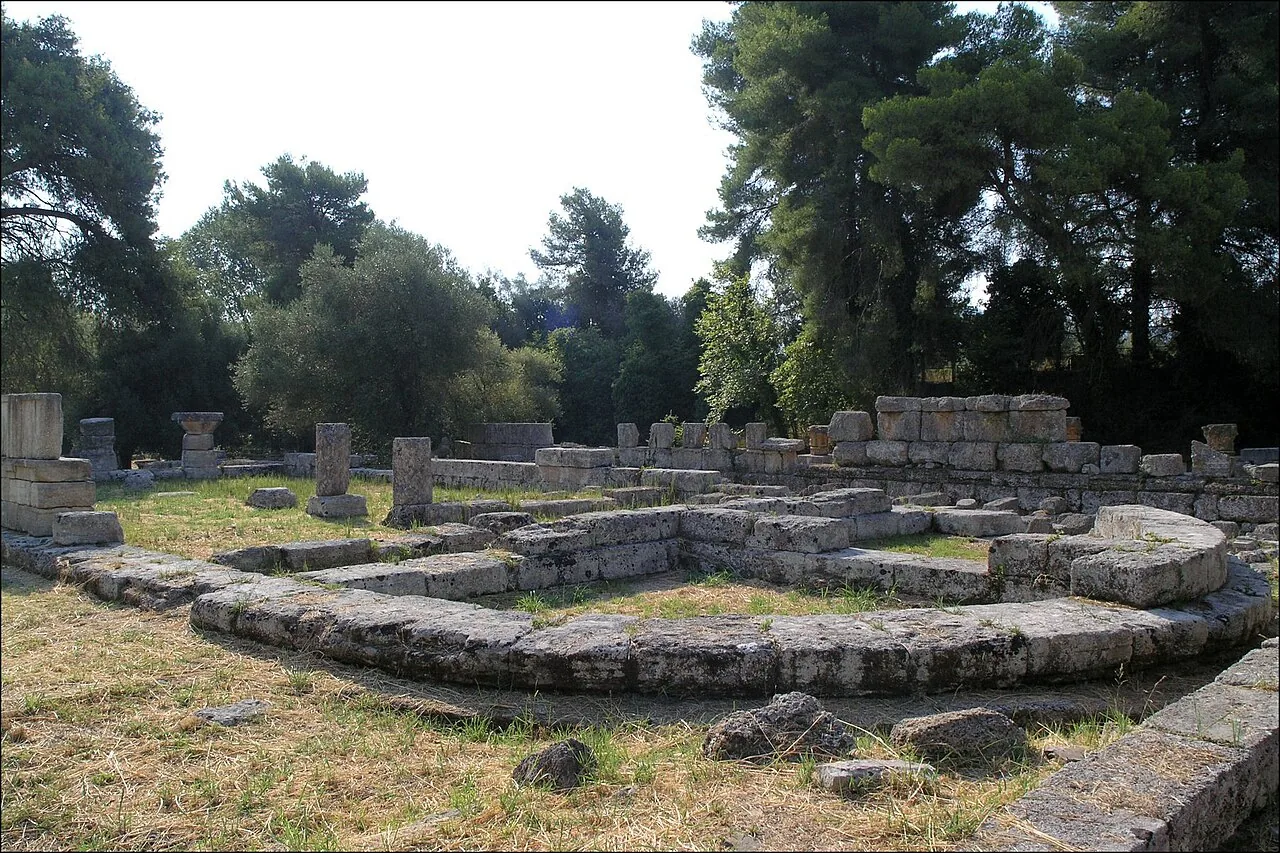
The council-house remains at Olympia. This is comparative evidence for Greek civic architecture, not the meeting place of Sparta's Gerousia.
Matěj Baťha, via Wikimedia Commons. CC BY-SA 2.5. ↗CC BY-SA 2.5. License terms ↗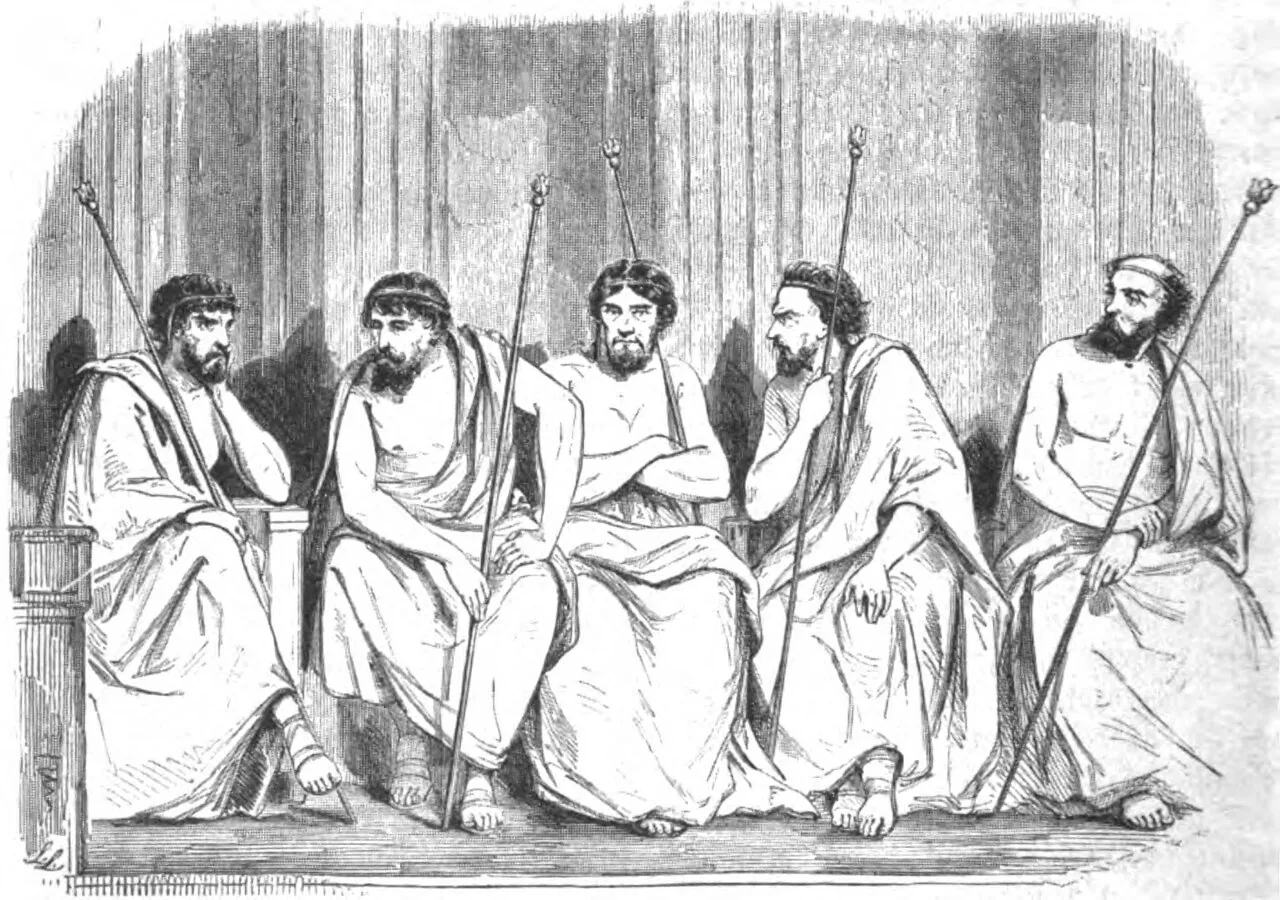
Nineteenth-century engraving of the Spartan Ephors. This is a later visualization of the magistrates and their authority, not an ancient portrait.
Ludwig Löffler., via Wikimedia Commons. Public domain. ↗Public domain. License terms ↗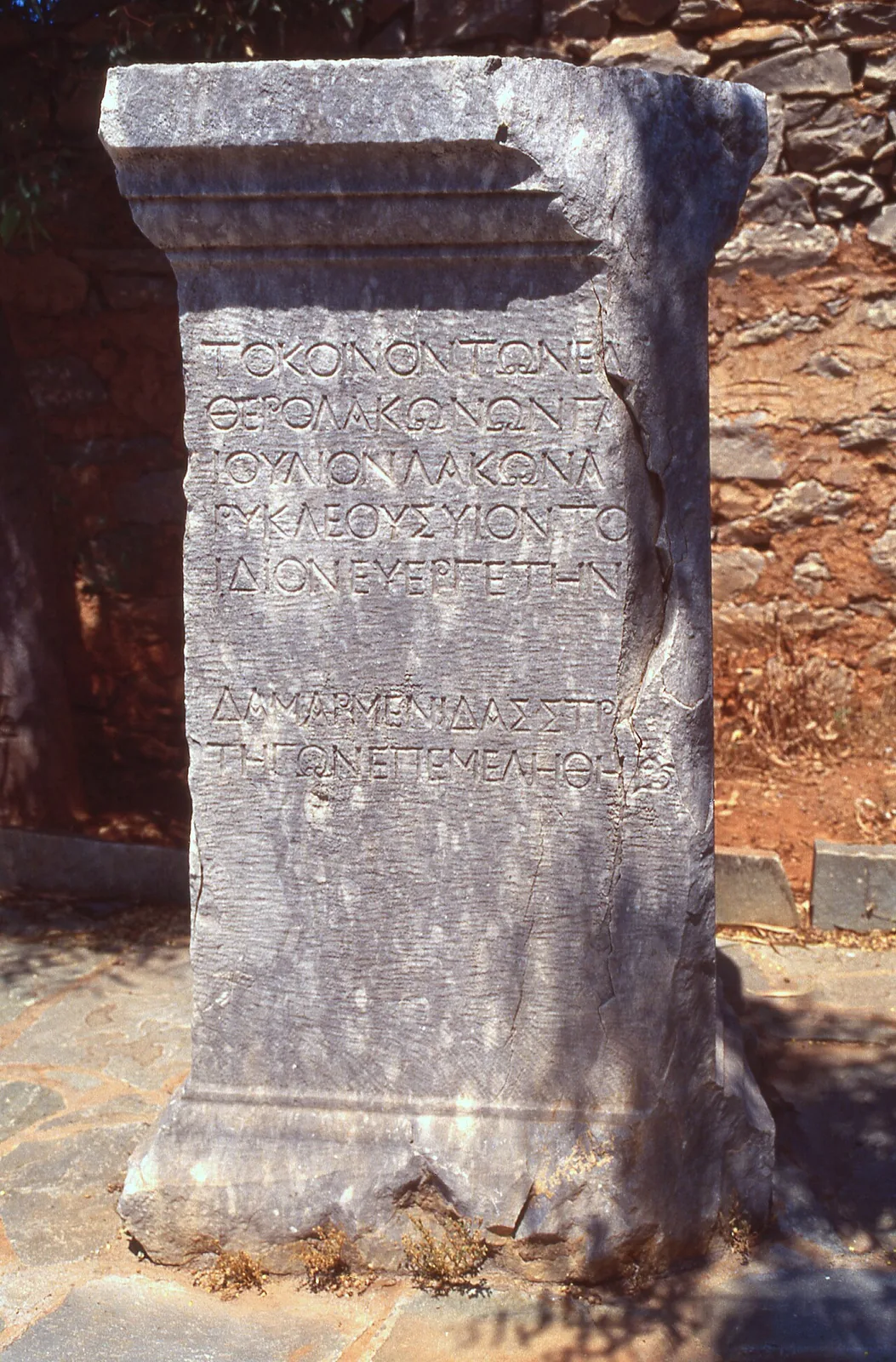
Early Roman-era inscription honoring Gaius Iulius Lakon, erected by the community of the Eleutherolakones. It illustrates later Laconian public institutions, not the board of Classical Spartan Ephors.
Mark Landon, via Wikimedia Commons. CC BY 4.0. ↗CC BY 4.0. License terms ↗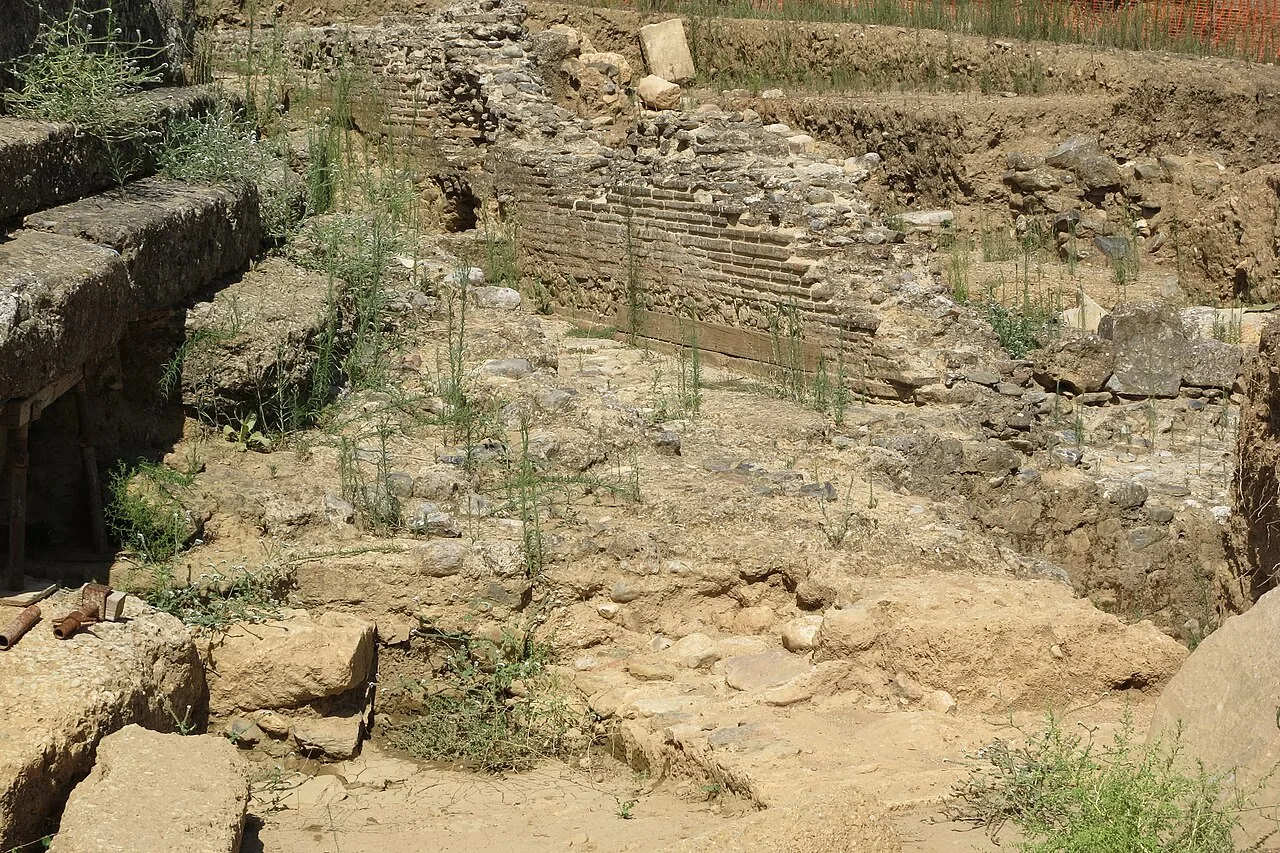
Excavated buildings in the acropolis area of ancient Sparta. They provide civic landscape context and are not securely identified here as the assembly's meeting place.
StanTravels, via Wikimedia Commons. CC BY-SA 4.0. ↗CC BY-SA 4.0. License terms ↗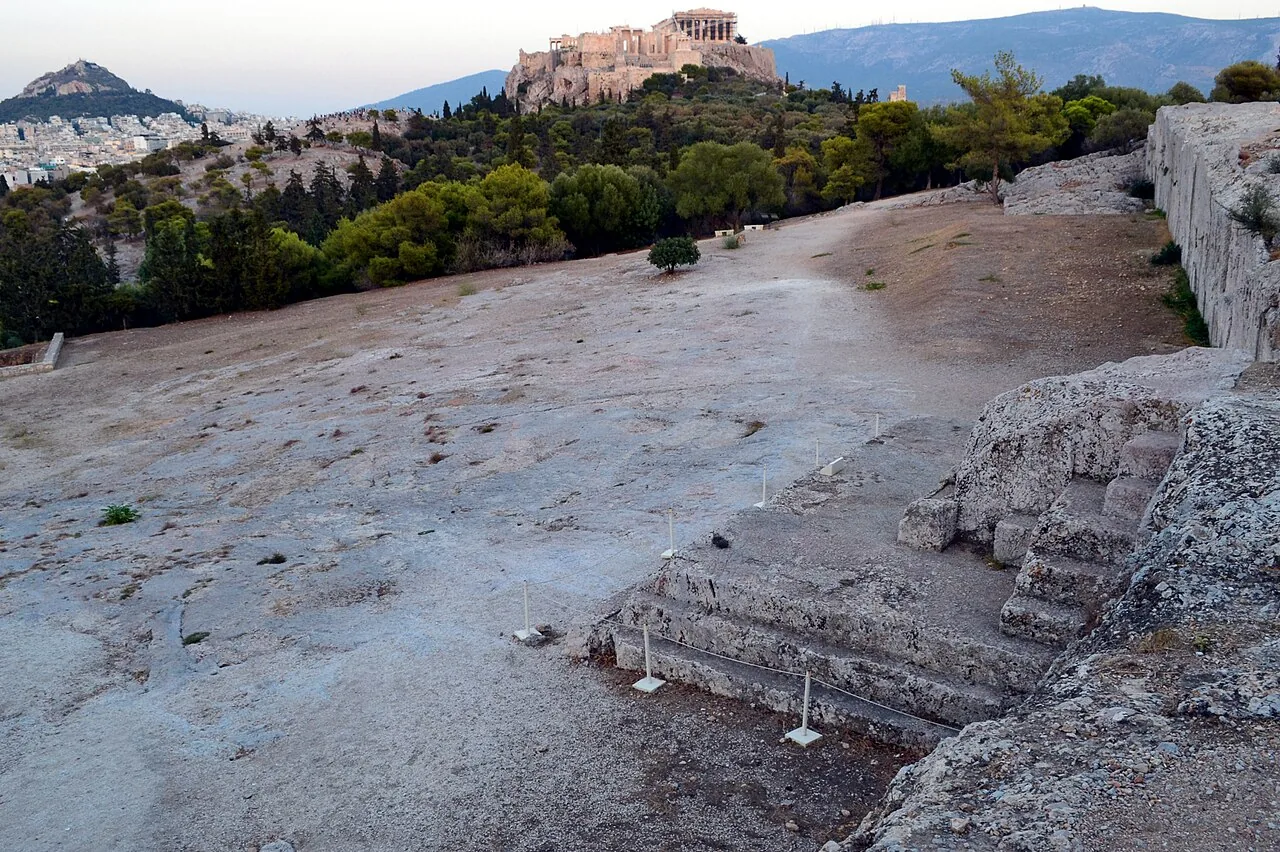
The Pnyx and speaker's platform at Athens. This is a comparative Greek assembly site; Sparta's assembly had different institutions and did not meet here.
GeorgeKokkos, via Wikimedia Commons. CC BY-SA 4.0. ↗CC BY-SA 4.0. License terms ↗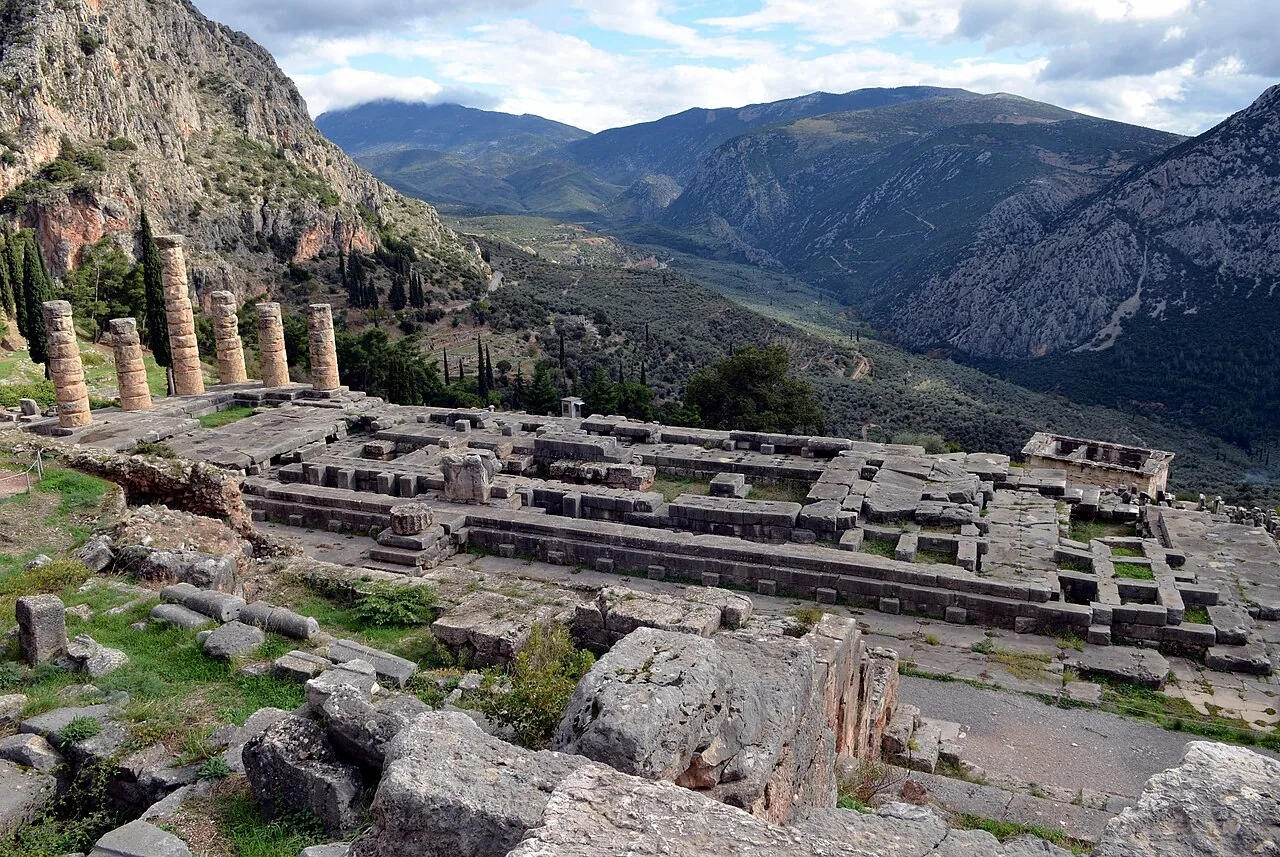
The temple of Apollo at Delphi. Ancient tradition connected the Great Rhetra with Delphic authority; the surviving ruins are later than the Rhetra's proposed origins.
Jason M Ramos, via Wikimedia Commons. CC BY 2.0. ↗CC BY 2.0. License terms ↗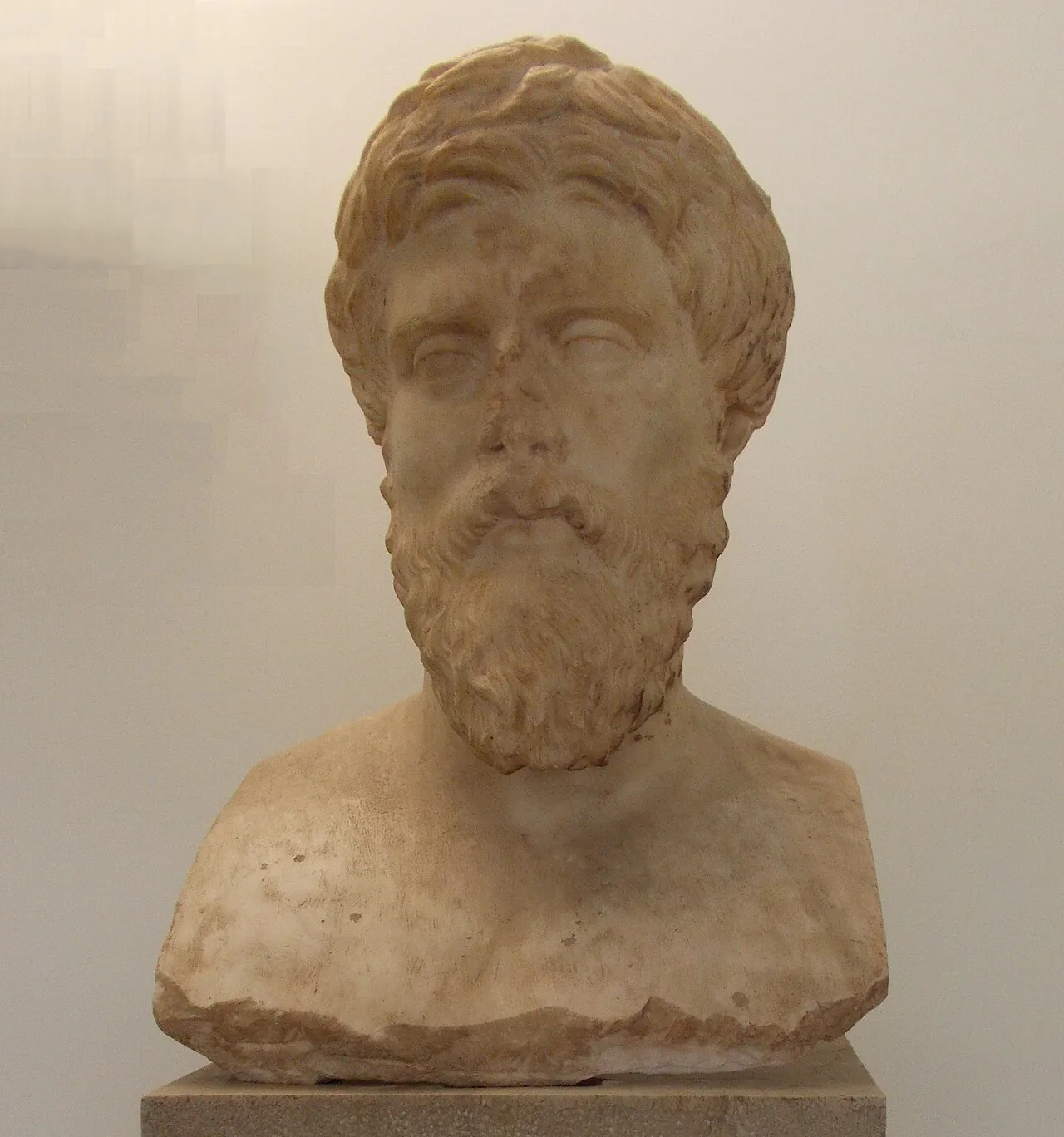
Bust at Delphi sometimes identified as Plutarch. His Life of Lycurgus preserves the best-known version of the Great Rhetra, many centuries after its proposed formation.
Odysses, via Wikimedia Commons. CC BY-SA 4.0. ↗CC BY-SA 4.0. License terms ↗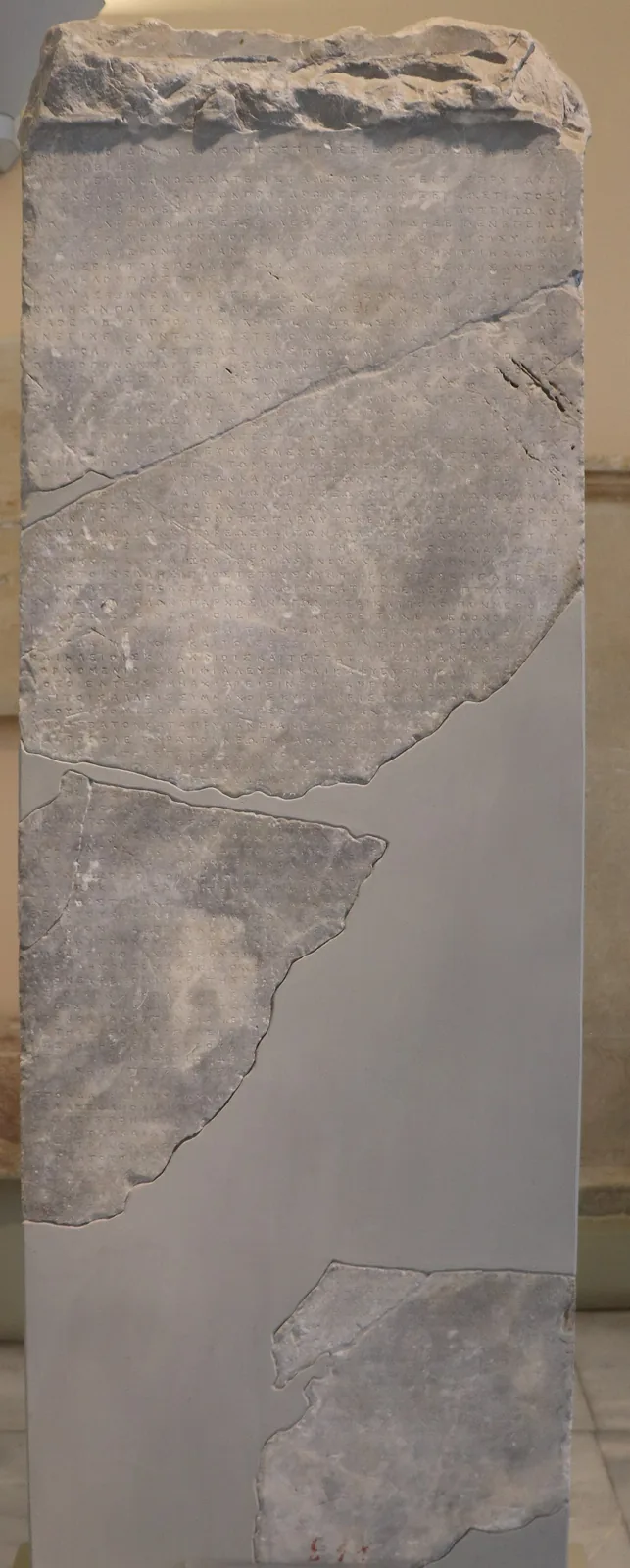
Inscribed treaty between Athens and Sparta from the third century BCE. The later document provides context for civic identity and interstate obligations.
Furius, via Wikimedia Commons. CC BY-SA 4.0. ↗CC BY-SA 4.0. License terms ↗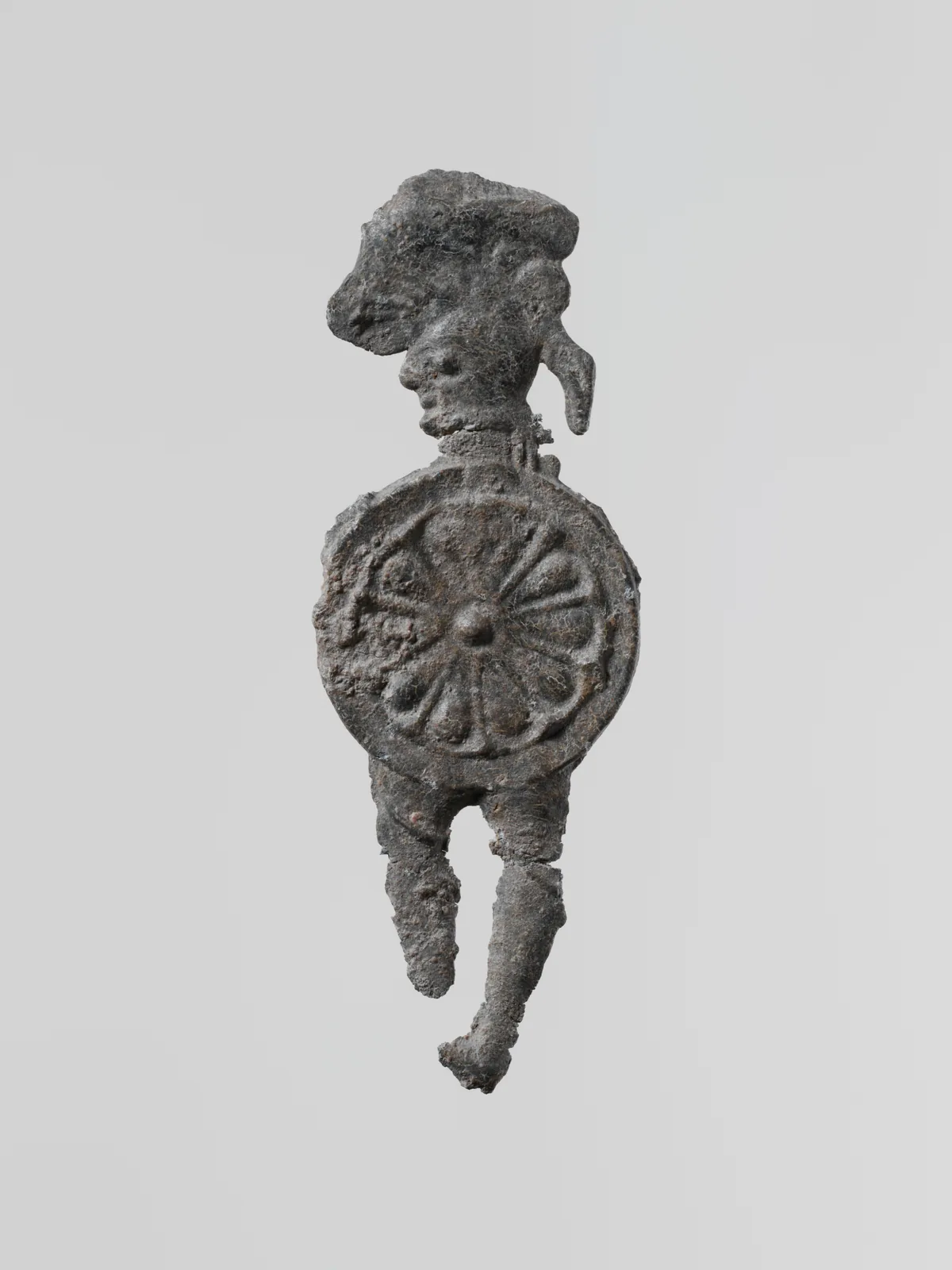
Laconian lead warrior with helmet and shield, sixth–fifth century BCE. Military imagery is relevant to citizen ideals, although the object does not identify a specific citizen.
The Metropolitan Museum of Art, Gift of A. J. B. Wace, 1924, 24.195.62. Public domain (CC0). ↗CC0 1.0 / Public domain. License terms ↗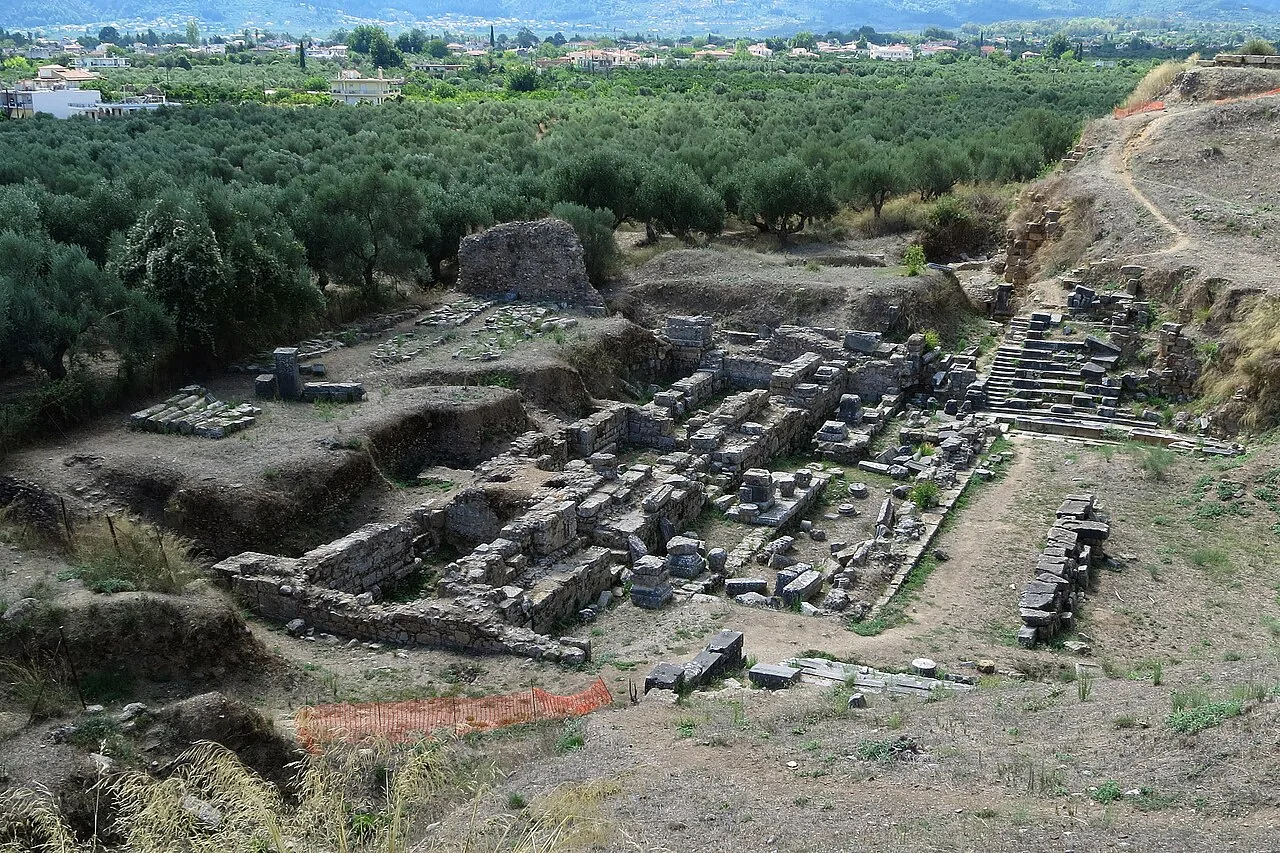
Sparta's ancient theatre beside an extensive modern olive grove. The image shows the agricultural landscape around the ancient city; it does not document Classical landholdings.
StanTravels, via Wikimedia Commons. CC BY-SA 4.0. ↗CC BY-SA 4.0. License terms ↗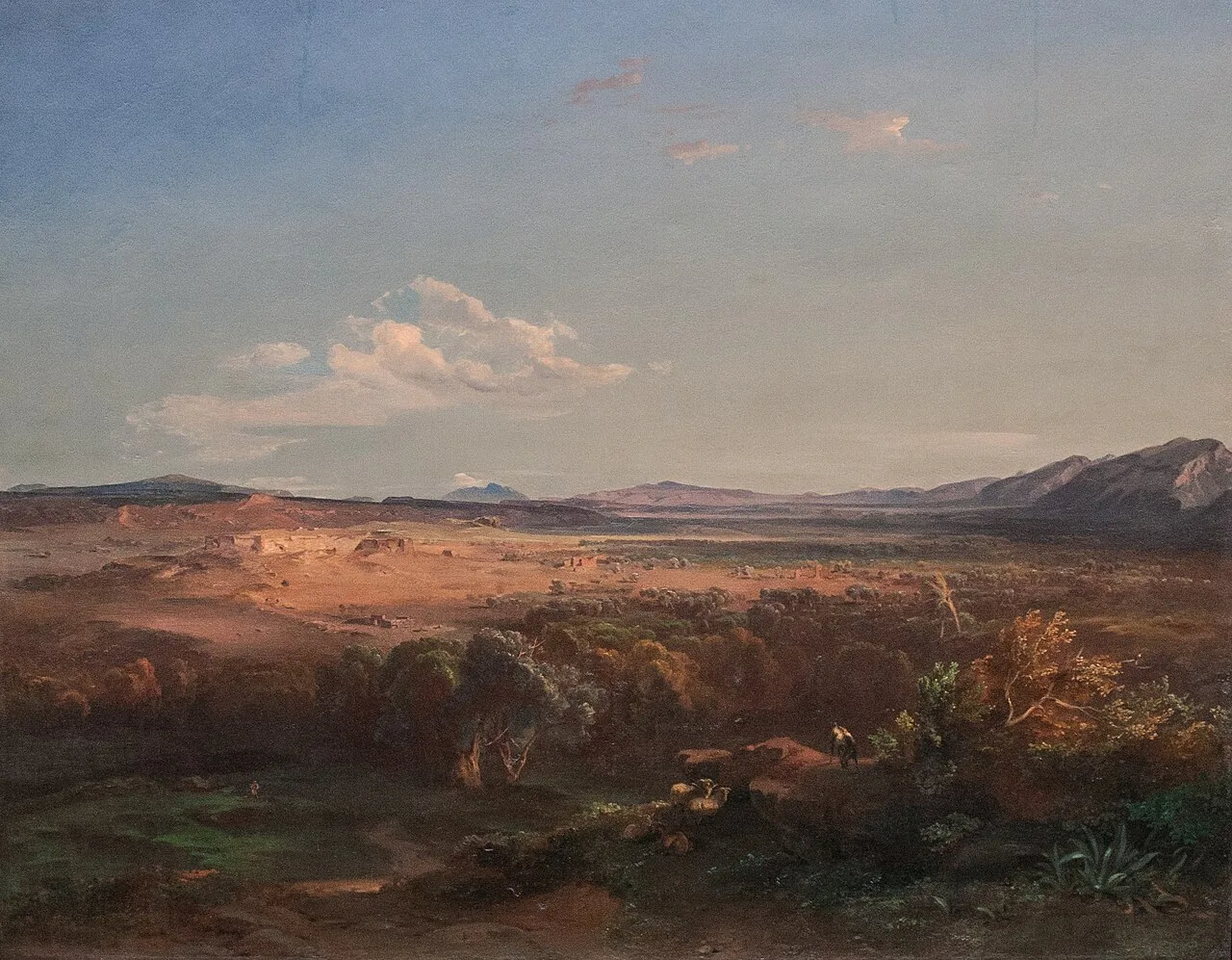
Carl Rottmann's Sparta Plain, 1841. A nineteenth-century landscape painting of the agricultural setting around Sparta.
Carl Rottmann, via Wikimedia Commons. Public domain. ↗Public domain. License terms ↗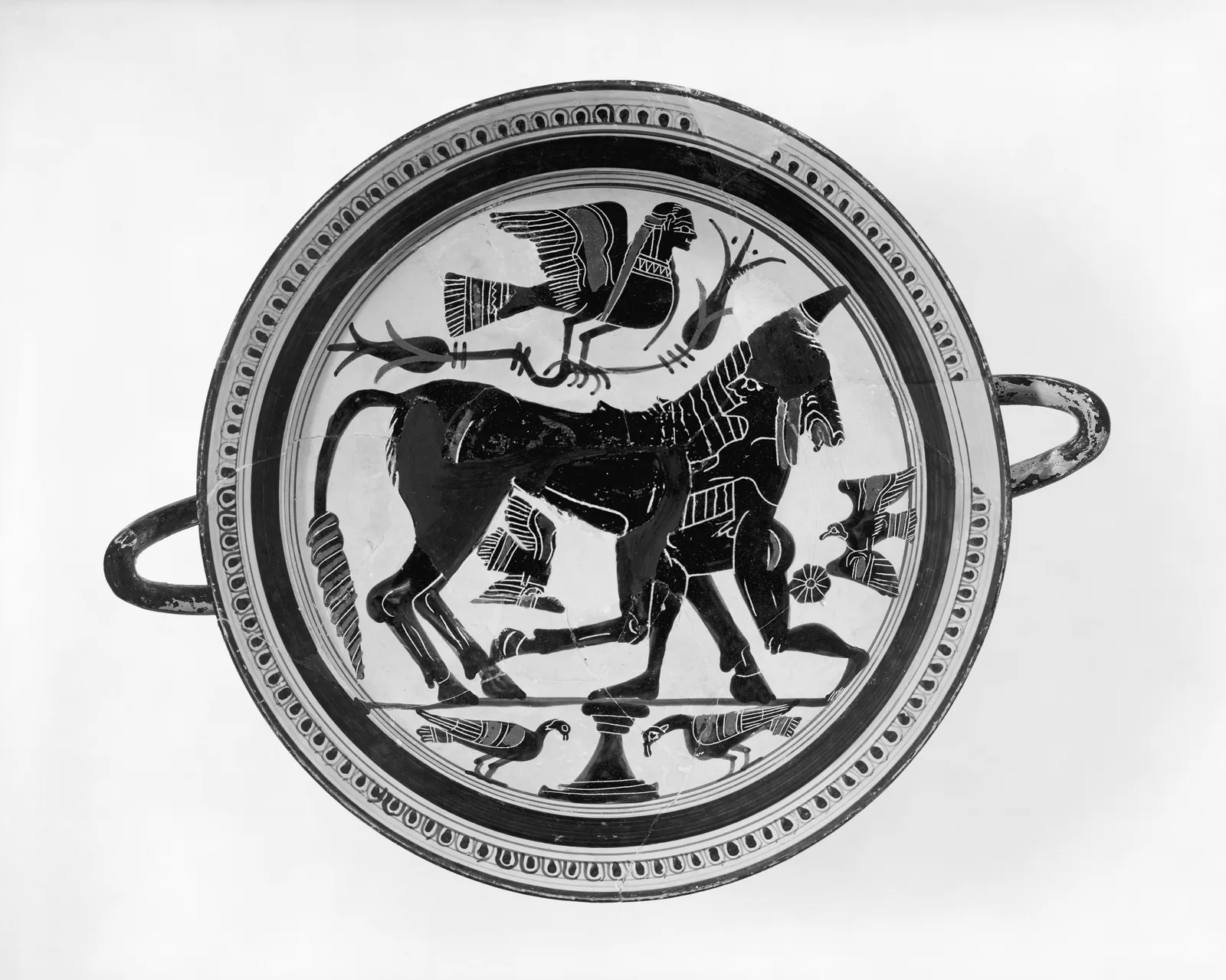
Laconian terracotta drinking cup, about 550 BCE. Decorated Laconian pottery provides material context for exchange and specialist production.
The Metropolitan Museum of Art, Gift of N. Koutoulakis, 1959, 59.15. Public domain (CC0). ↗CC0 1.0 / Public domain. License terms ↗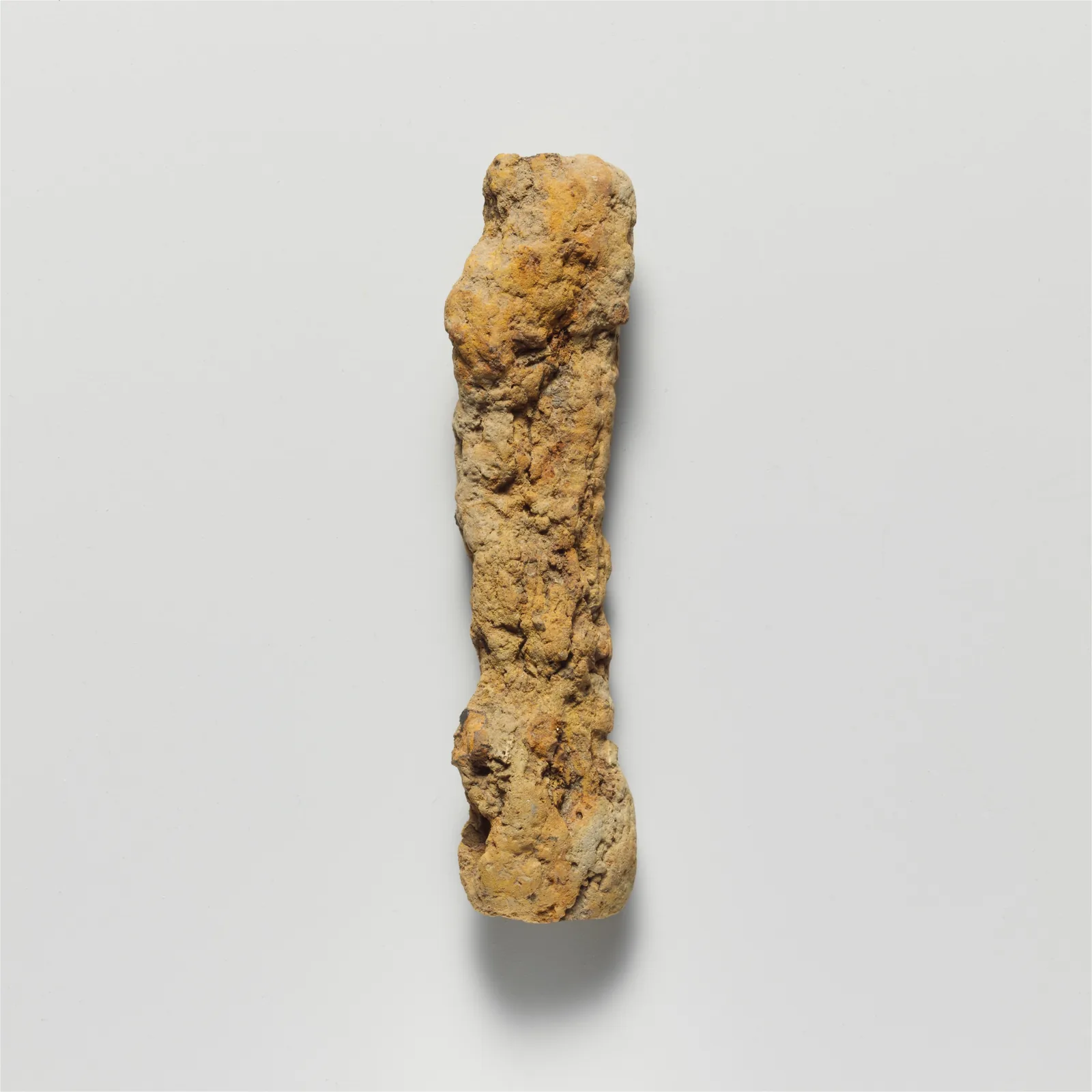
An iron bar identified by The Met as Laconian, tentatively dated to the seventh–fifth century BCE. It should not be treated as proof that this particular object was Spartan currency.
The Metropolitan Museum of Art, Gift of A. J. B. Wace, 1924, 24.195.184. Public domain (CC0). ↗CC0 1.0 / Public domain. License terms ↗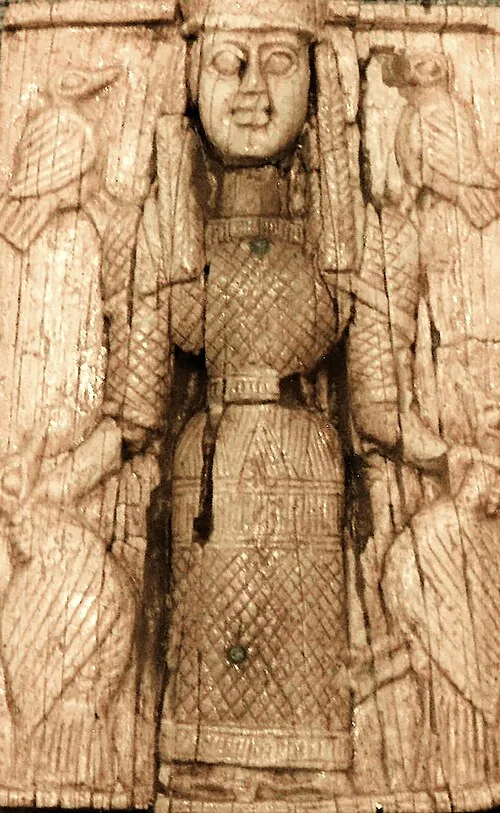
Archaic ivory votive from Sparta's sanctuary of Artemis Orthia, depicting the goddess as mistress of animals; National Archaeological Museum, Athens.
User:Marsyas, via Wikimedia Commons. CC BY-SA 2.5. ↗CC BY-SA 2.5. License terms ↗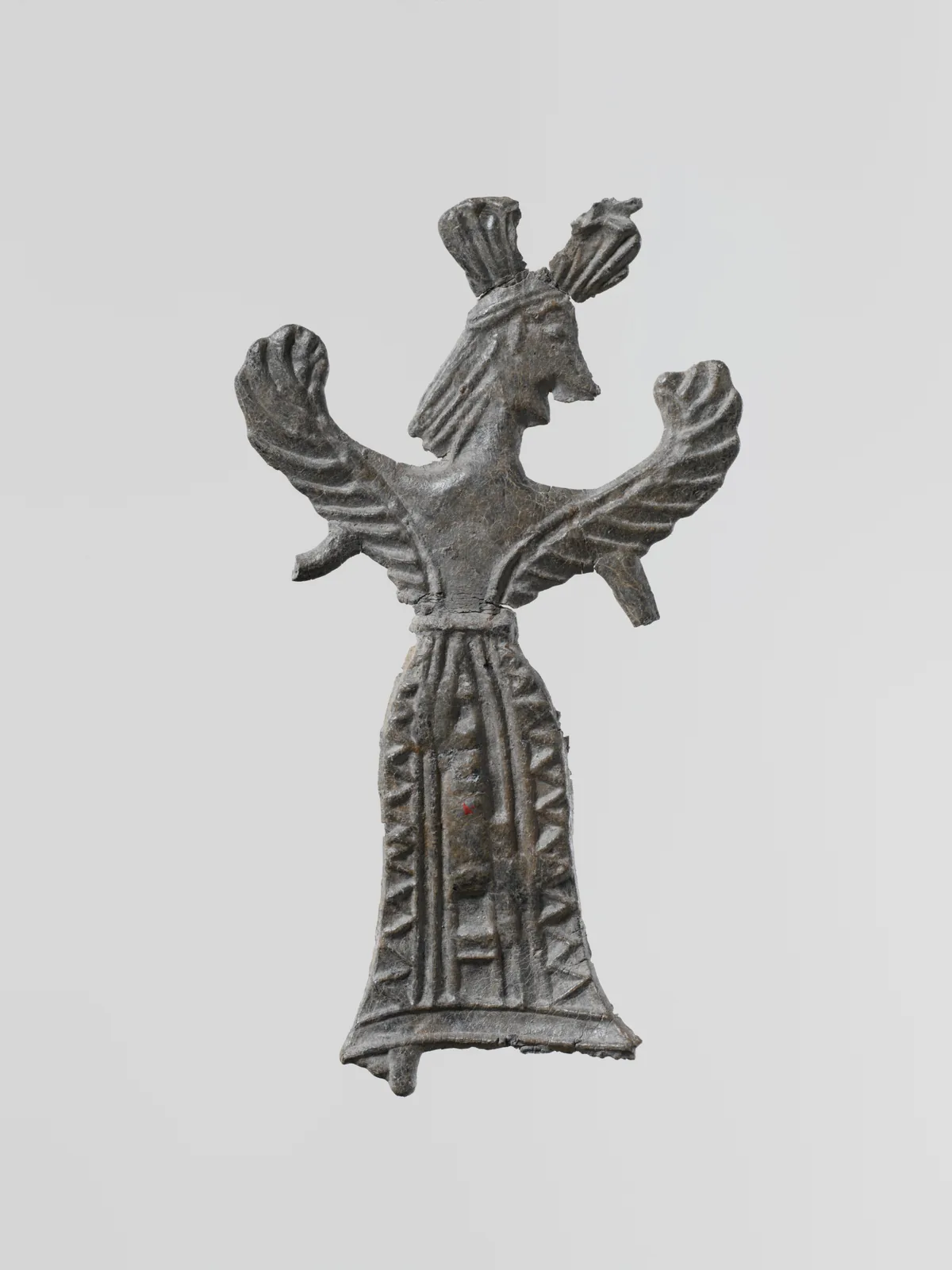
Laconian lead figure of a winged goddess, late seventh–early sixth century BCE, from the votive tradition associated with Sparta's sanctuaries.
The Metropolitan Museum of Art, Gift of A. J. B. Wace, 1924, 24.195.4. Public domain (CC0). ↗CC0 1.0 / Public domain. License terms ↗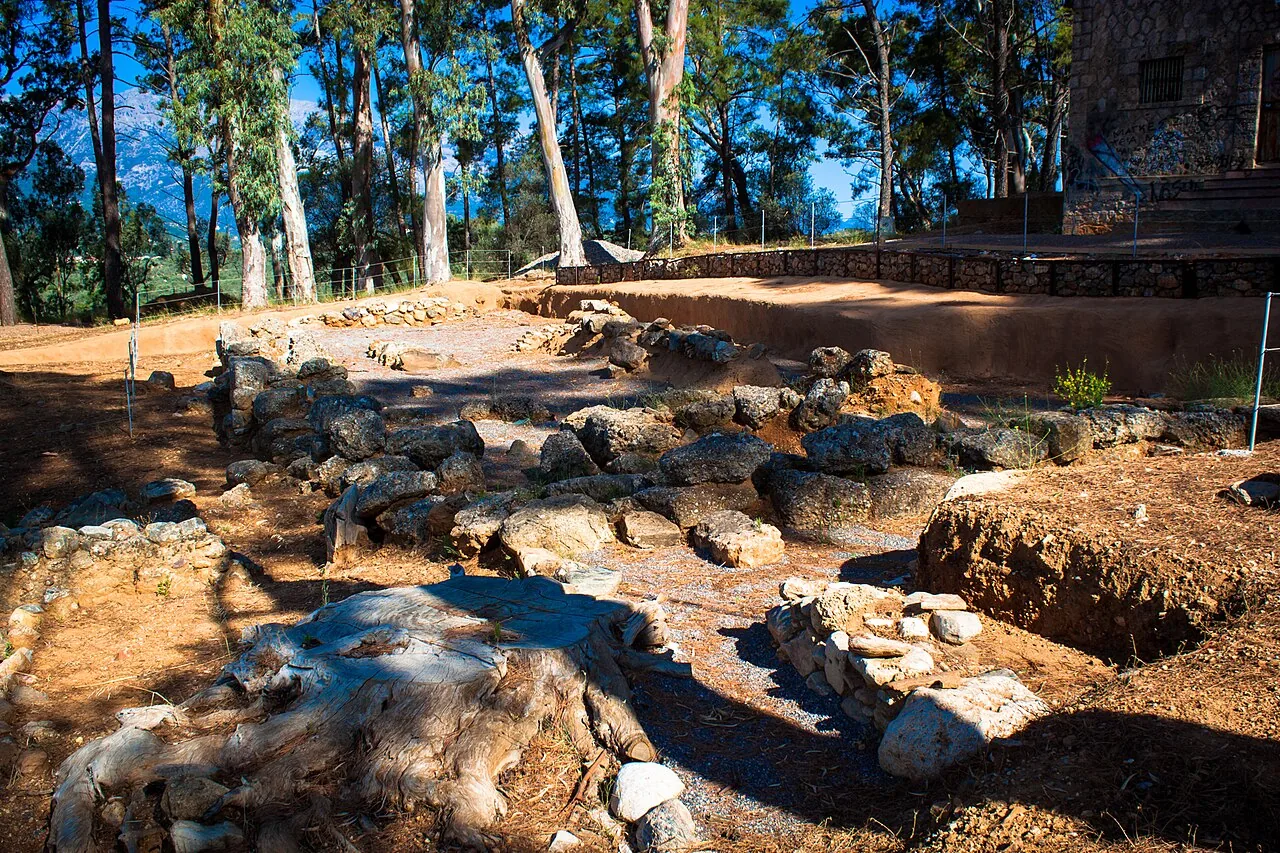
The remains of the sanctuary of Athena Chalkioikos on the acropolis of Sparta.
Andy Hay, via Wikimedia Commons. CC BY 2.0. ↗CC BY 2.0. License terms ↗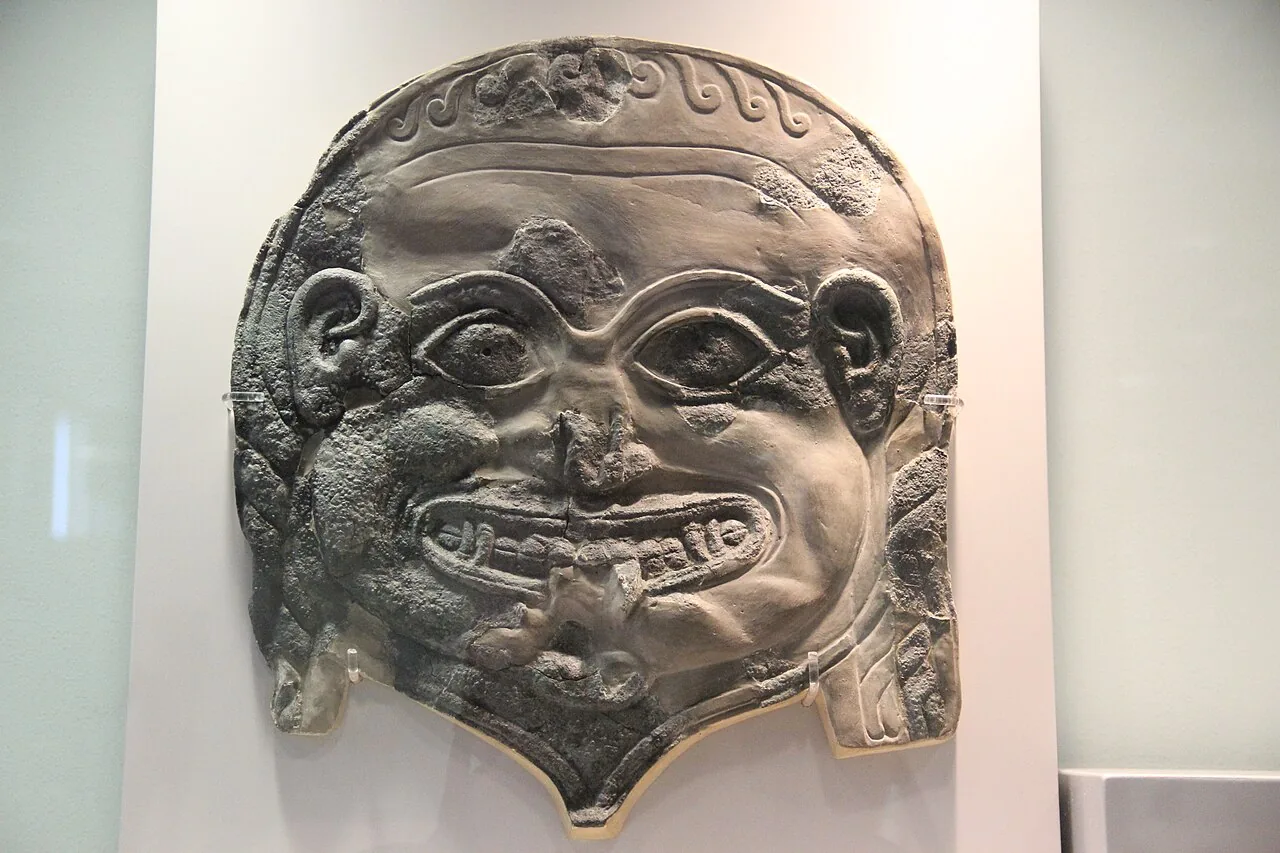
Bronze Gorgon's-head attachment from the sanctuary of Athena Chalkioikos at Sparta, displayed in the National Archaeological Museum, Athens.
Gary Todd from Xinzheng, China, via Wikimedia Commons. CC0. ↗CC0. License terms ↗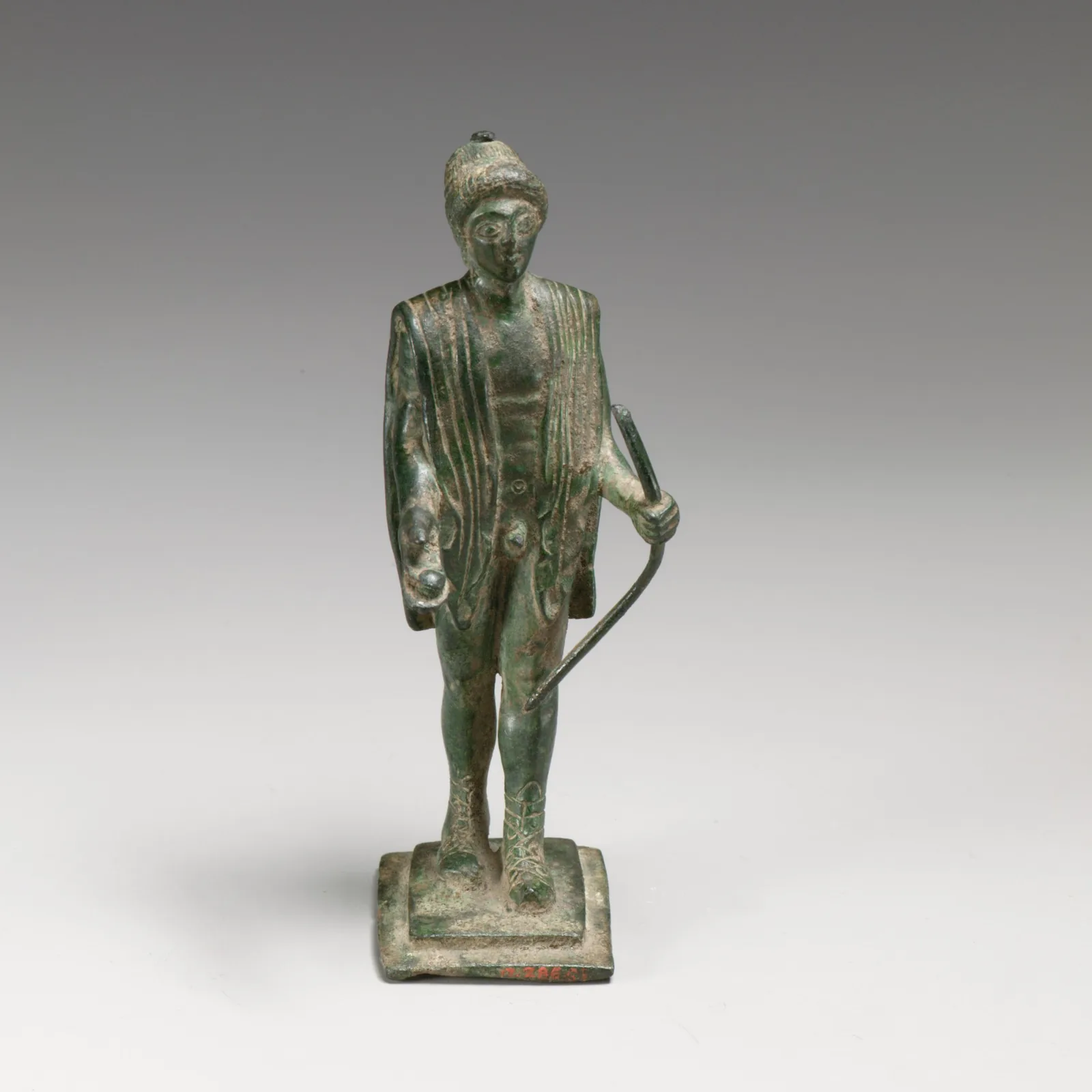
Greek bronze statuette of Apollo, about 500 BCE, holding a bow. It illustrates the god's wider Greek imagery and is not securely associated with the sanctuary at Amyklai.
The Metropolitan Museum of Art, Rogers Fund, 1907, 07.286.91. Public domain (CC0). ↗CC0 1.0 / Public domain. License terms ↗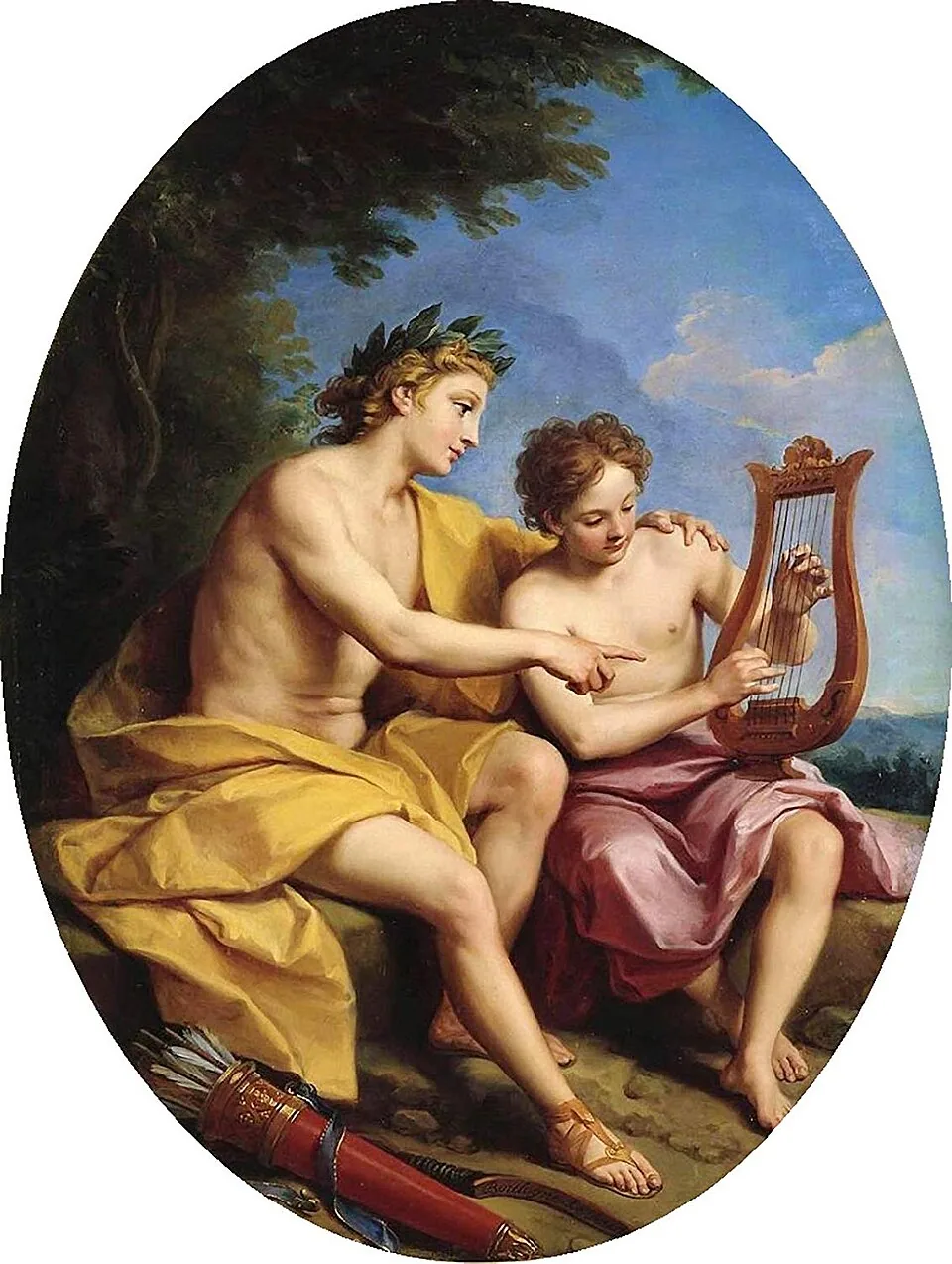
Louis de Boullogne's Apollo Teaching Hyacinth to Play the Lyre, 1688. A later interpretation of the myth behind the Hyakinthia, not a depiction of the Spartan festival itself.
Louis de Boullogne, via Wikimedia Commons. Public domain. ↗Public domain. License terms ↗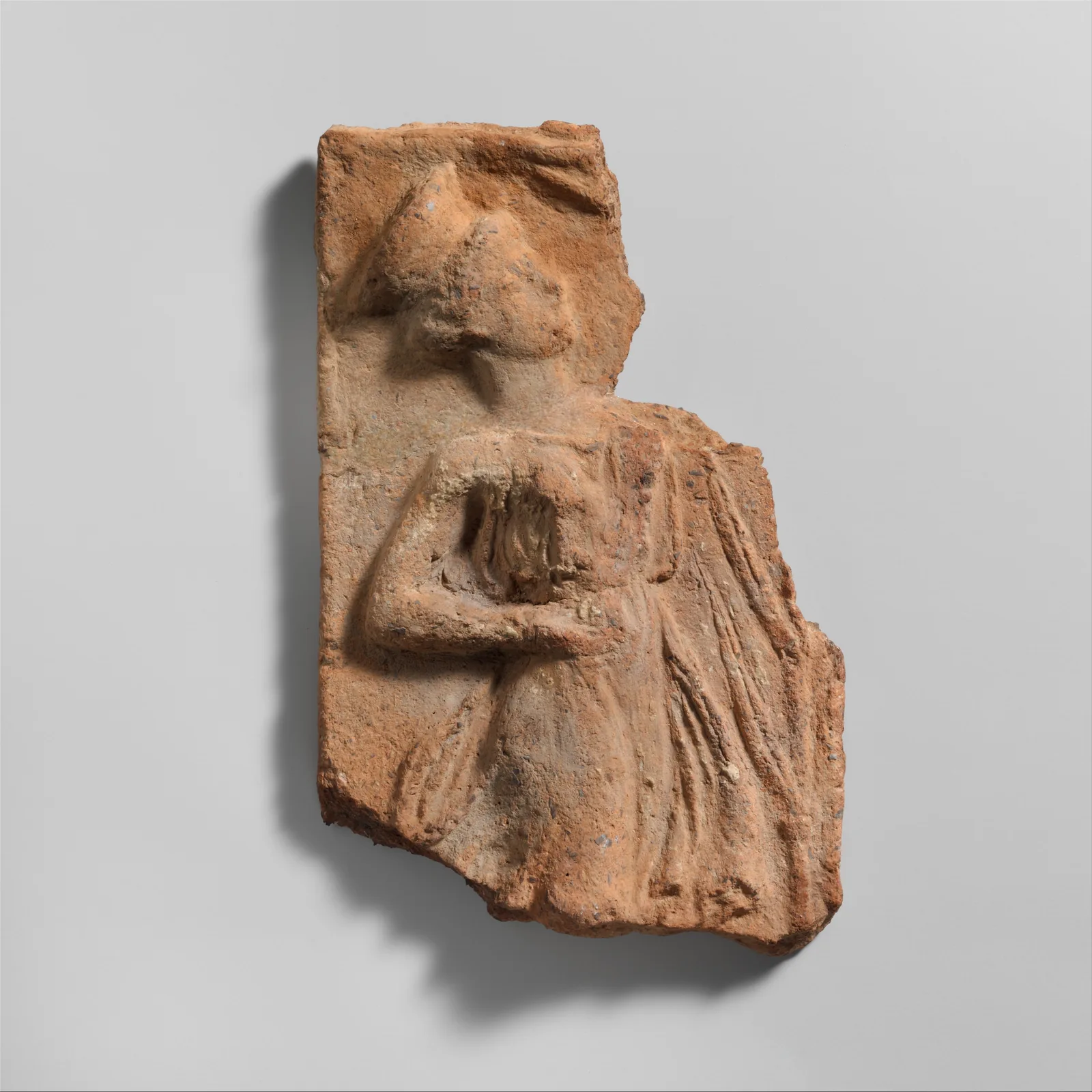
Greek terracotta plaque fragment, late fifth century BCE. The Met identifies its headdress as possibly belonging to a dancer at the Karneia, a festival of Apollo.
The Metropolitan Museum of Art, Gift of the Archaeological Institute of America, 1953, 53.5.39. Public domain (CC0). ↗CC0 1.0 / Public domain. License terms ↗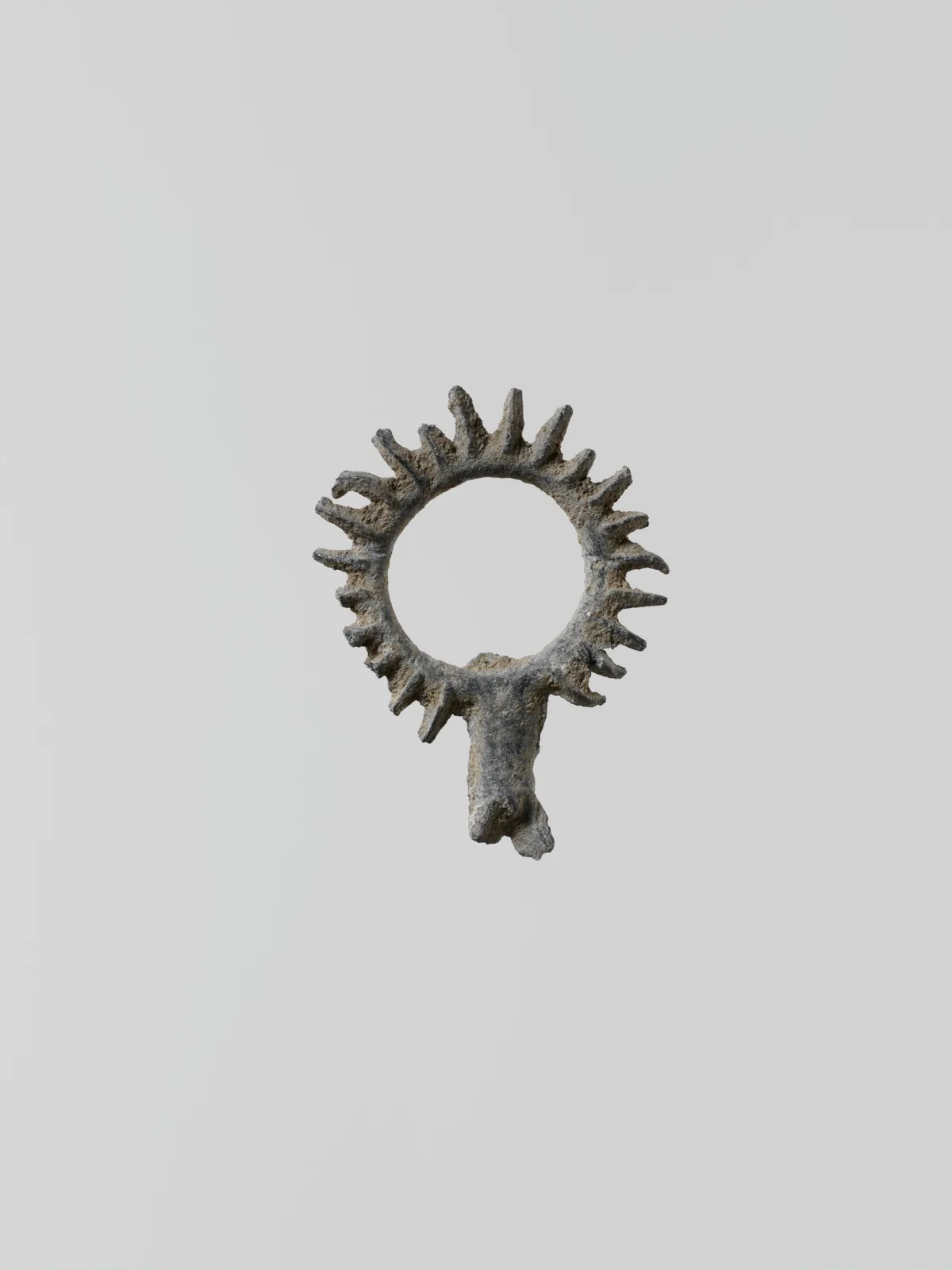
Laconian lead wreath, sixth–fifth century BCE. Wreath imagery supplies broad ritual context; this object is not securely attributed to the Karneia festival.
The Metropolitan Museum of Art, Gift of A. J. B. Wace, 1924, 24.195.158. Public domain (CC0). ↗CC0 1.0 / Public domain. License terms ↗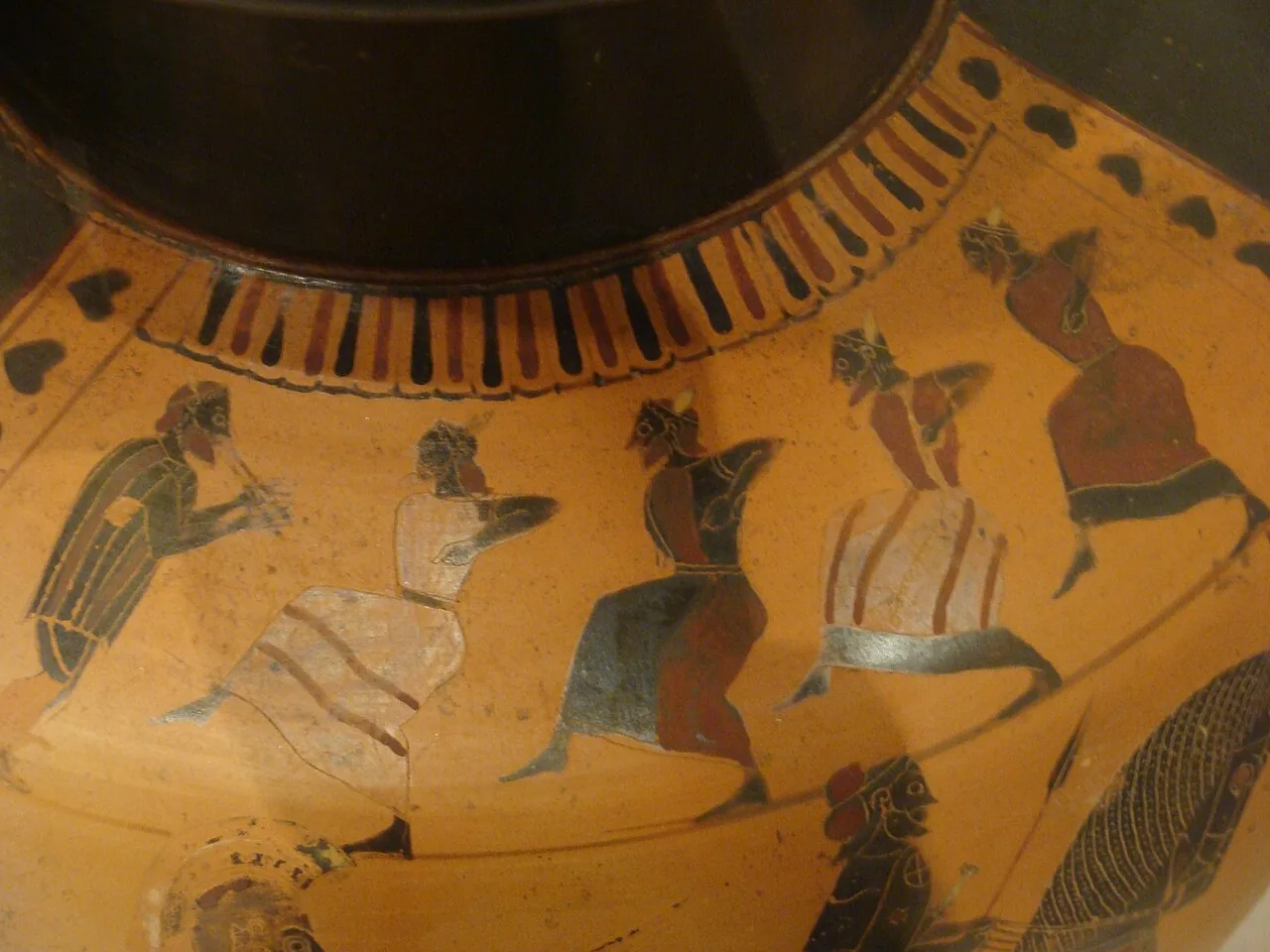
Attic black-figure pottery showing an aulos player and dancing men. Comparative Greek musical and dance imagery; this scene is not securely identified as Sparta's Gymnopaedia.
Ben Sutherland, via Wikimedia Commons. CC BY 2.0. ↗CC BY 2.0. License terms ↗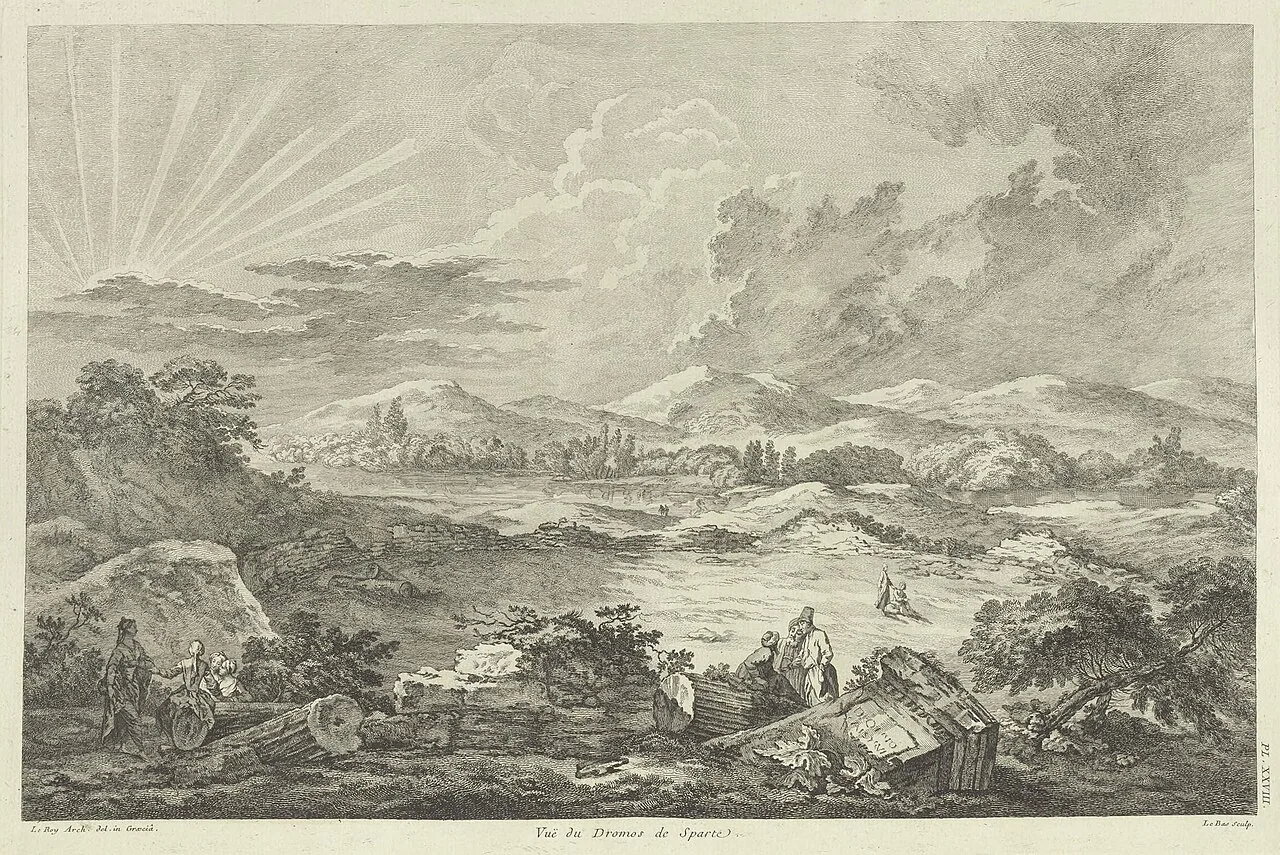
Julien-David Le Roy's eighteenth-century view of the area he identified as Sparta's dromos. An early antiquarian interpretation, not a reconstruction of the Gymnopaedia festival.
Julien-David Le Roy; digitization via Wikimedia Commons. CC BY-SA 4.0. ↗CC BY-SA 4.0. License terms ↗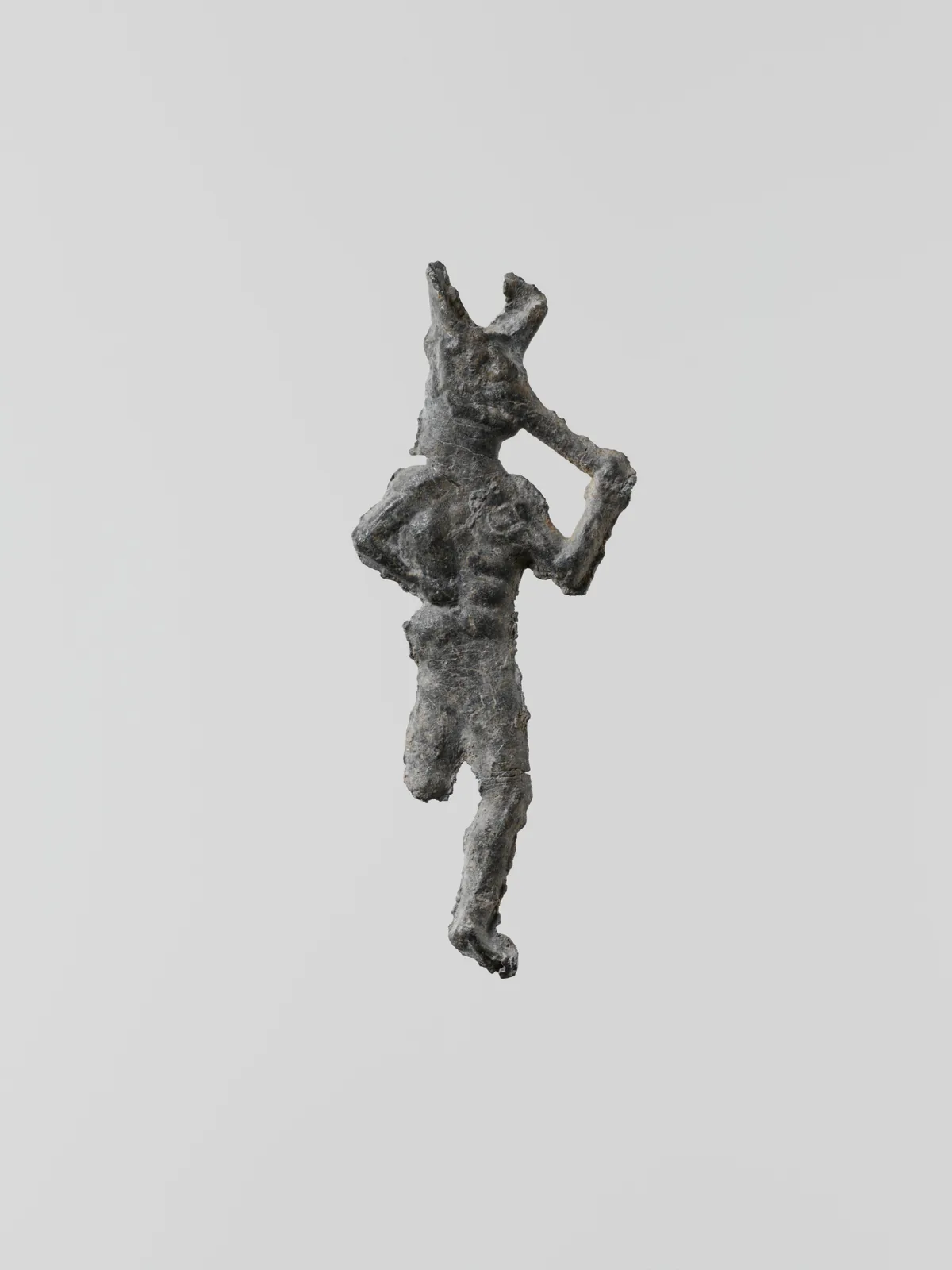
Laconian lead figure of a flute-player, sixth–fifth century BCE—direct material evidence for musical imagery in the Spartan region.
The Metropolitan Museum of Art, Gift of A. J. B. Wace, 1924, 24.195.98. Public domain (CC0). ↗CC0 1.0 / Public domain. License terms ↗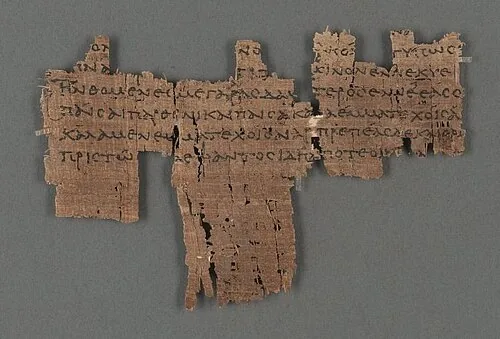
Papyrus Oxyrhynchus 8, an ancient fragment associated with Alcman's poetry. The manuscript comes from Egypt and illustrates the later transmission of Greek verse.
Ancient papyrus; historical reproduction via Wikimedia Commons. Public domain. ↗Public domain. License terms ↗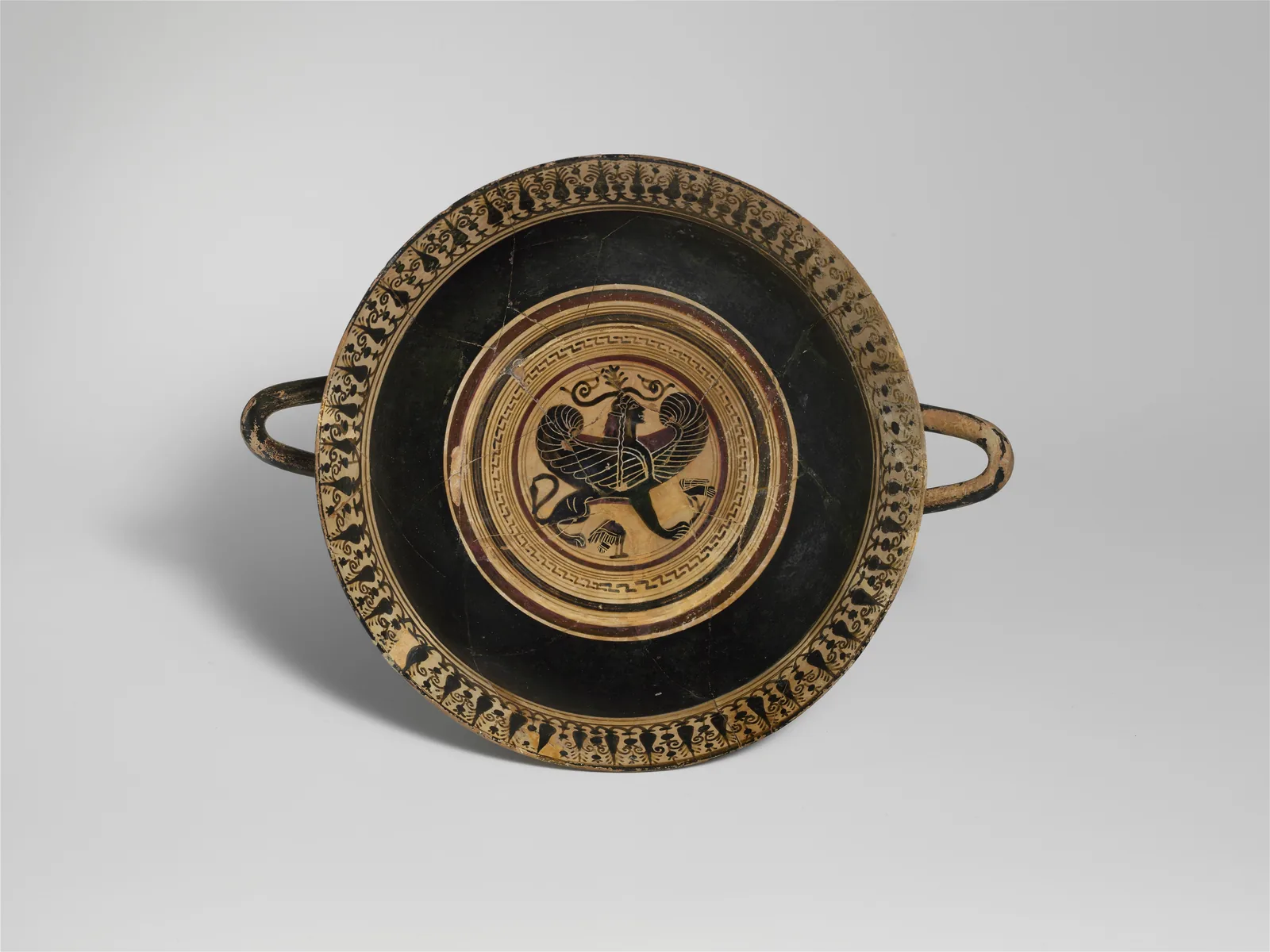
Laconian terracotta kylix, sixth century BCE, illustrating the region's distinctive ceramic craftsmanship.
The Metropolitan Museum of Art, Gift of The American Society for the Exploration of Sardis, 1914, 14.30.26. Public domain (CC0). ↗CC0 1.0 / Public domain. License terms ↗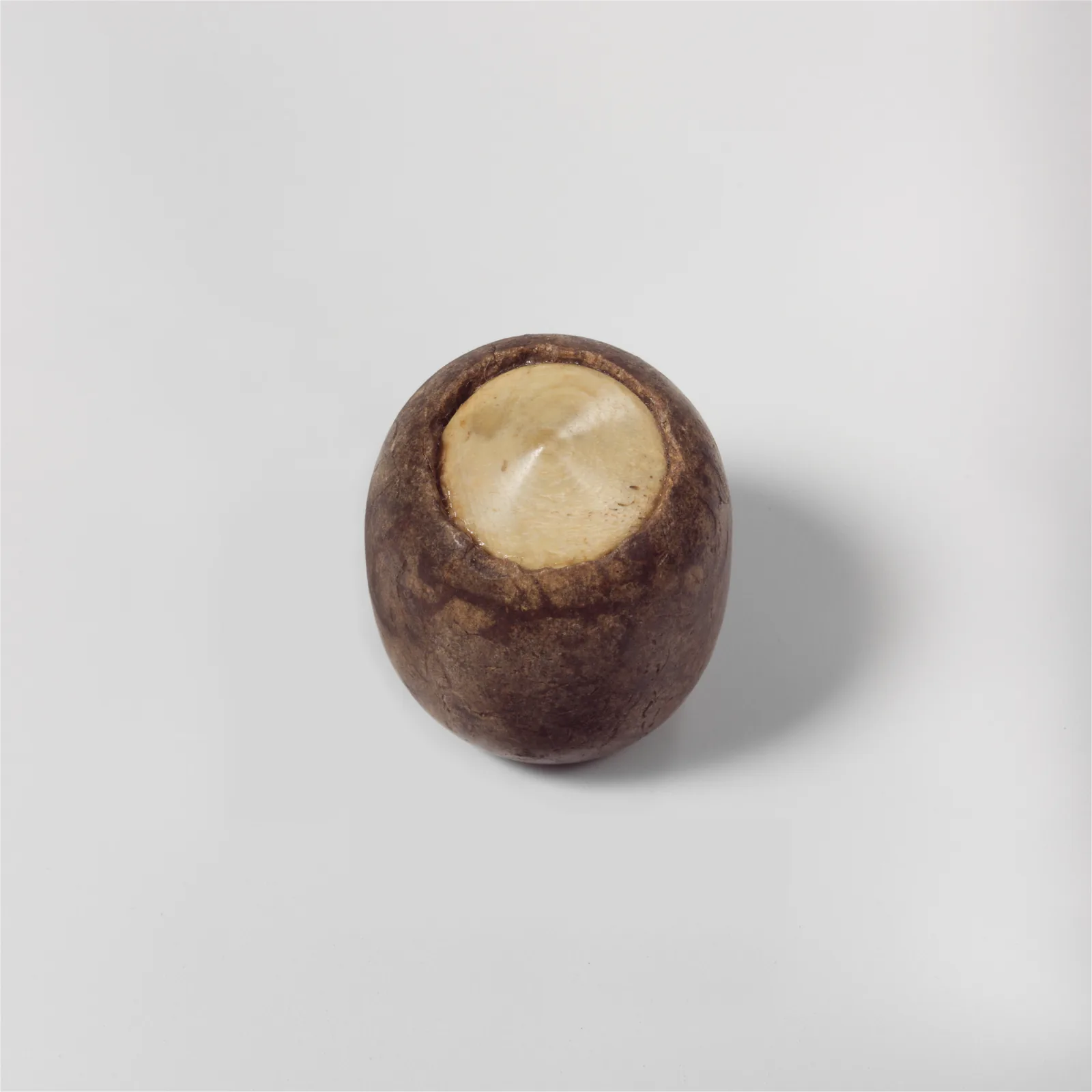
Laconian bone cylinder with a pointed ivory top, seventh–sixth century BCE, showing the use of several materials in small-scale craft.
The Metropolitan Museum of Art, Gift of A. J. B. Wace, 1924, 24.195.183. Public domain (CC0). ↗CC0 1.0 / Public domain. License terms ↗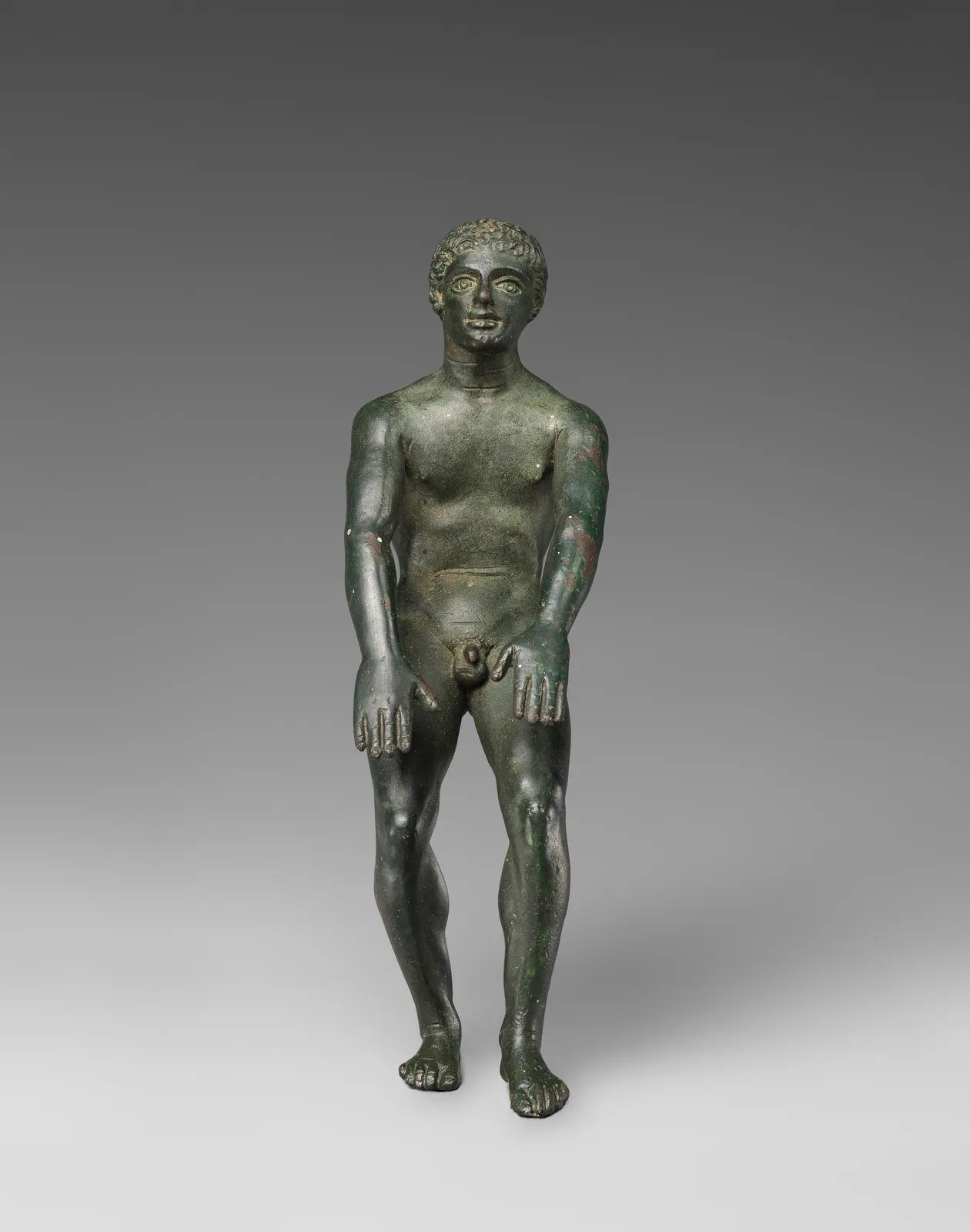
Greek bronze athlete, about 450 BCE, interpreted as a runner preparing to start or a jumper completing a leap. Comparative Greek athletic imagery; its origin is not identified as Spartan.
The Metropolitan Museum of Art, Rogers Fund, 1908, 08.258.11. Public domain (CC0). ↗CC0 1.0 / Public domain. License terms ↗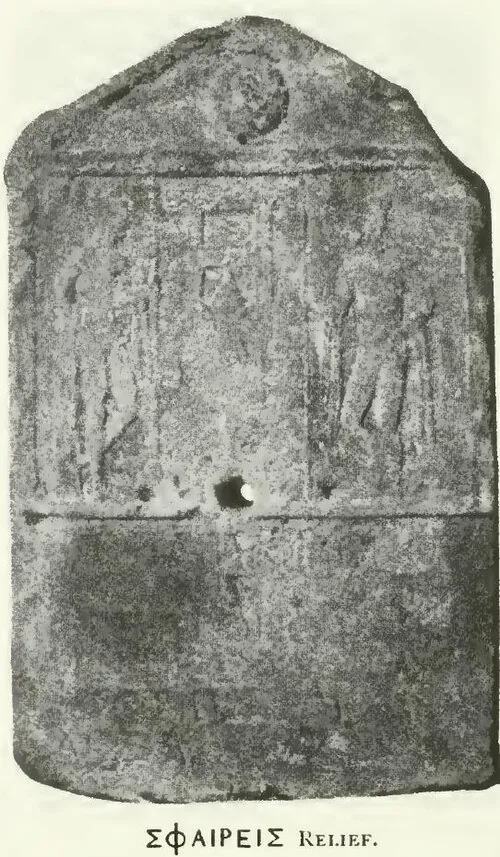
Historical photograph of a Spartan relief associated with ball players, published in the Annual of the British School at Athens. The sculpture supplies local evidence for athletic imagery.
Annual of the British School at Athens, volume 13, historical plate via Wikimedia Commons. Public domain. ↗Public domain. License terms ↗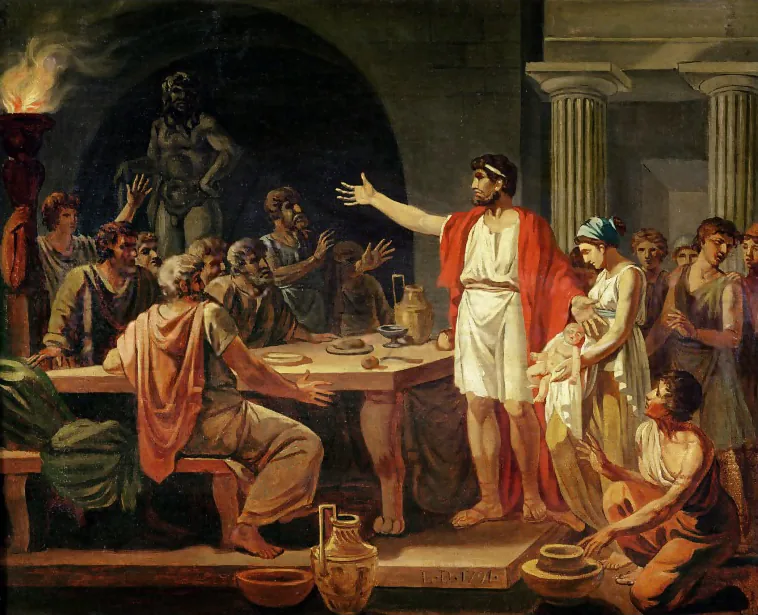
Jean-Jacques Le Barbier's eighteenth-century study of Lycurgus. A later imagined depiction of the legendary lawgiver, not a contemporary likeness.
Jean-Jacques-François Le Barbier / Wikimedia Commons. Public domain. Resized and converted to WebP. ↗Public domain. License terms ↗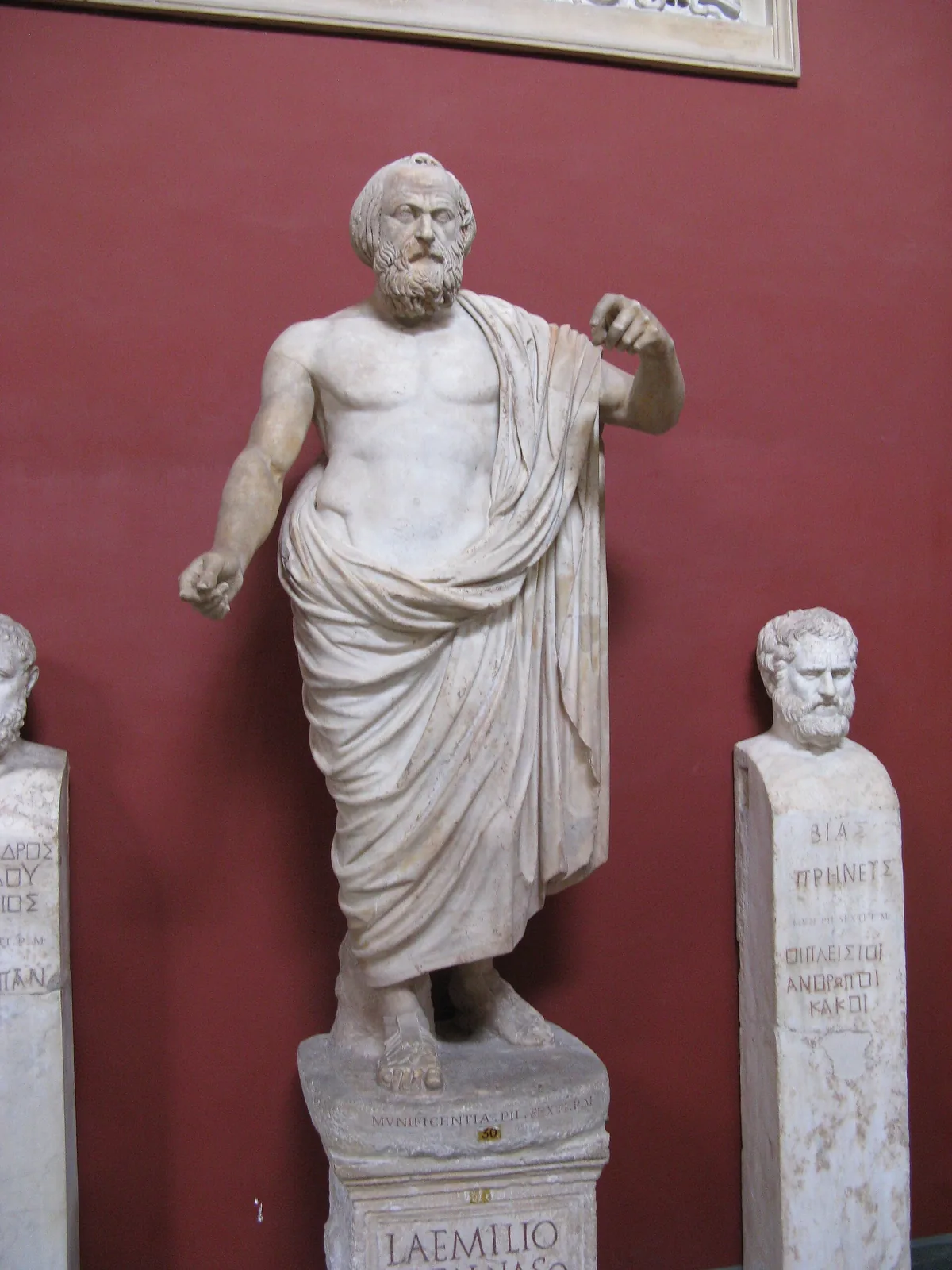
Roman statue in the Vatican Museums, traditionally called Lycurgus or Lysias. The figure is unlabeled and its identification is uncertain.
Yair Haklai / Wikimedia Commons. CC BY-SA 4.0. Resized and converted to WebP. ↗CC BY-SA 4.0. License terms ↗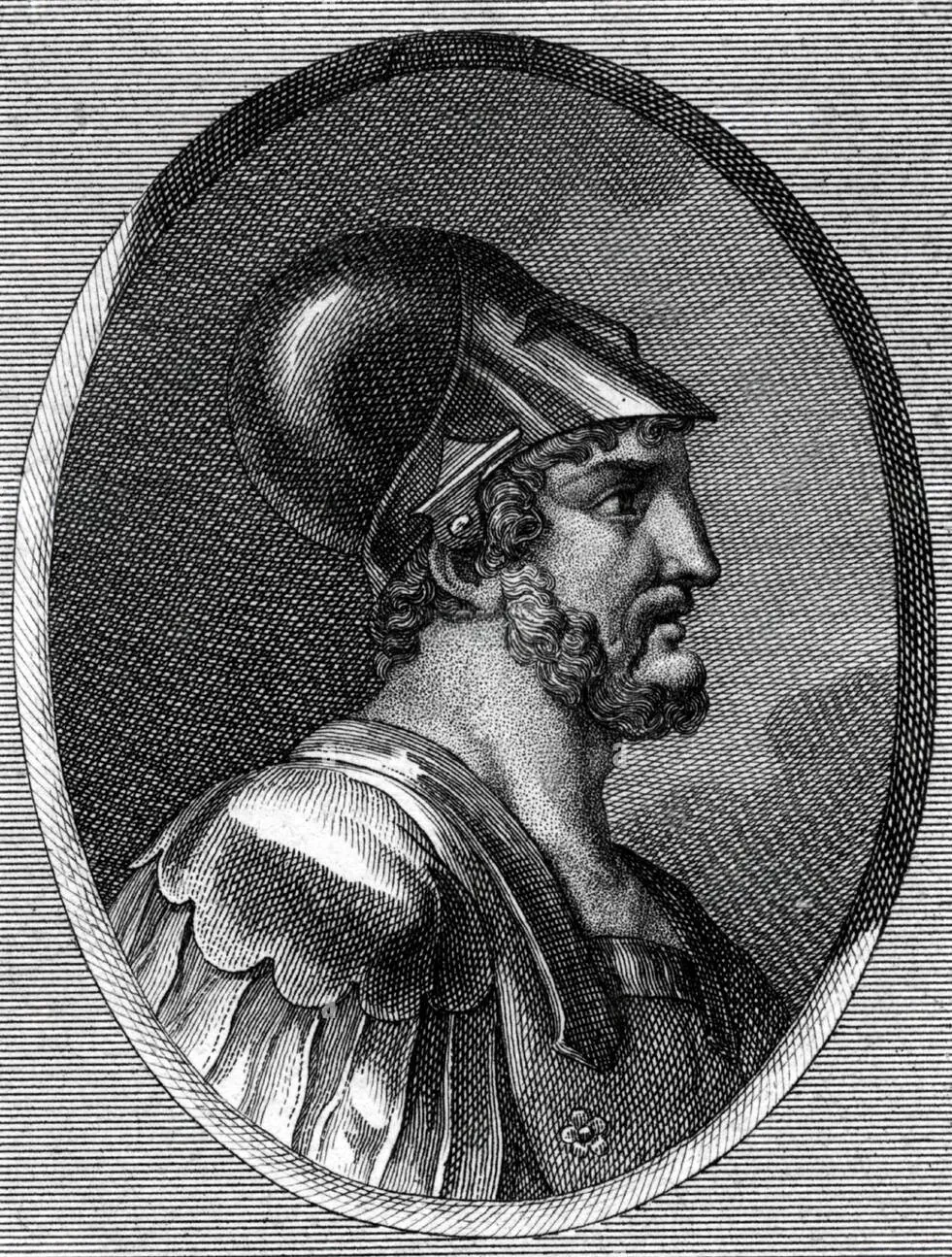
A later European portrait labeled Leonidas I. It records the king's reception in art, not his securely known appearance.
Max Karl Baldamus / Wikimedia Commons. Public domain. Resized and converted to WebP. ↗Public domain. License terms ↗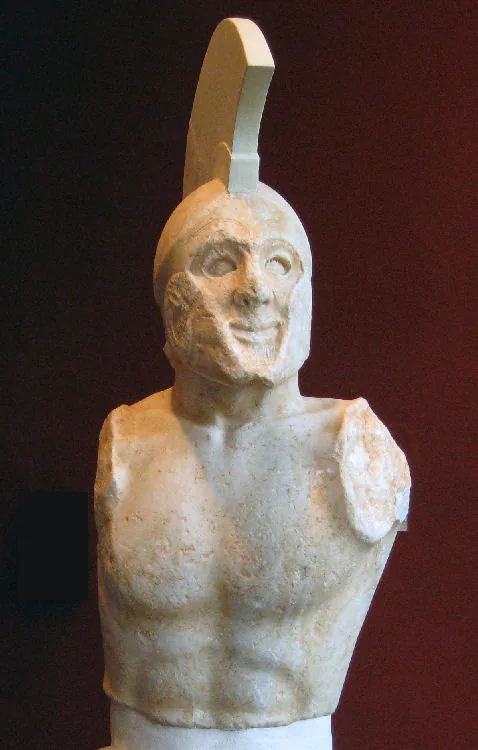
Ancient marble hoplite from Sparta's sanctuary of Athena Chalkioikos, often called Leonidas. The identification with the king is unproven.
Jan van Vliet / Wikimedia Commons. CC0. Resized and converted to WebP. ↗CC0. License terms ↗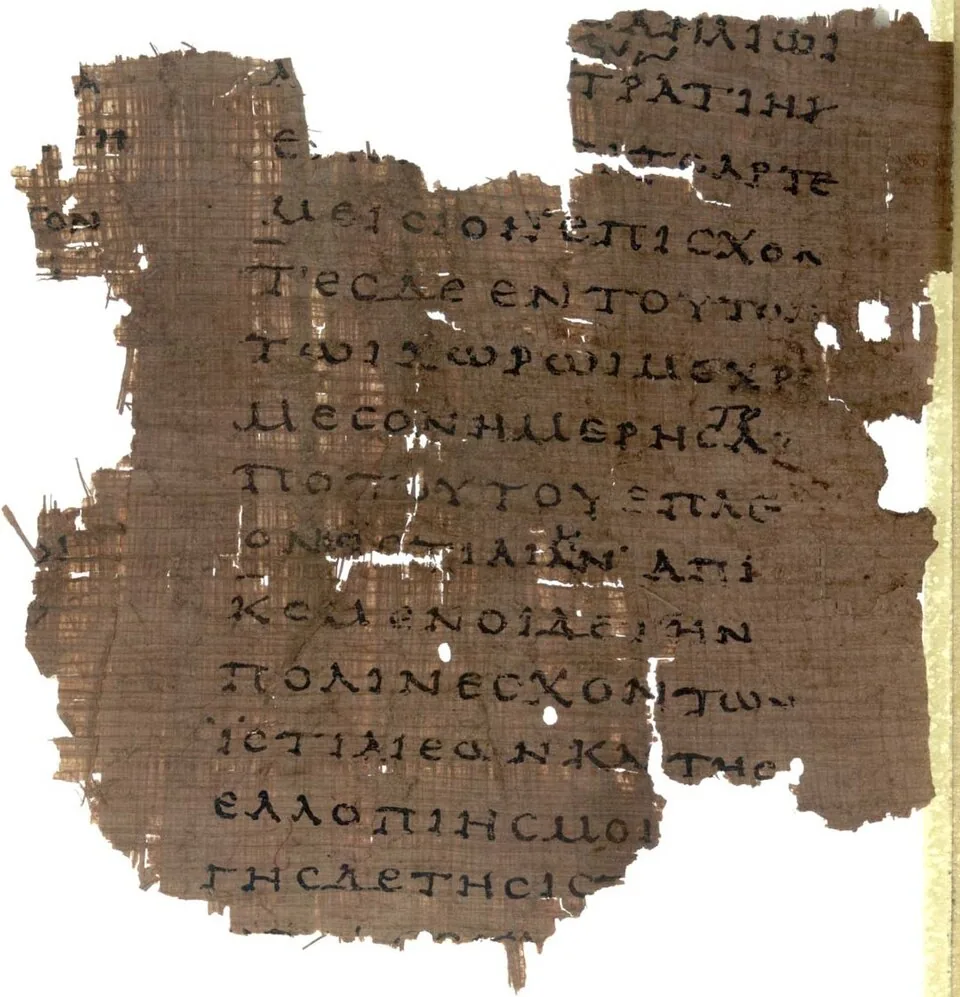
Papyrus Oxyrhynchus 2099, an early second-century CE fragment of Herodotus's Histories, Book VIII. Herodotus preserves stories about Gorgo elsewhere in the work; this manuscript fragment is context, not a portrait or a claim to contain her story.
Papyrology Rooms, Sackler Library, Oxford; cropped version by Phlsph7 / Wikimedia Commons. Public domain. Resized and converted to WebP. ↗Public domain. License terms ↗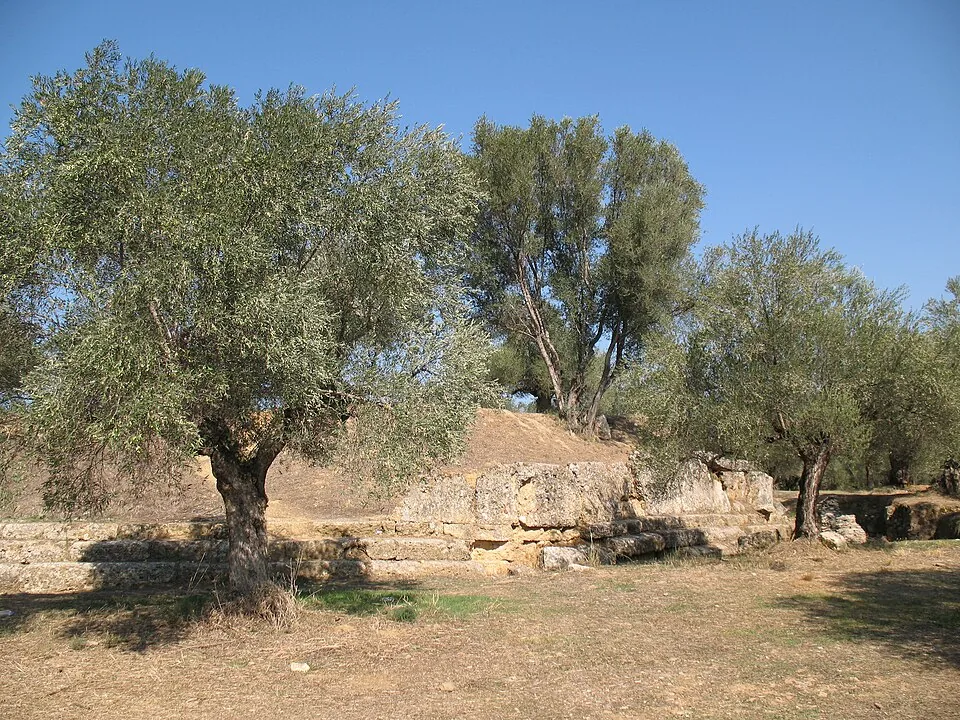
The archaeological landscape of Sparta's acropolis, providing context for Gorgo's home city. No authenticated likeness of Gorgo is implied.
macrolepis / Wikimedia Commons. CC BY 3.0. Resized and converted to WebP. ↗CC BY 3.0. License terms ↗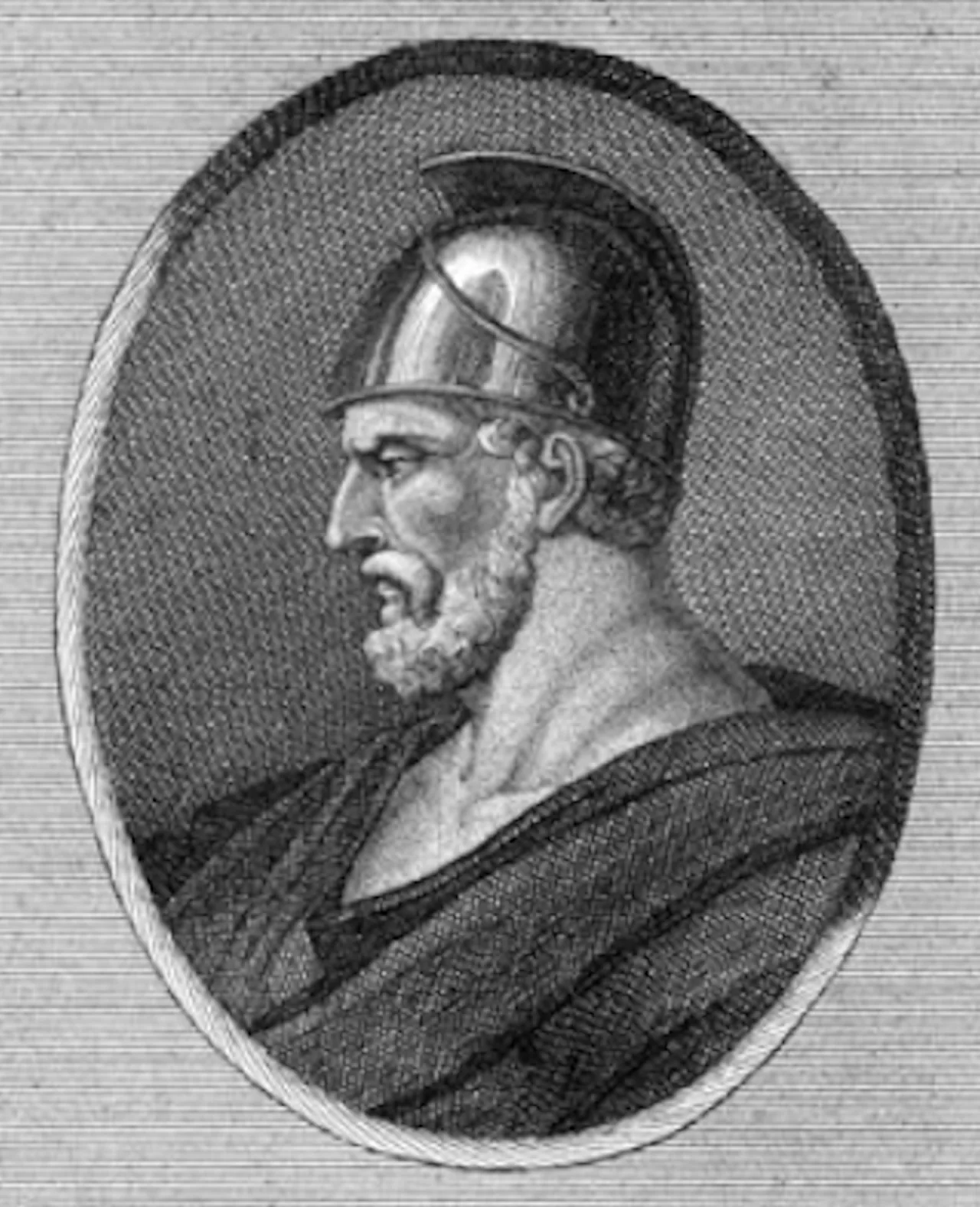
An eighteenth-century imagined depiction of Pausanias, the Spartan regent and commander. It is not a contemporary portrait.
Unknown 18th century / Wikimedia Commons. Public domain. Resized and converted to WebP. ↗Public domain. License terms ↗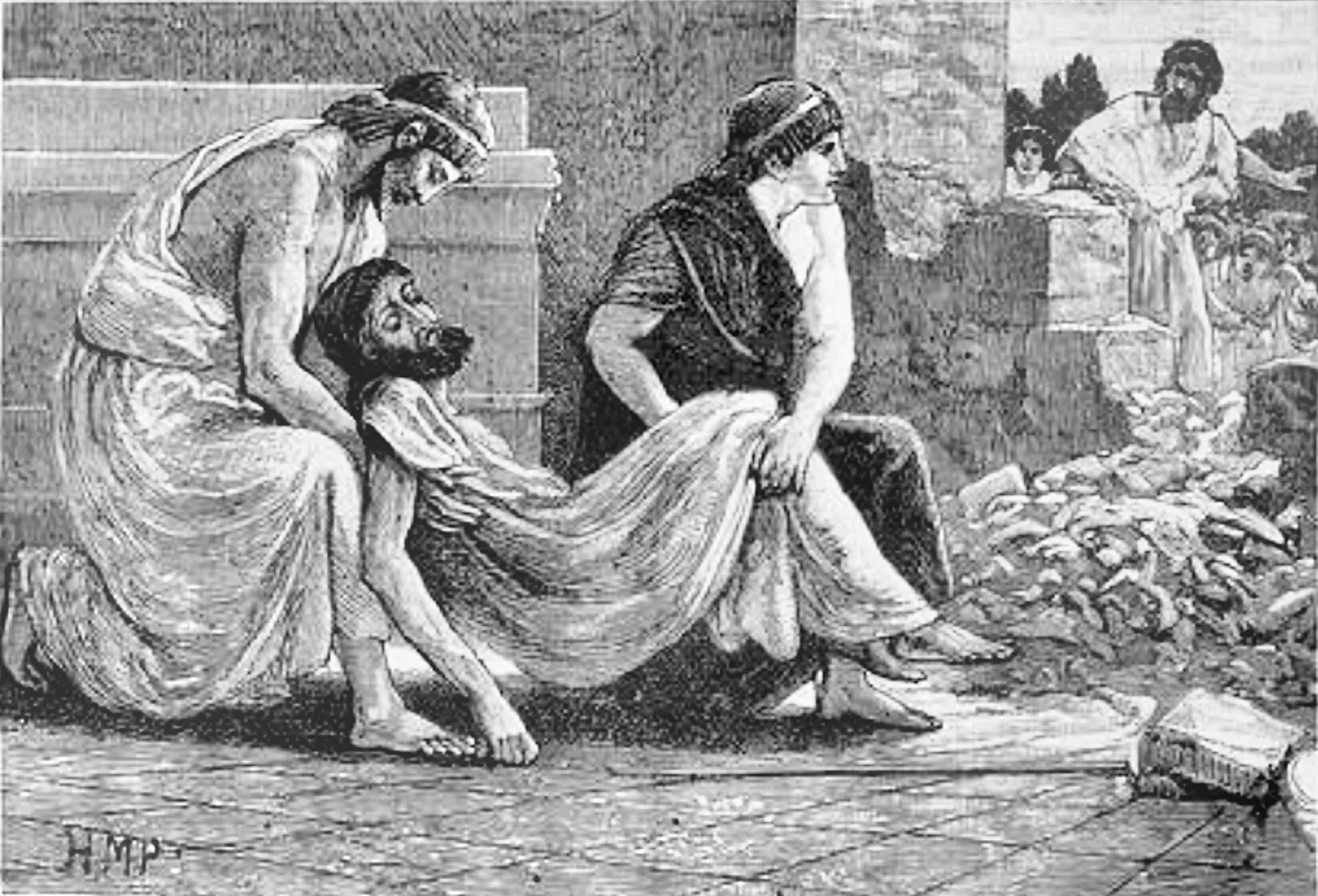
A later historical illustration of the death of the Spartan regent Pausanias. The scene is an artist's reconstruction.
Unknown 1882 / Wikimedia Commons. Public domain. Resized and converted to WebP. ↗Public domain. License terms ↗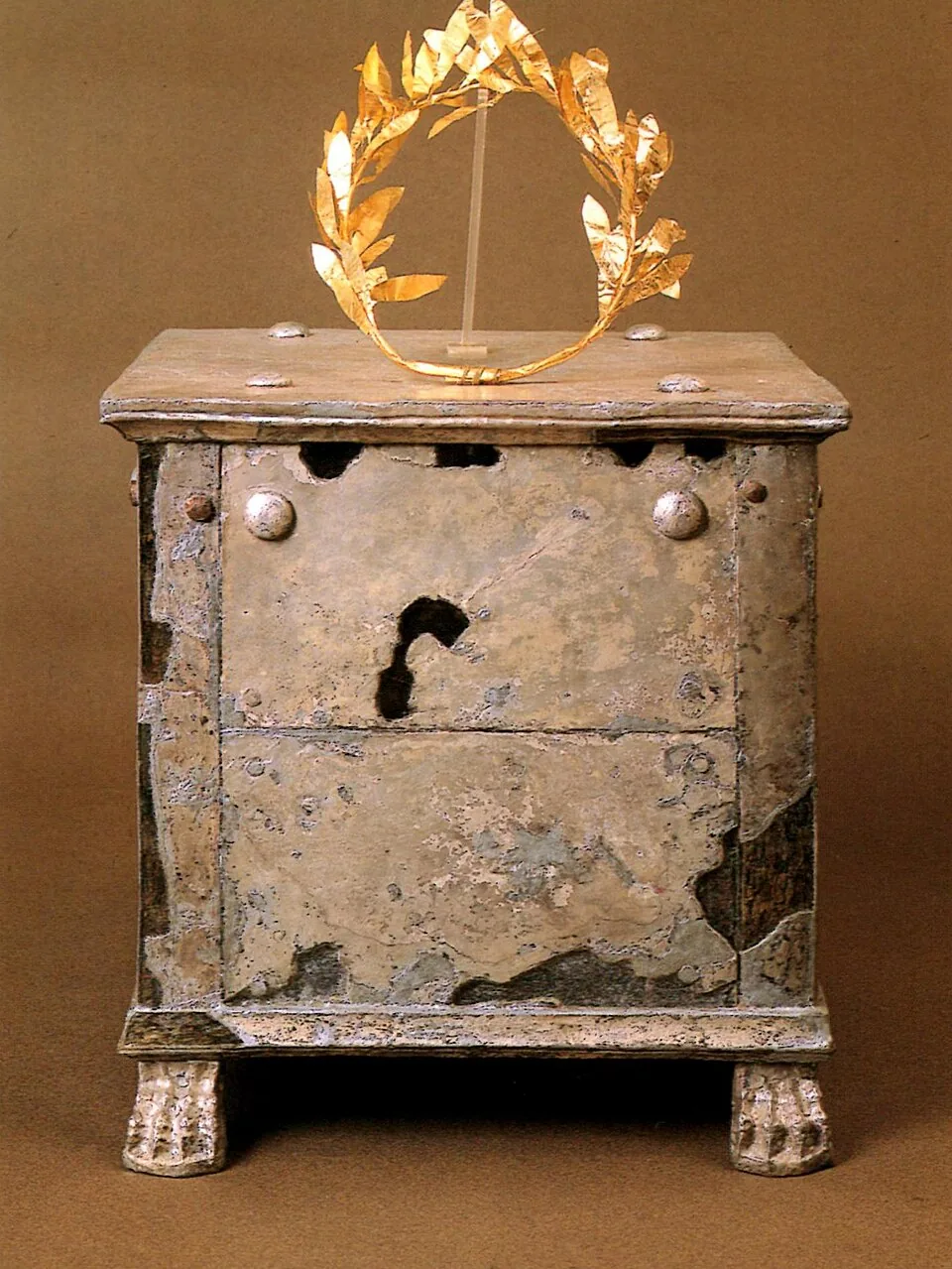
Silver ossuary and gold wreath from Amphipolis, presented in the source as those of Brasidas. These are associated burial objects, not a portrait.
Rjdeadly / Wikimedia Commons. CC BY-SA 4.0. Resized and converted to WebP. ↗CC BY-SA 4.0. License terms ↗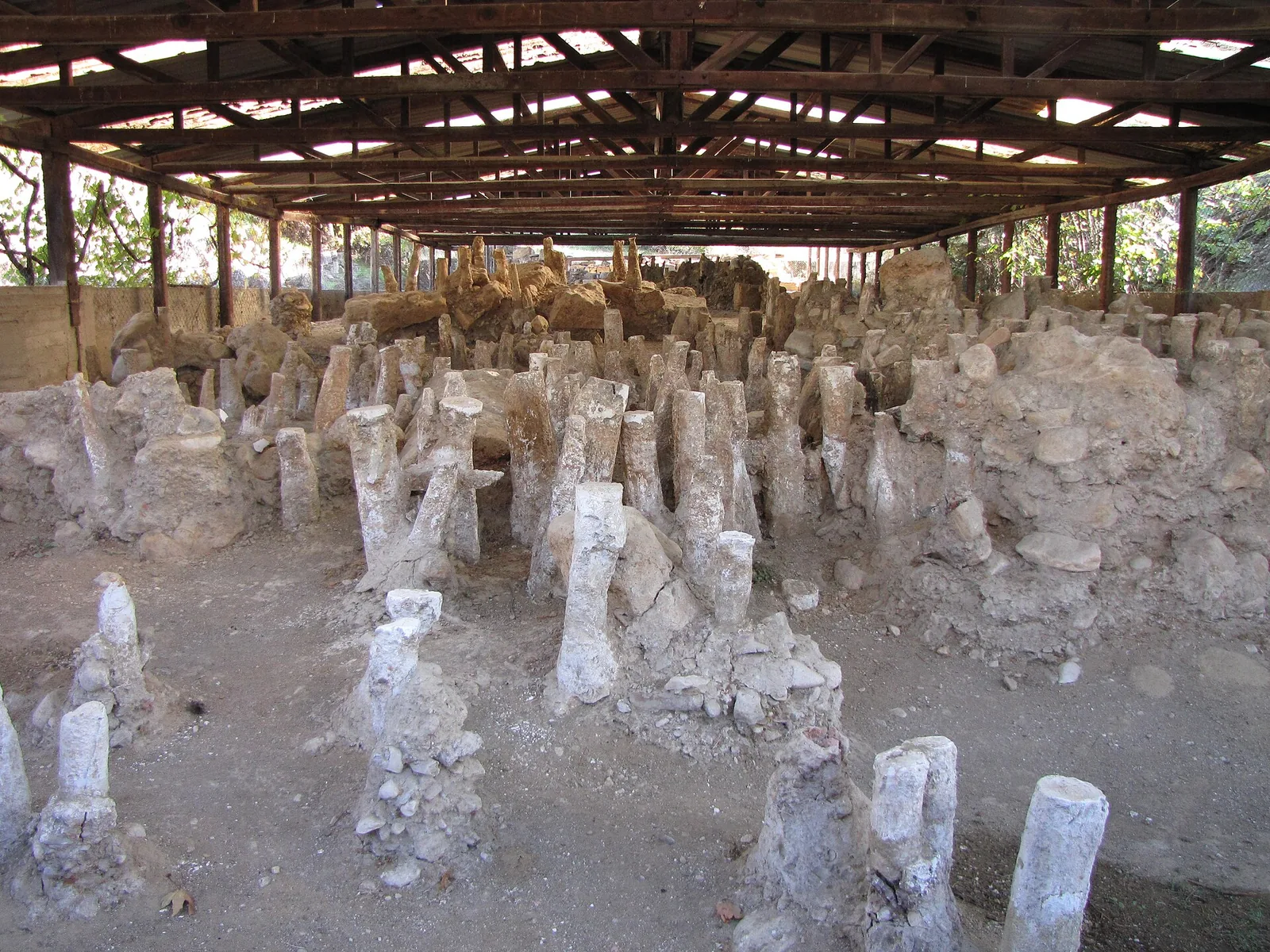
Remains of the ancient wooden bridge at Amphipolis. The river crossing provides geographical context for Brasidas's campaign; no likeness of him is shown.
Juergen Weidner / Wikimedia Commons. CC BY-SA 4.0. Resized and converted to WebP. ↗CC BY-SA 4.0. License terms ↗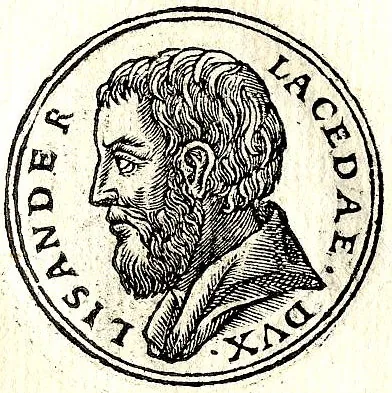
A later imagined depiction of Lysander, the Spartan admiral. His ancient appearance is not established by this image.
Published by Guillaume Rouille(1518?-1589) / Wikimedia Commons. Public domain. Resized and converted to WebP. ↗Public domain. License terms ↗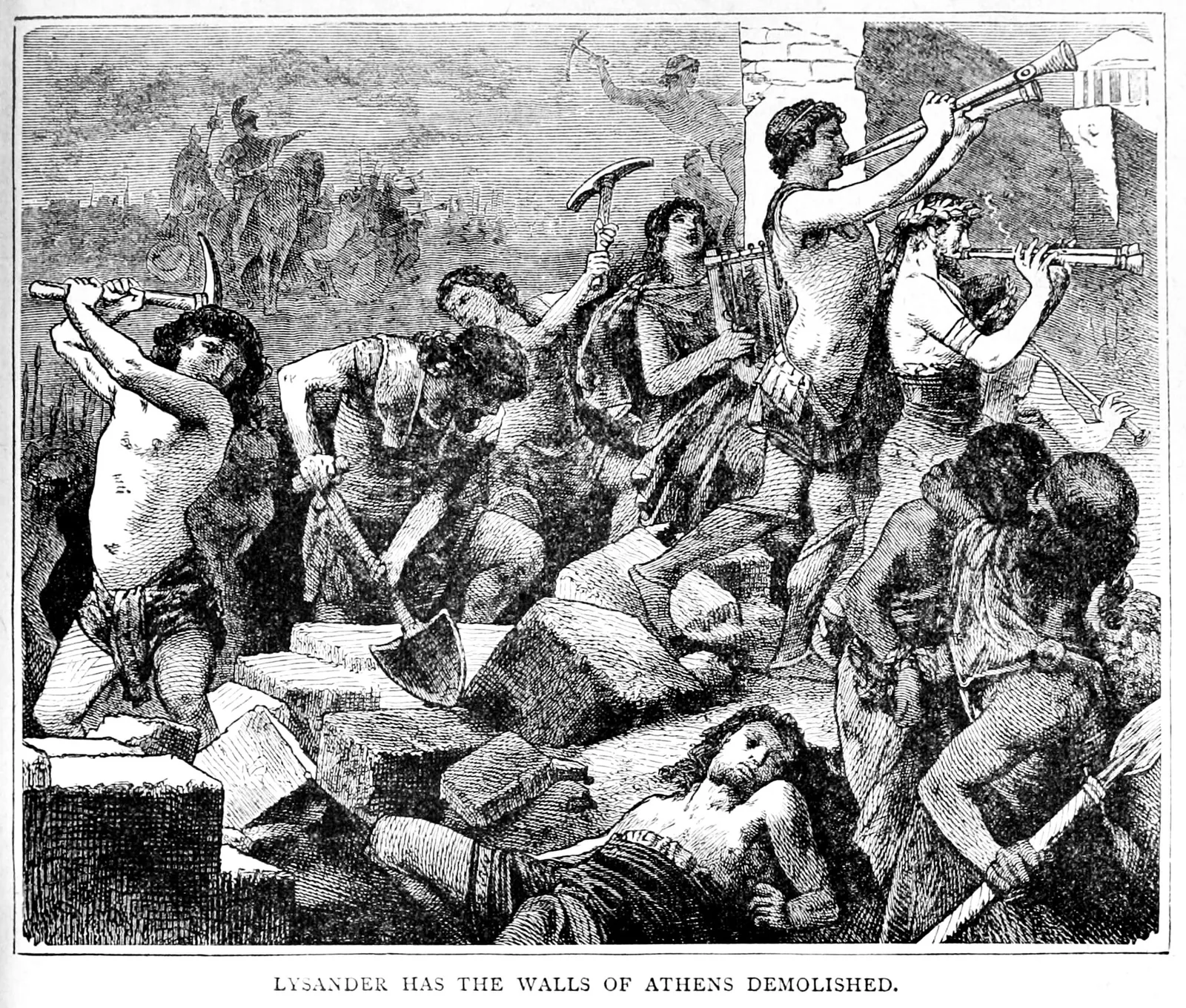
A later historical illustration of the demolition of Athens's walls after its surrender in 404 BCE. The scene is a reconstruction.
Ward / Wikimedia Commons. Public domain. Resized and converted to WebP. ↗Public domain. License terms ↗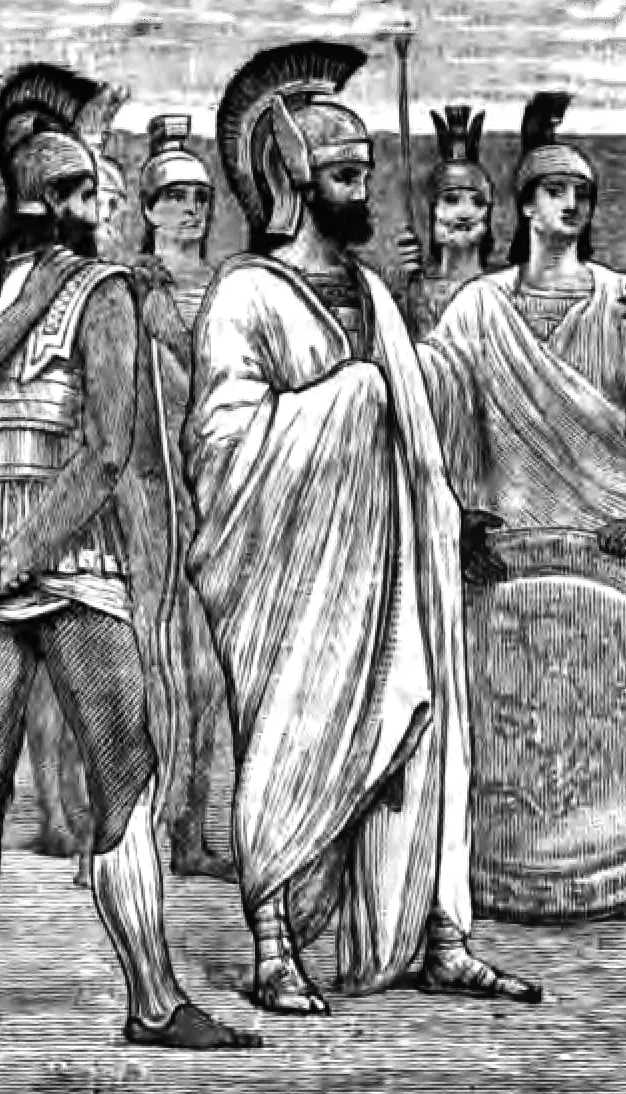
A later European depiction of Agesilaus II, king of Sparta. This is an imagined portrait, not a secure ancient likeness.
Edmund Ollier Publication date 1882 / Wikimedia Commons. Public domain. Resized and converted to WebP. ↗Public domain. License terms ↗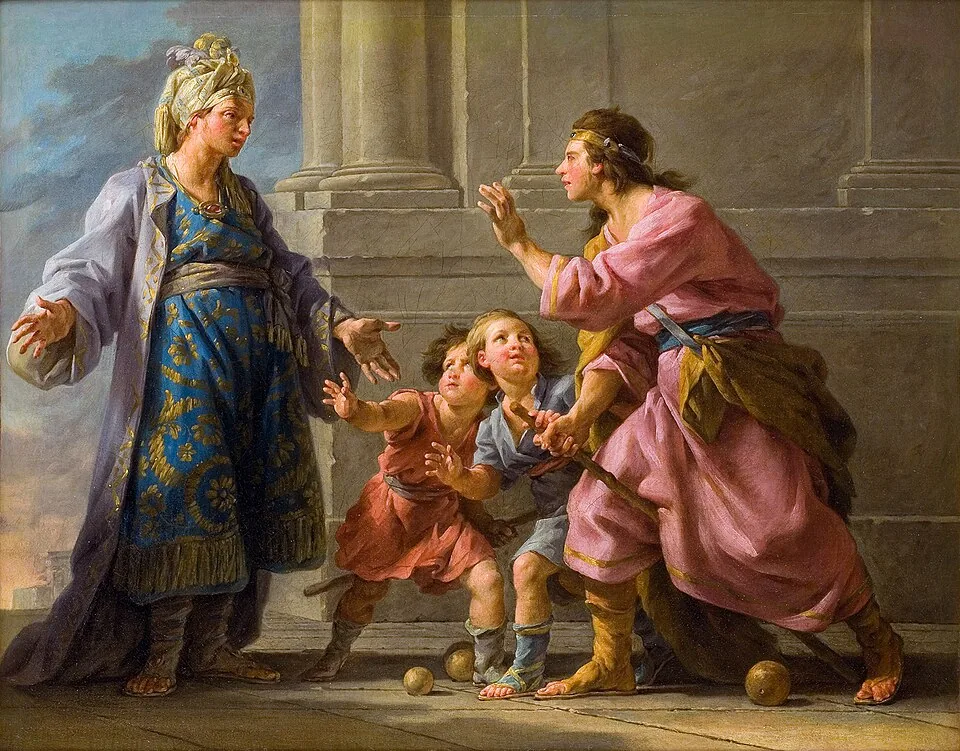
Noël Hallé's Agesilaus Playing with His Children (1779), now in the Musée Fabre. A later moralizing reconstruction of the Spartan king's family life.
Noël Hallé / Wikimedia Commons. Public domain. Resized and converted to WebP. ↗Public domain. License terms ↗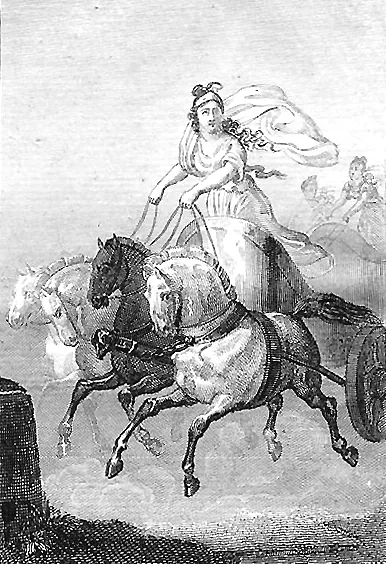
A later imagined depiction of Cynisca from a work by Sophie de Renneville. It does not preserve the Olympic victor's ancient appearance.
Anonymous / Wikimedia Commons. Public domain. Resized and converted to WebP. ↗Public domain. License terms ↗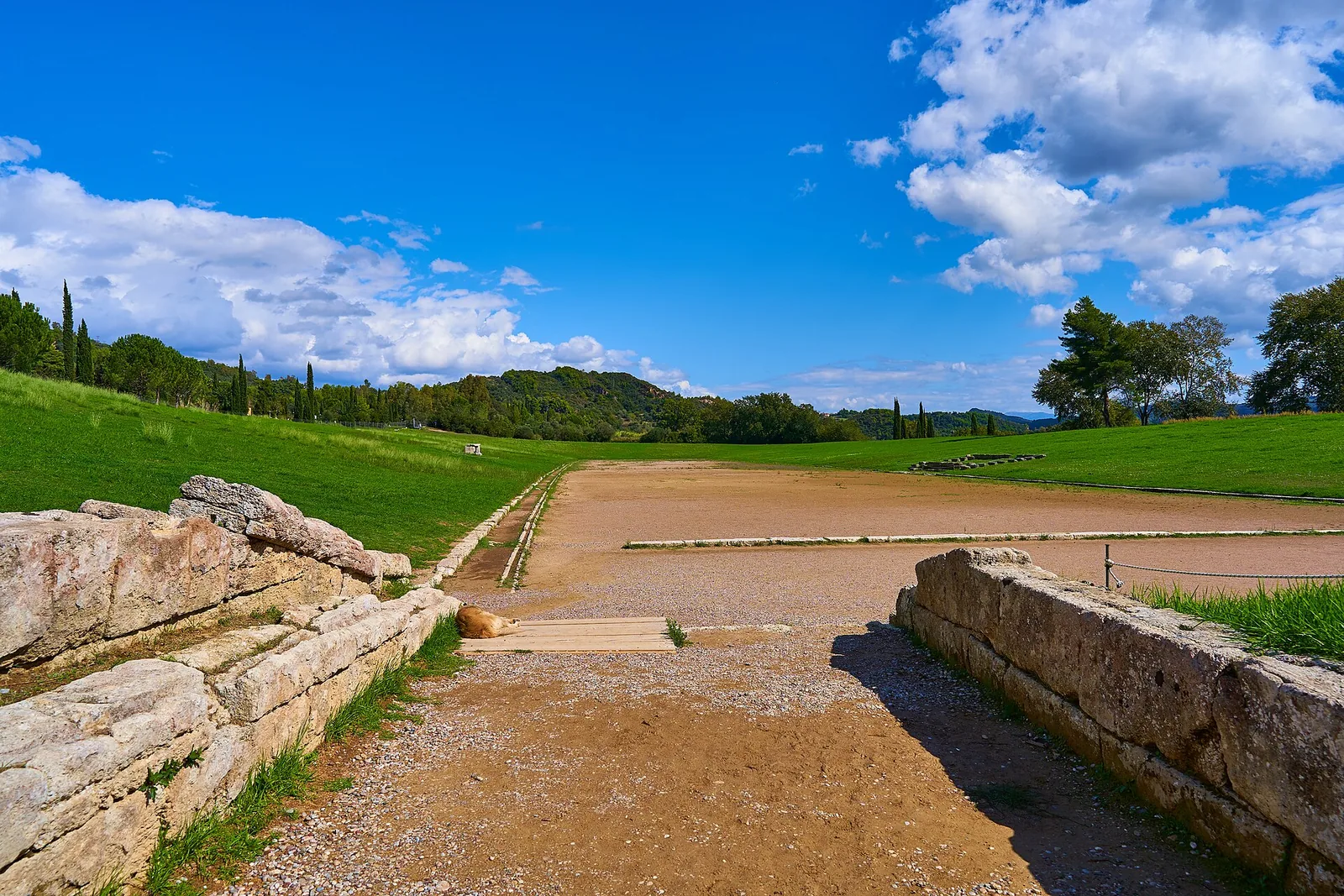
The stadium at Olympia provides context for the sanctuary associated with Cynisca’s victories. Her winning event was a four-horse chariot race held in the hippodrome, not in this stadium.
George E. Koronaios / Wikimedia Commons. CC BY-SA 4.0. Resized and converted to WebP. ↗CC BY-SA 4.0. License terms ↗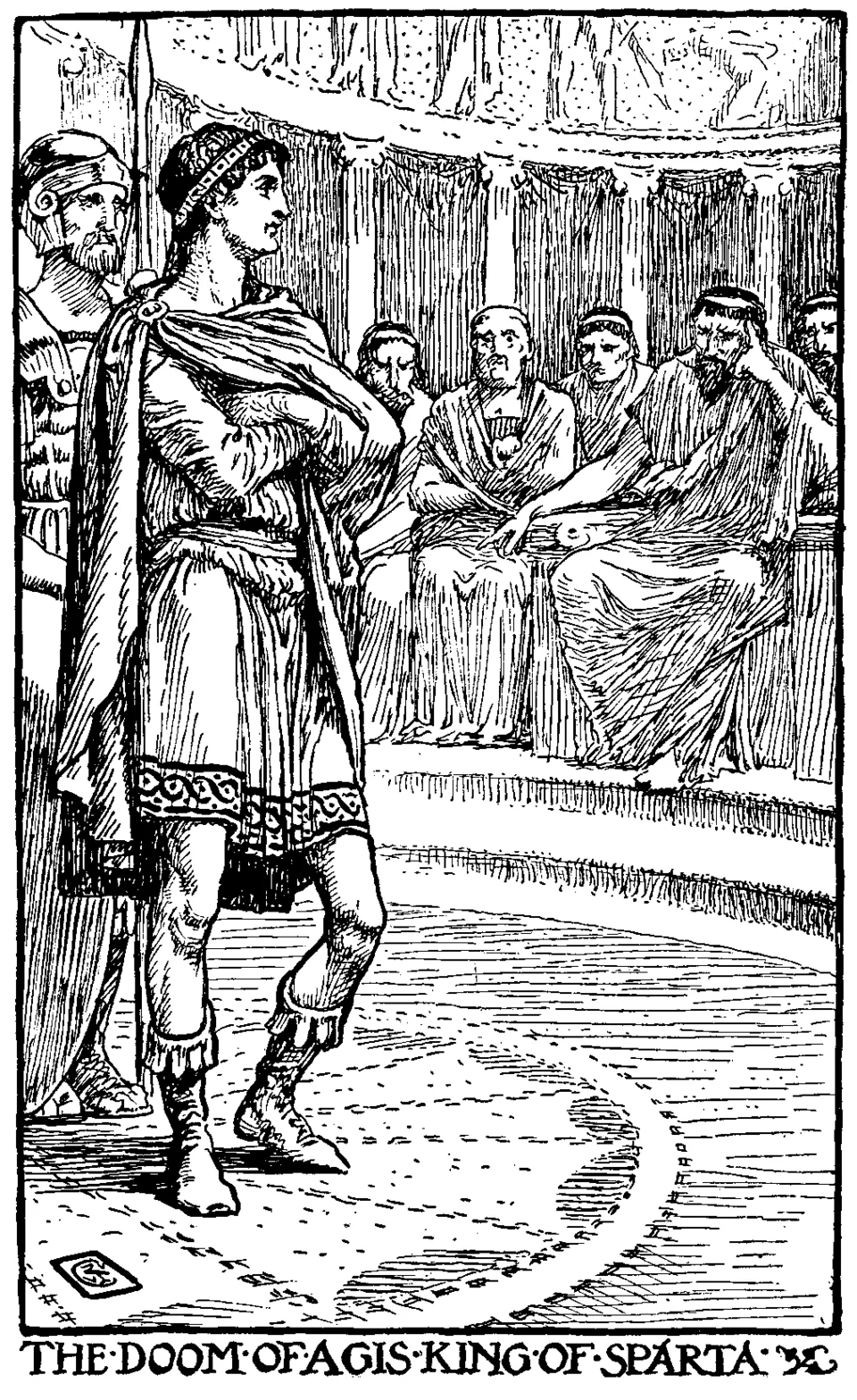
Walter Crane's later illustration of the doom of Agis IV. The king's appearance is imagined, and the scene is not an eyewitness record.
Walter Crane / Wikimedia Commons. Public domain. Resized and converted to WebP. ↗Public domain. License terms ↗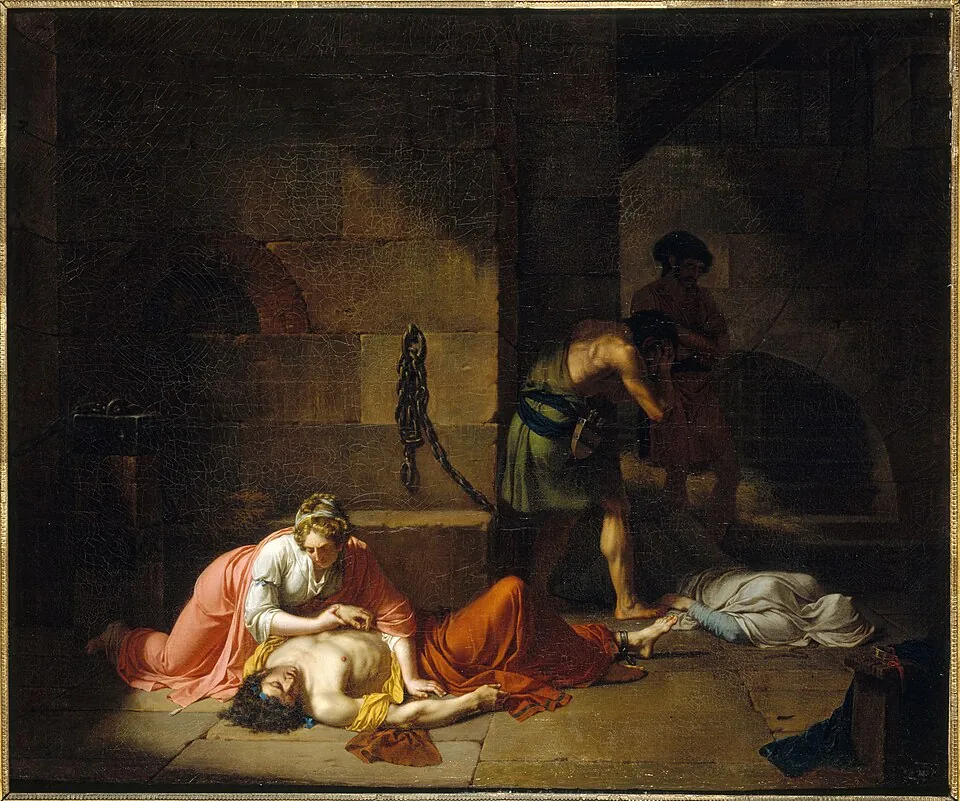
Nicolas-André Monsiau's The Death of Agis, a later European reconstruction of the fate of Agis IV.
Nicolas-André Monsiau / Wikimedia Commons. Public domain. Resized and converted to WebP. ↗Public domain. License terms ↗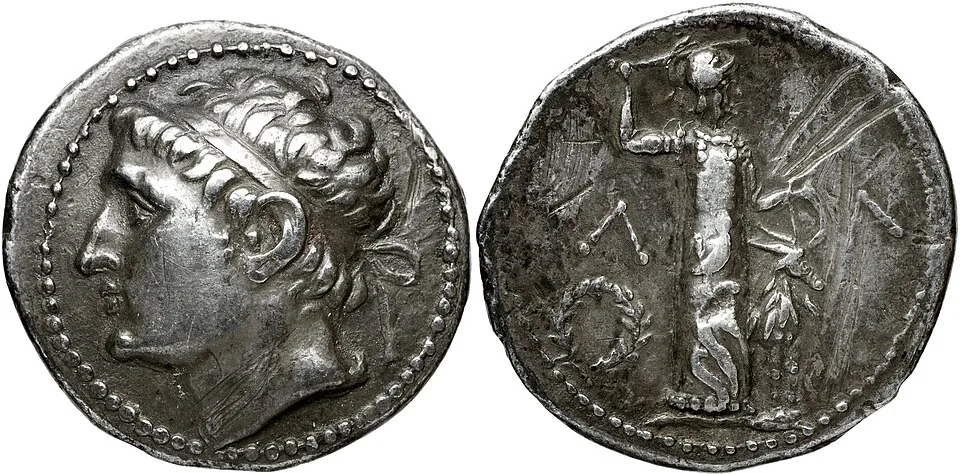
A silver tetradrachm of Cleomenes III, dated 226–222 BCE. The royal head is ancient coin imagery; its exact relationship to the king's appearance cannot be established.
Gallica / Wikimedia Commons. CC BY-SA 4.0. Resized and converted to WebP. ↗CC BY-SA 4.0. License terms ↗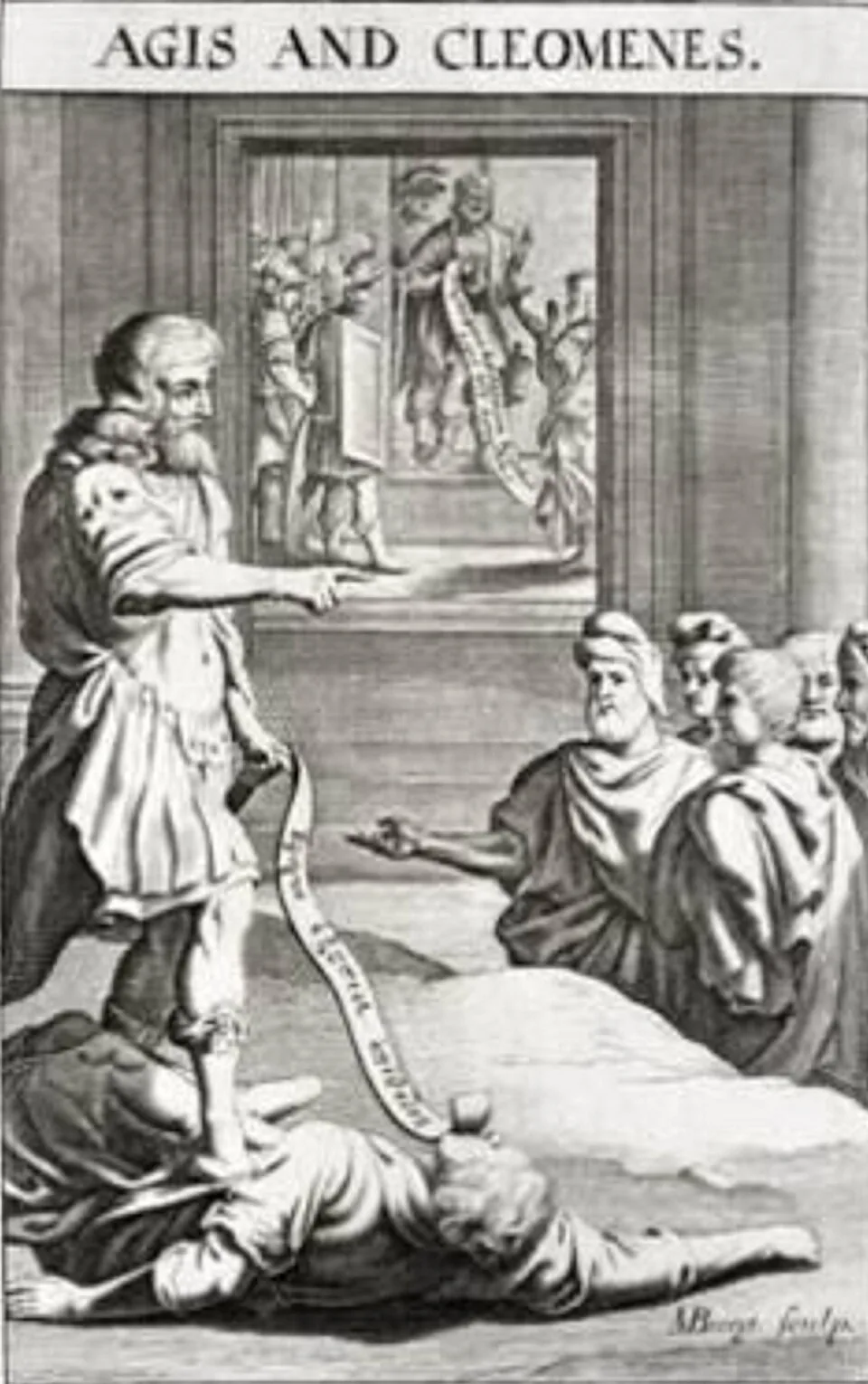
Michael Burghers's engraving for Plutarch's Lives of Agis IV and Cleomenes III, published in 1711. The individual figures are not securely identified; the foreground may show Cleomenes after his attack on the ephors.
Michael Burghers, late 17th century / Wikimedia Commons. Public domain. Resized and converted to WebP. ↗Public domain. License terms ↗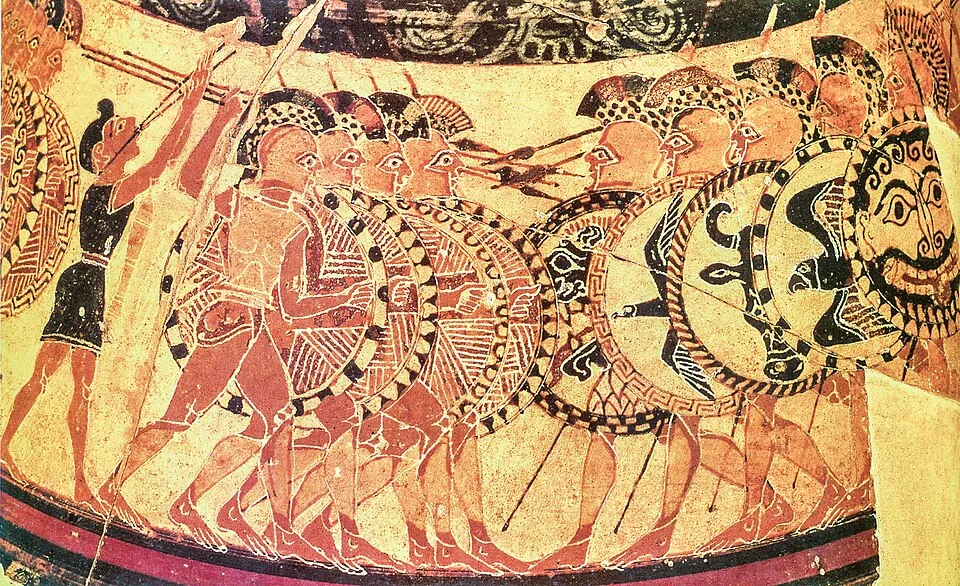
A seventh-century BCE Corinthian vase painting of hoplites. It is comparative Greek evidence, not an image of a specifically identified Spartan unit.
Chigi Painter. Via Wikimedia Commons. Resized and converted to WebP. ↗Public domain. License terms ↗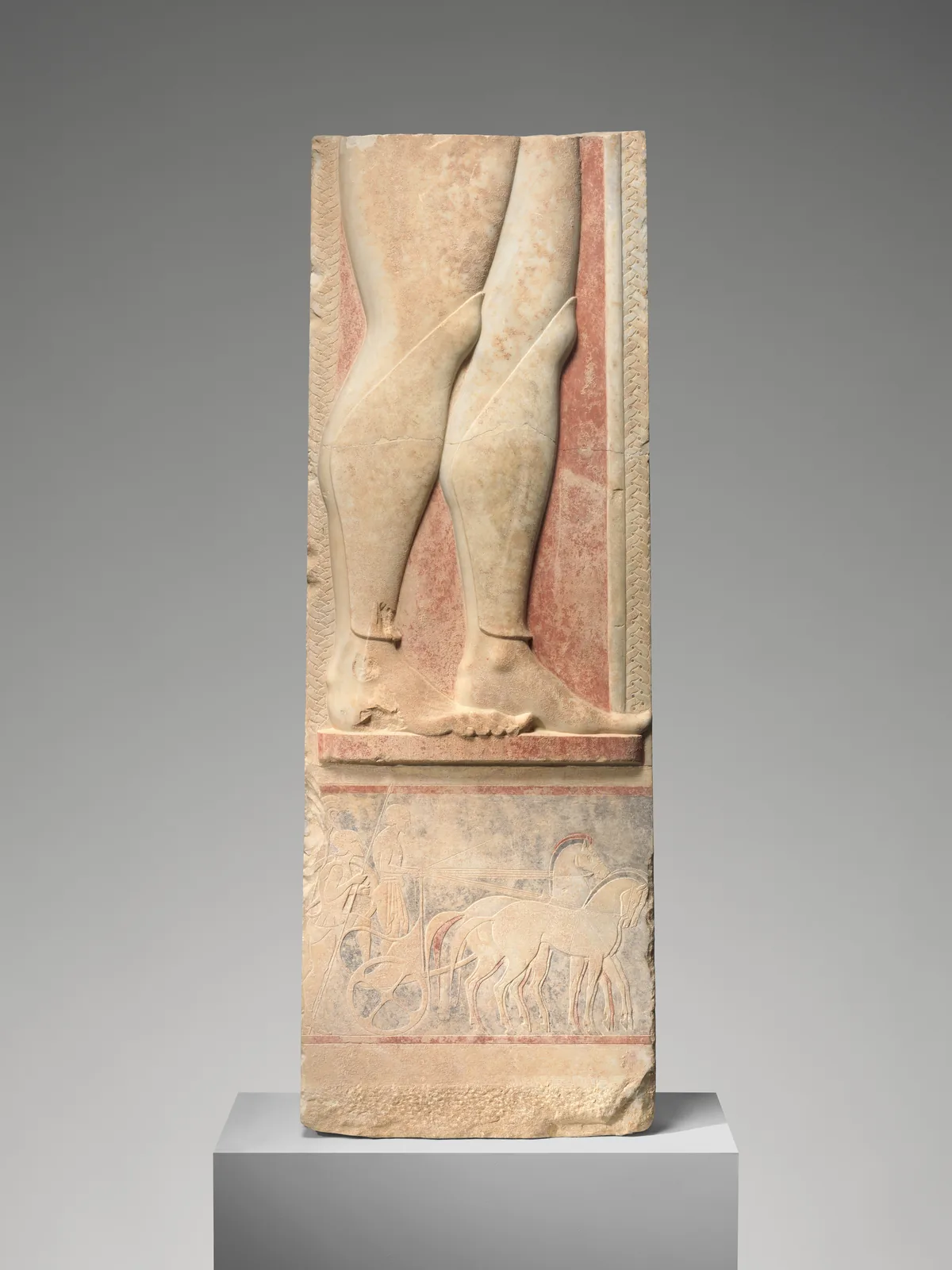
Attic marble grave-marker fragment of a hoplite, ca. 525–515 BCE. This is comparative Greek evidence for a soldier’s commemoration, not a specifically Spartan monument.
The Metropolitan Museum of Art, Fletcher Fund, 1938, 38.11.13. Resized and converted to WebP. ↗CC0. License terms ↗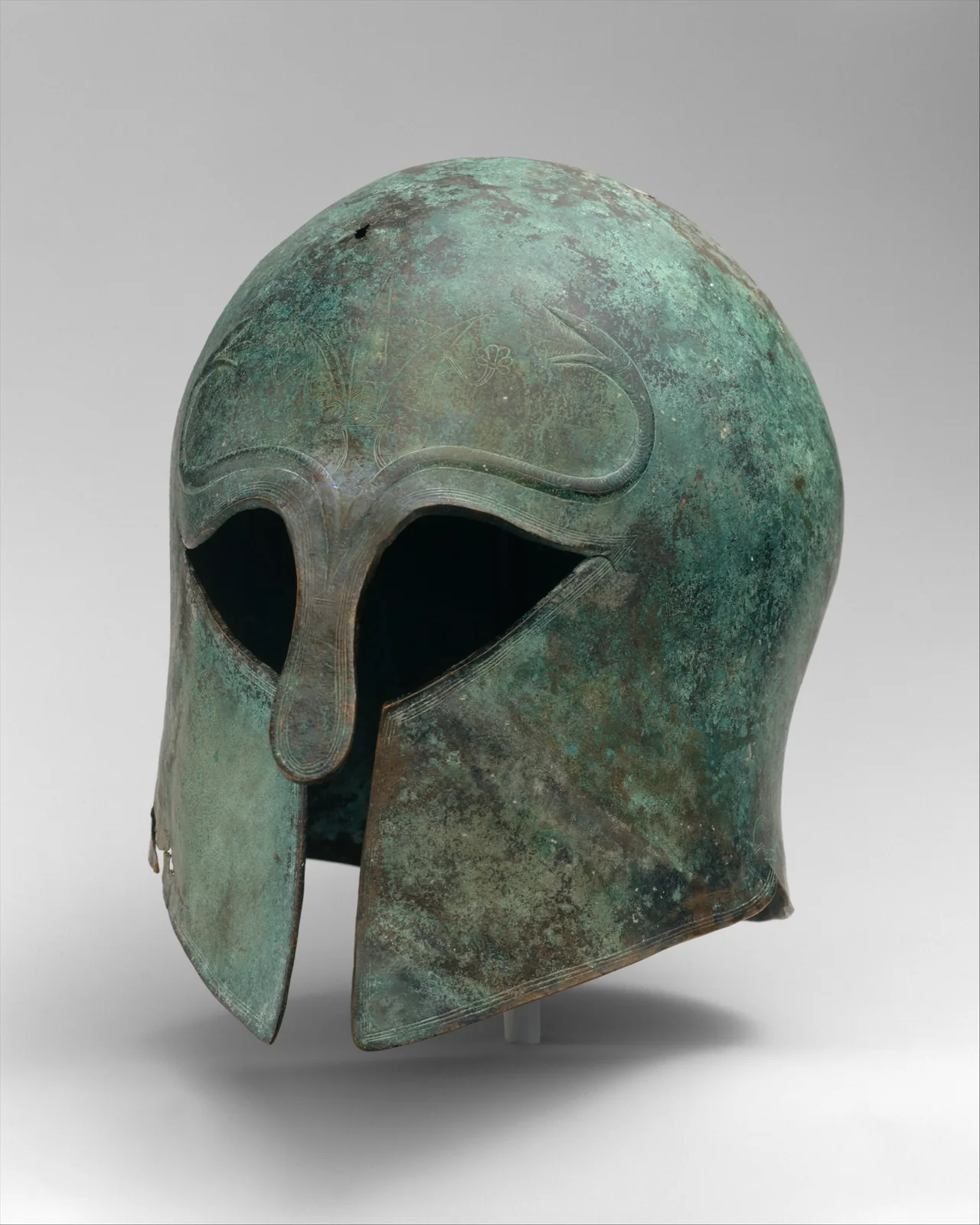
Greek bronze helmet of Corinthian type, ca. 600–575 BCE. The museum does not identify this particular object as Spartan.
The Metropolitan Museum of Art, Dodge Fund, 1955, 55.11.10. Public domain (CC0). Resized and converted to WebP. ↗CC0 1.0 / Public domain. License terms ↗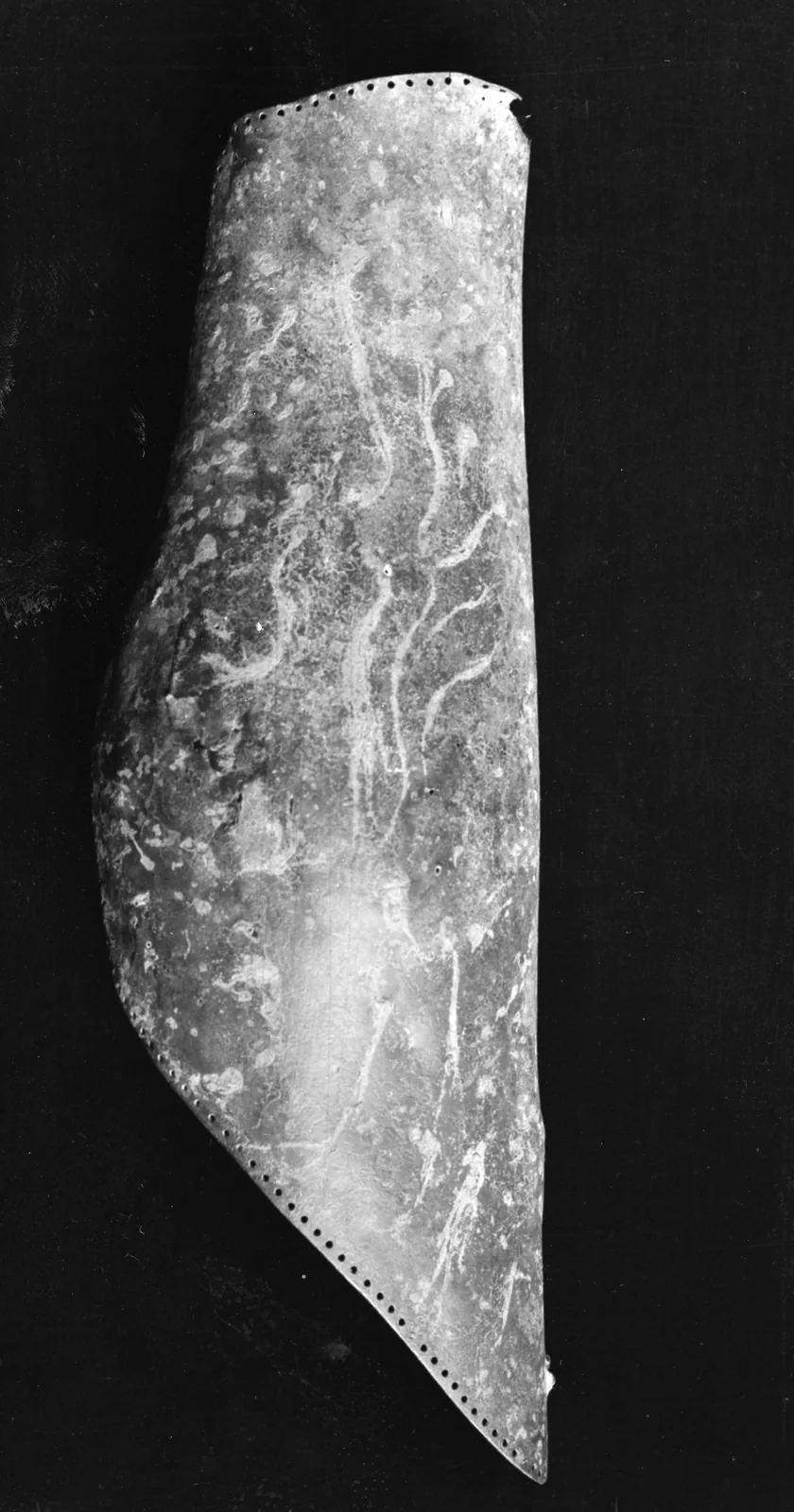
An ancient Greek bronze greave from The Met’s collection. This comparative armor piece is not attributed to a particular Spartan wearer.
The Metropolitan Museum of Art, Rogers Fund, 1906, 06.1076. Resized and converted to WebP. ↗CC0. License terms ↗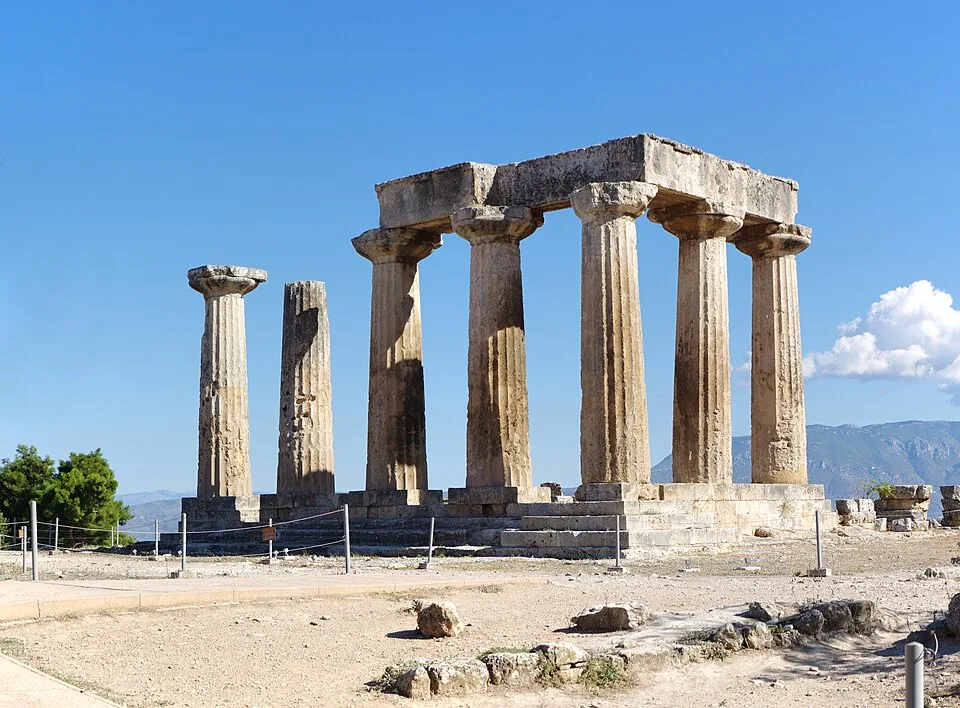
The surviving Temple of Apollo at Corinth, a city closely involved in the Peloponnesian alliance. The photograph shows the site today.
Berthold Werner. Via Wikimedia Commons. Resized and converted to WebP. ↗CC BY-SA 3.0. License terms ↗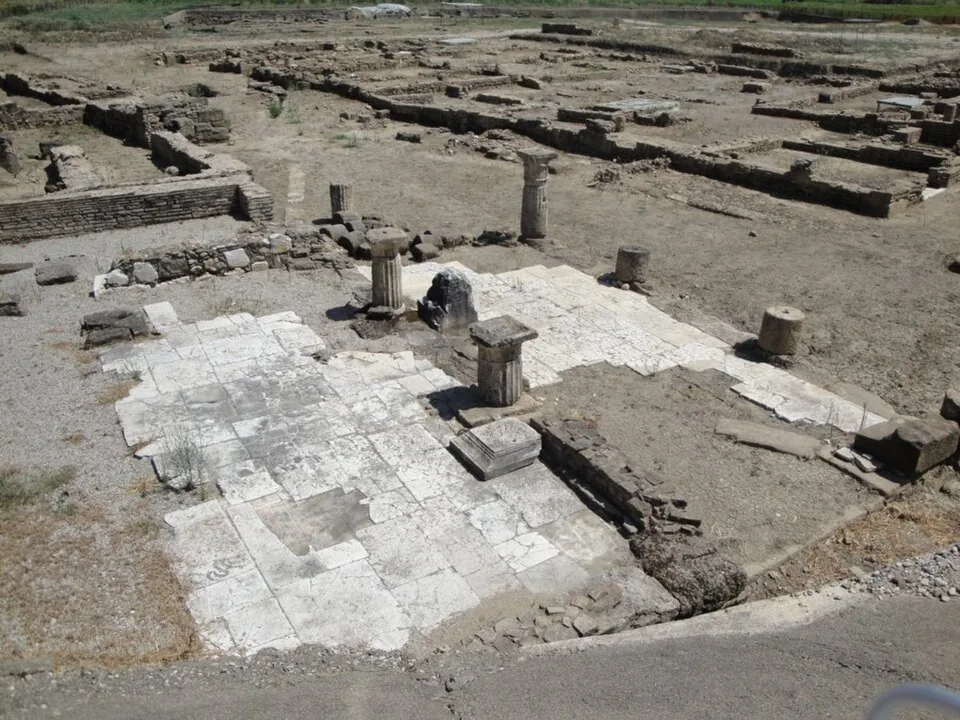
Excavated remains at Elis, one of the Peloponnesian communities involved in Sparta’s shifting network of alliances.
Tkoletsis. Via Wikimedia Commons. Resized and converted to WebP. ↗CC BY-SA 3.0. License terms ↗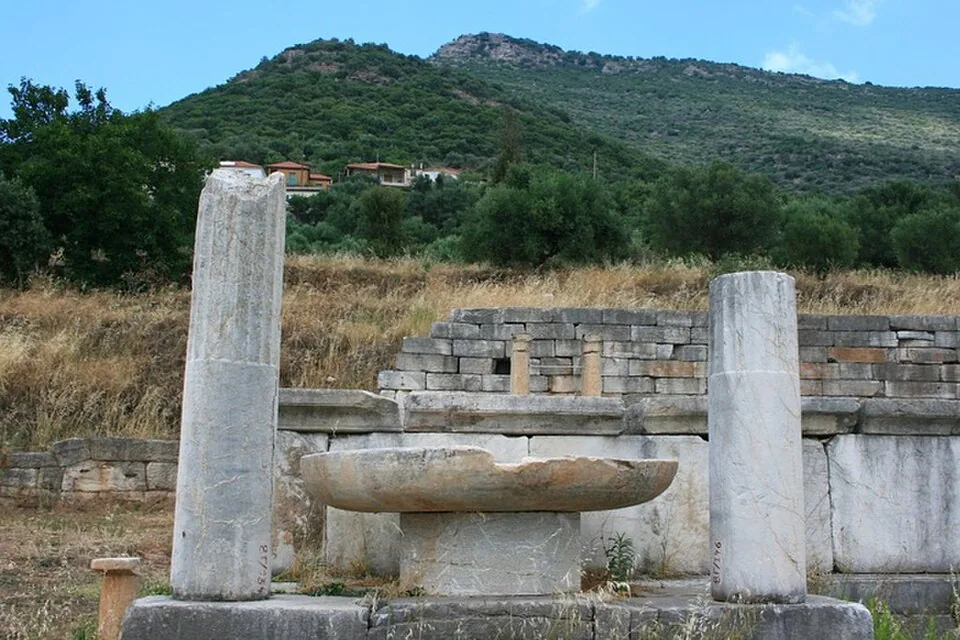
A modern view from ancient Messene toward Mavromati and the surrounding hills, including Ithome. The visible ruins belong to the later city, not the early Messenian wars.
Stefan Artinger. Via Wikimedia Commons. Resized and converted to WebP. ↗CC0. License terms ↗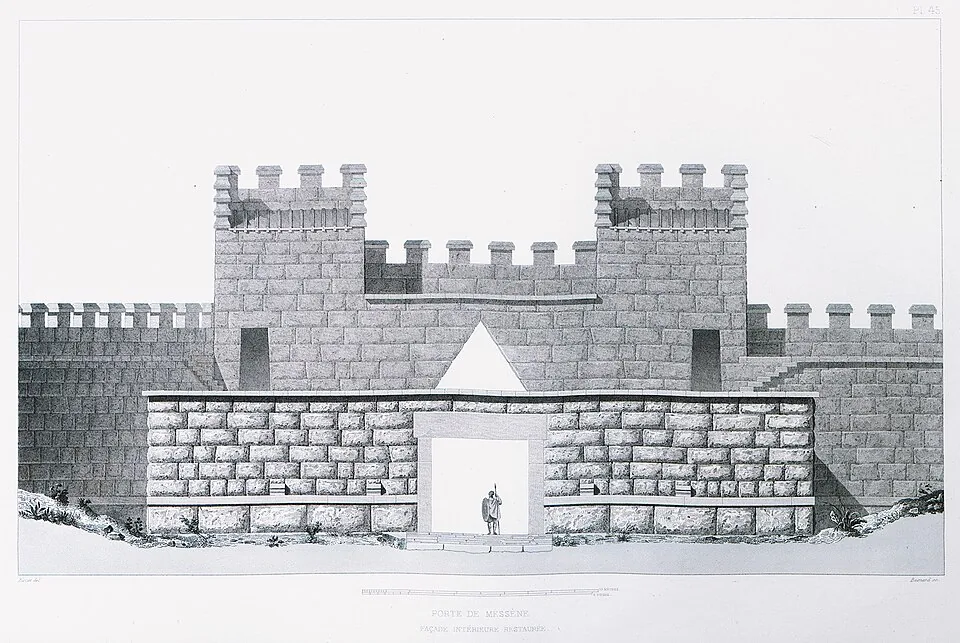
A nineteenth-century reconstruction drawing of Messene’s Arcadian Gate. It depicts the later independent city’s defenses, not the early Messenian wars.
Unknown nineteenth-century illustrator. Via Wikimedia Commons. Public domain. Resized and converted to WebP. ↗Public domain. License terms ↗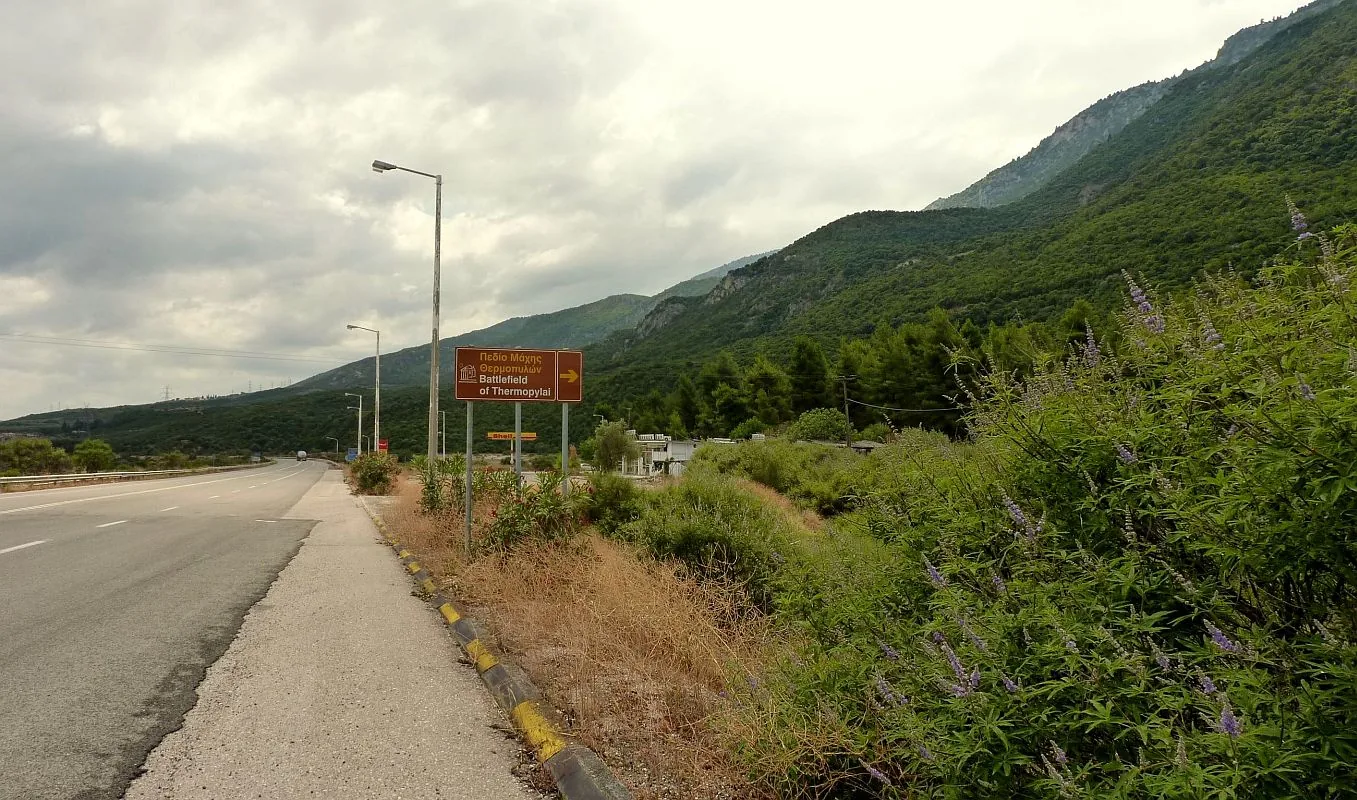
The modern road and landscape near Thermopylae, photographed in 2013. The shoreline and transport routes have changed since 480 BCE.
Ronny Siegel, via Wikimedia Commons. CC BY 3.0. Resized and converted to WebP. ↗CC BY 3.0. License terms ↗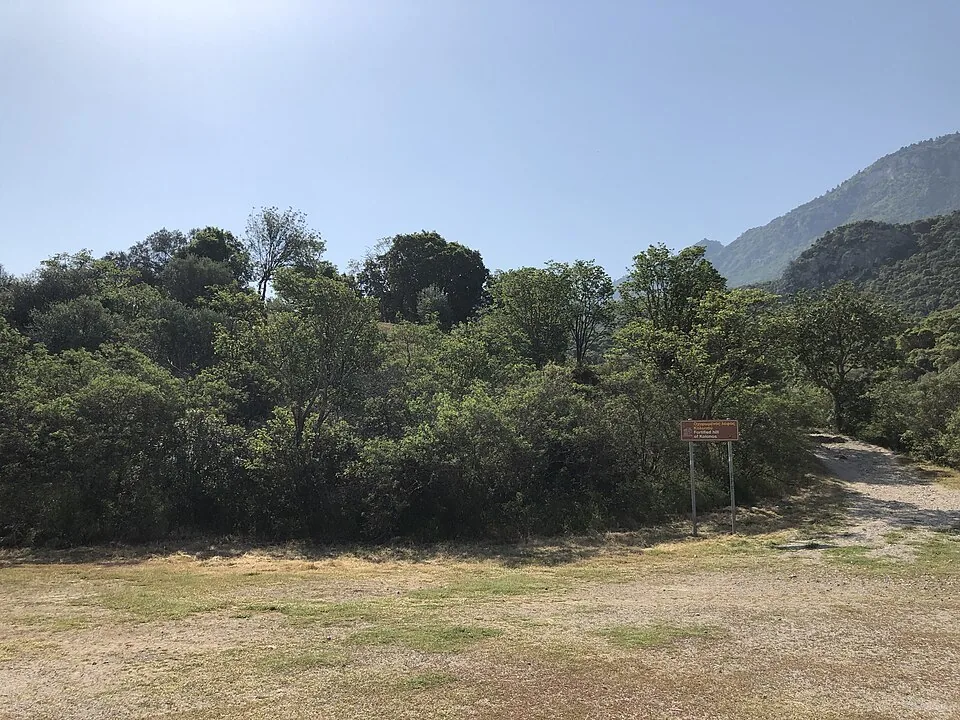
The Hill of Kolonos at Thermopylae in a modern photograph. Its present vegetation and commemorative setting are later than the battle.
Davide Mauro. Via Wikimedia Commons. Resized and converted to WebP. ↗CC BY-SA 4.0. License terms ↗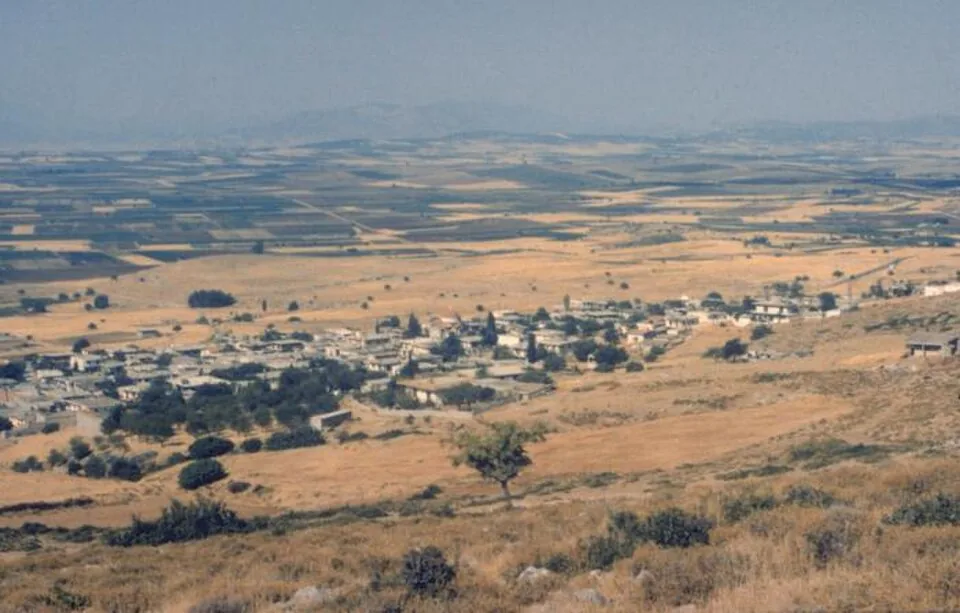
Plataea seen from the south in a modern photograph. The landscape locates the ancient city, without reconstructing troop positions.
Jona Lendering. Via Wikimedia Commons. Resized and converted to WebP. ↗CC0. License terms ↗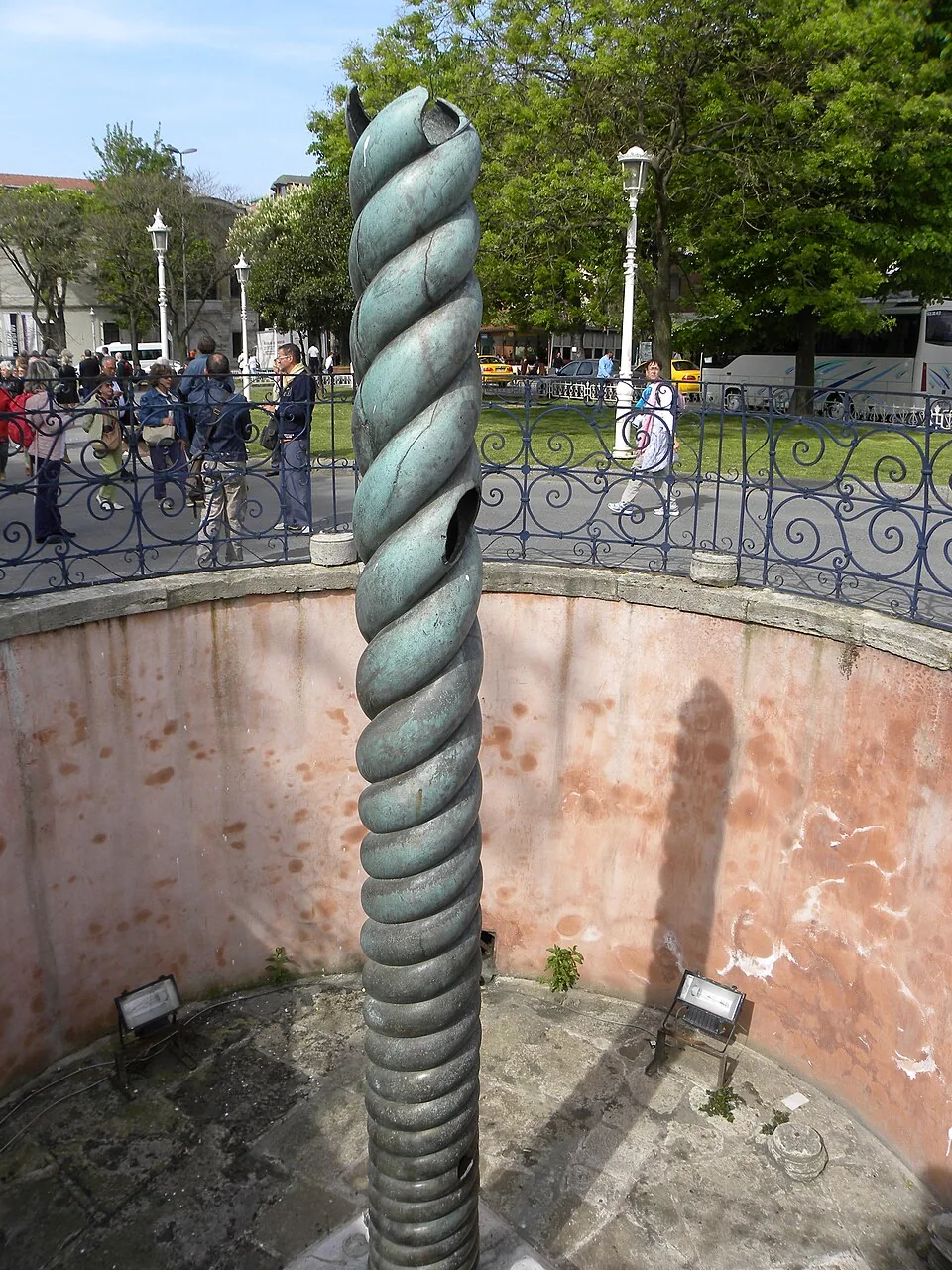
The surviving bronze Serpent Column in Istanbul, originally dedicated at Delphi after the Greek victory over Persia in 479 BCE.
Ian Scott. Via Wikimedia Commons. Resized and converted to WebP. ↗CC BY-SA 2.0. License terms ↗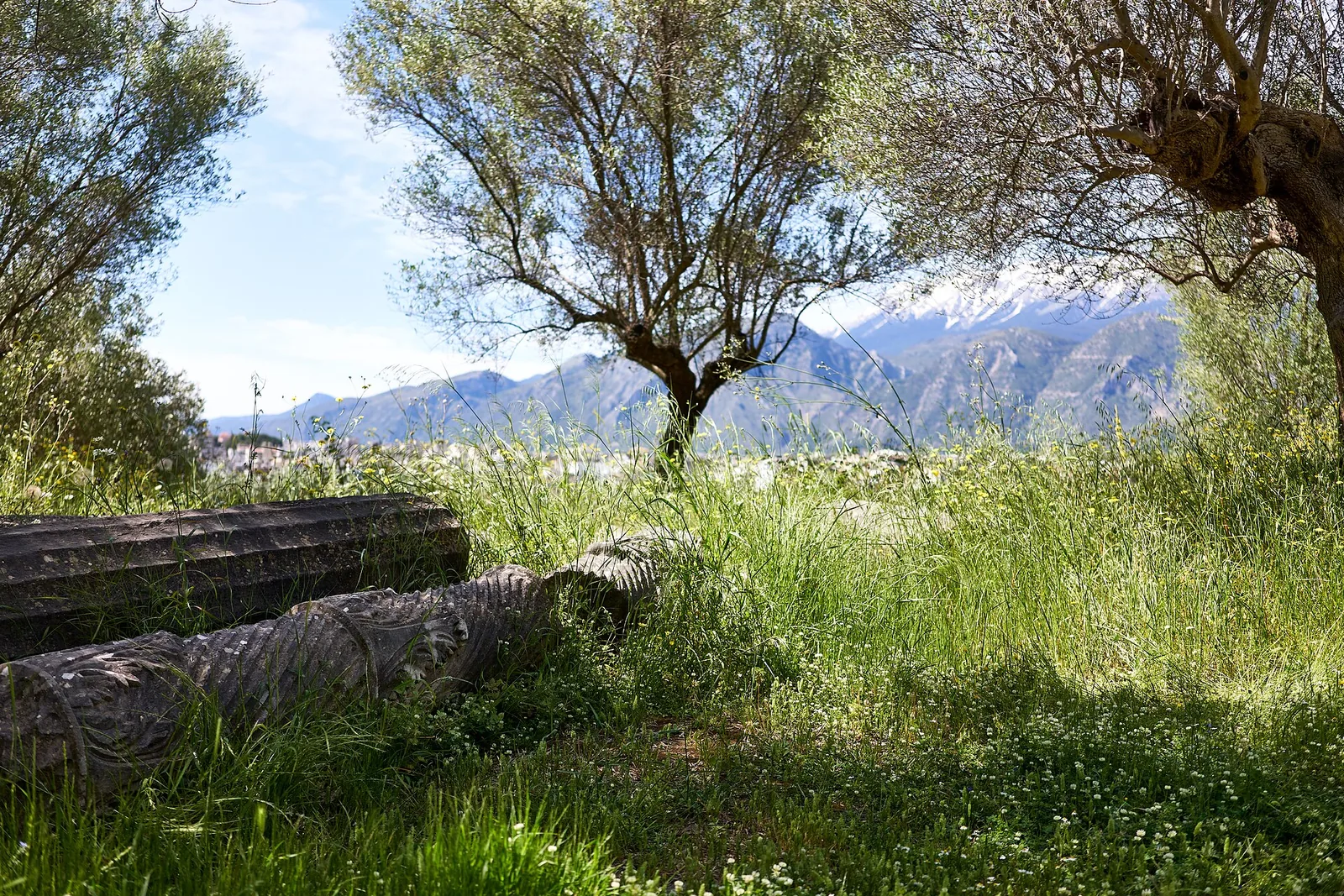
A modern view of Taygetus through the ruins and olive trees at Sparta. It locates the landscape; it does not depict the ancient earthquake.
George E. Koronaios, via Wikimedia Commons. CC BY-SA 4.0. Resized and converted to WebP. ↗CC BY-SA 4.0. License terms ↗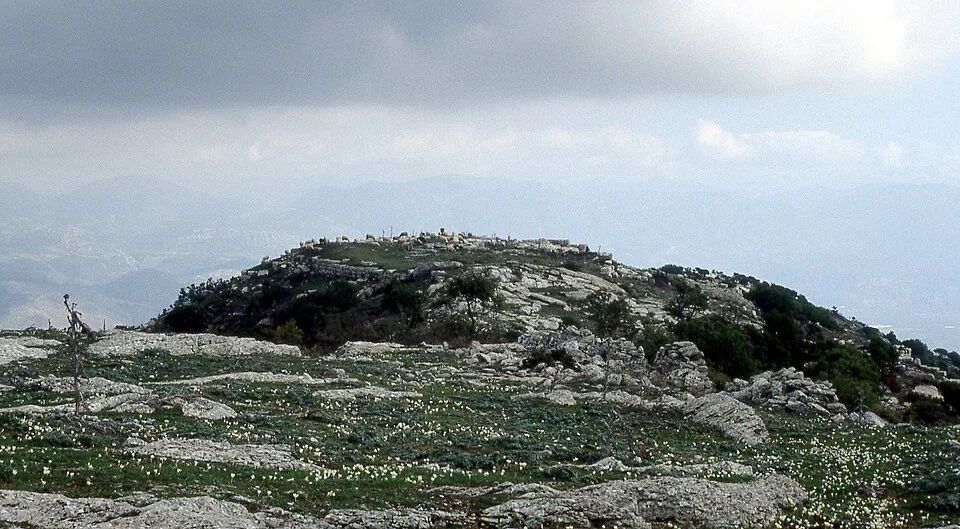
The eastern summit of Mount Ithome, photographed in 1990. The mountain was associated with the resistance following Sparta’s earthquake and helot revolt.
Mark Landon (photographed in 1990; digitized in 2021). Via Wikimedia Commons. Resized and converted to WebP. ↗CC BY-SA 4.0. License terms ↗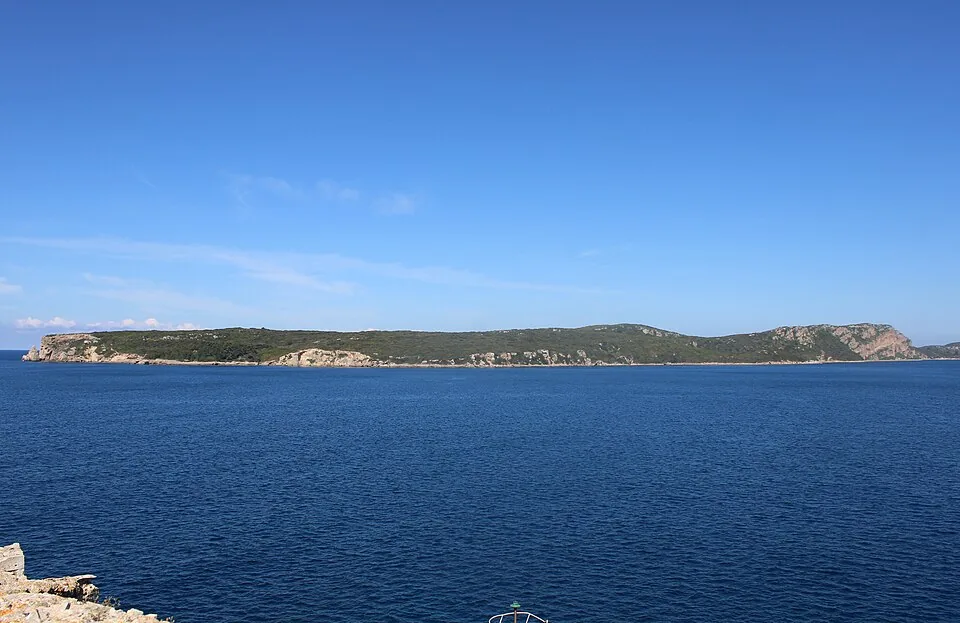
Sphacteria seen from Pylos in a modern photograph. The island and bay formed the setting for the events of 425 BCE.
Zunkir. Via Wikimedia Commons. Resized and converted to WebP. ↗CC BY-SA 4.0. License terms ↗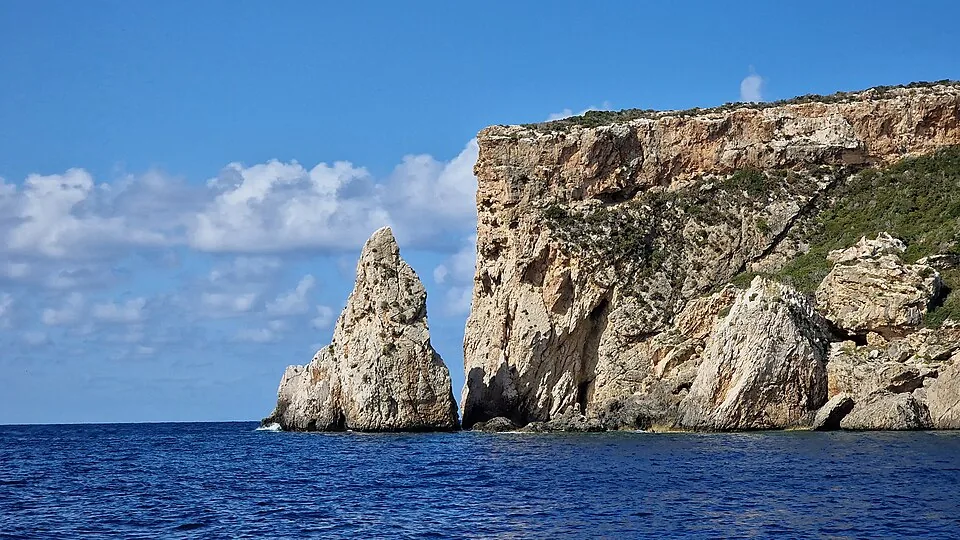
The coast of Sphacteria photographed in 2023. This present-day view illustrates the terrain, not the ancient battle or fortifications.
Rigorius. Via Wikimedia Commons. Resized and converted to WebP. ↗CC BY-SA 4.0. License terms ↗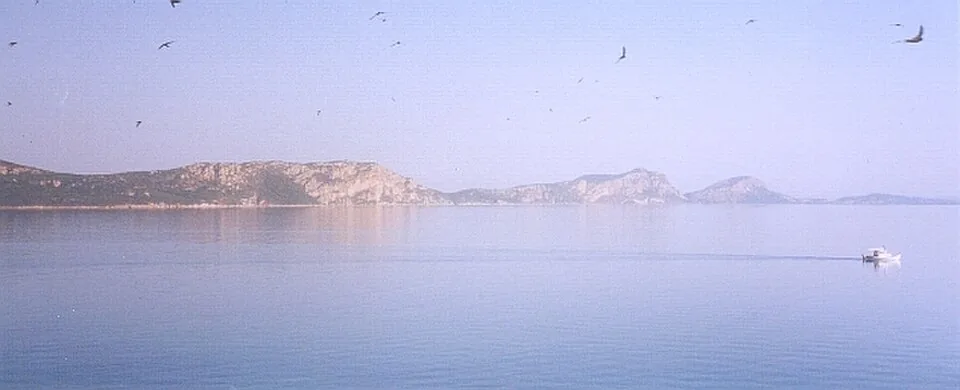
Sphacteria, the island off Pylos where Spartan troops were trapped in 425 BCE, photographed in the modern landscape.
Classical geographer / Wikimedia Commons. CC BY-SA 3.0. Resized and converted to WebP. ↗CC BY-SA 3.0. License terms ↗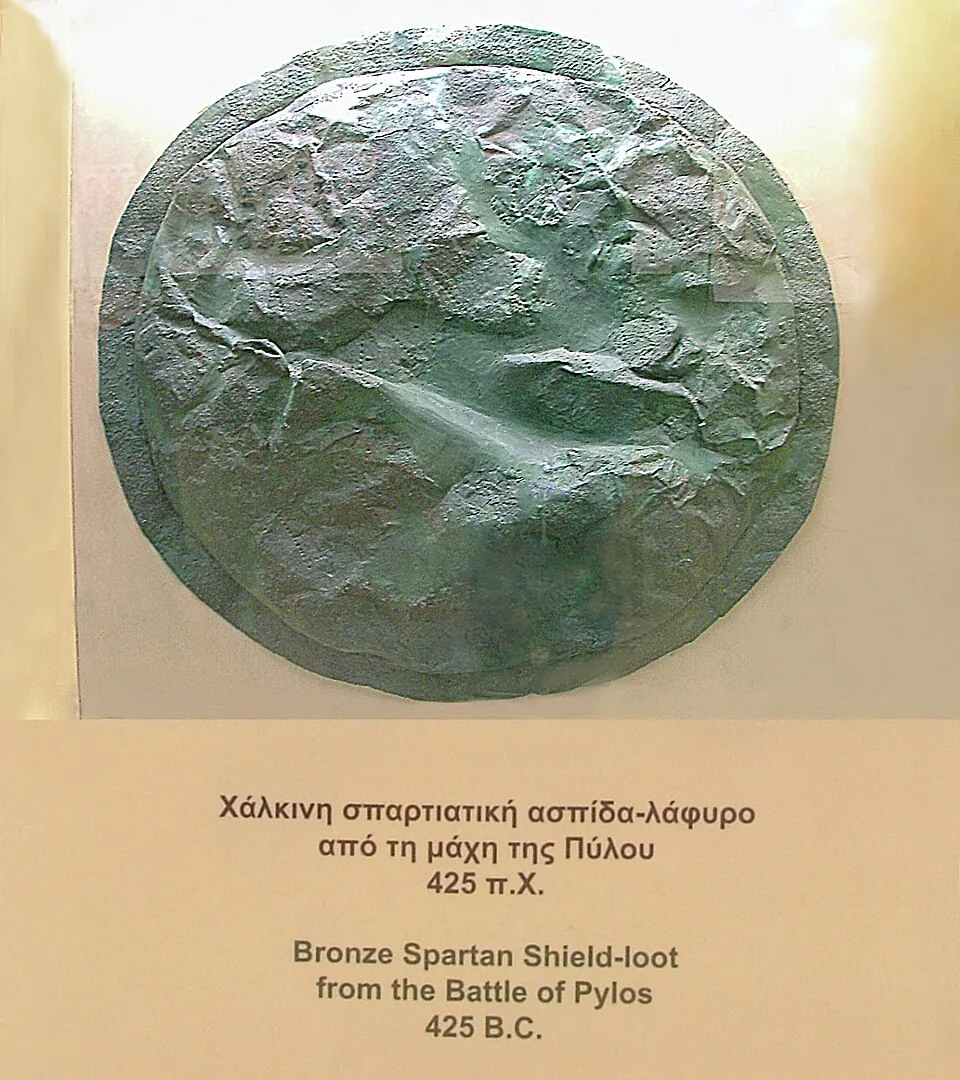
A bronze Spartan shield taken as spoil at Pylos in 425 BCE, now in the Ancient Agora Museum, Athens. The punched inscription records its capture by the Athenians.
Dorieo, Wikimedia Commons (License CC-BY-SA 4.0). Resized and converted to WebP. ↗CC BY-SA 4.0. License terms ↗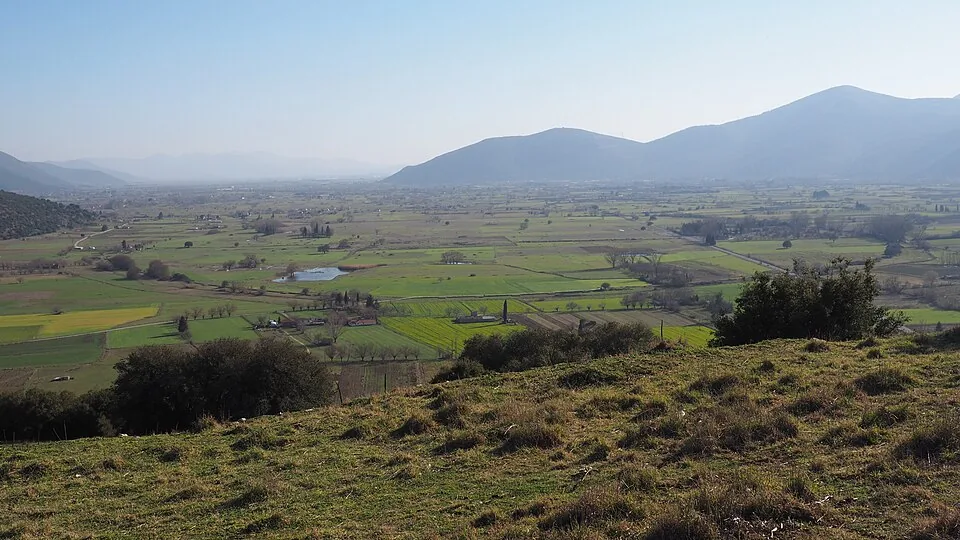
The archaeological landscape of Mantineia in Arcadia. These surviving ruins provide context for the region of the battle of 418 BCE.
SchneesturmKatze / Wikimedia Commons. CC BY-SA 4.0. Resized and converted to WebP. ↗CC BY-SA 4.0. License terms ↗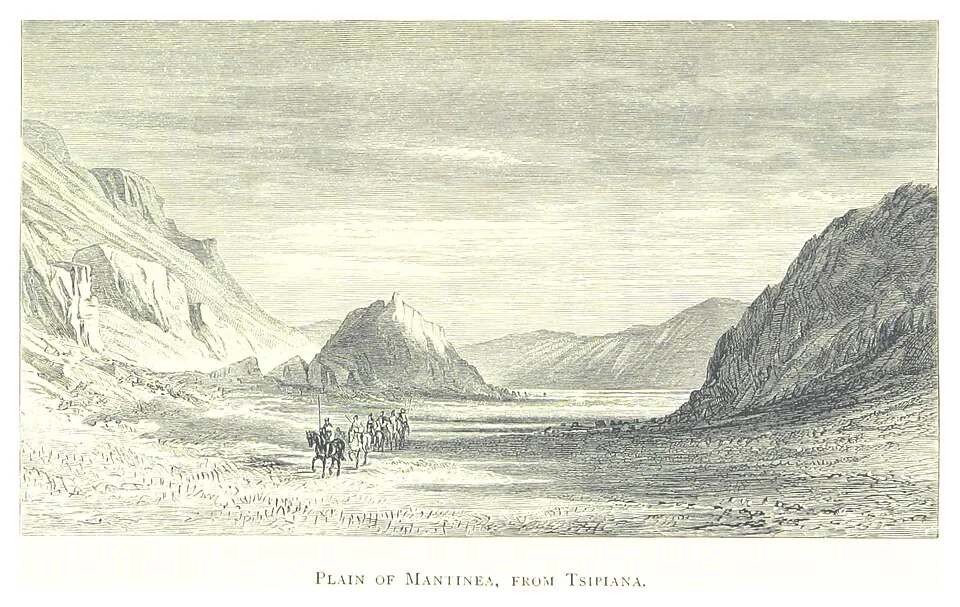
The Plains of Mantinea, from Tsipiana, an illustration published in 1882. It shows the later landscape, not the battle of 418 BCE.
Lord Windsor / Wikimedia Commons. Public domain. Resized and converted to WebP. ↗Public domain. License terms ↗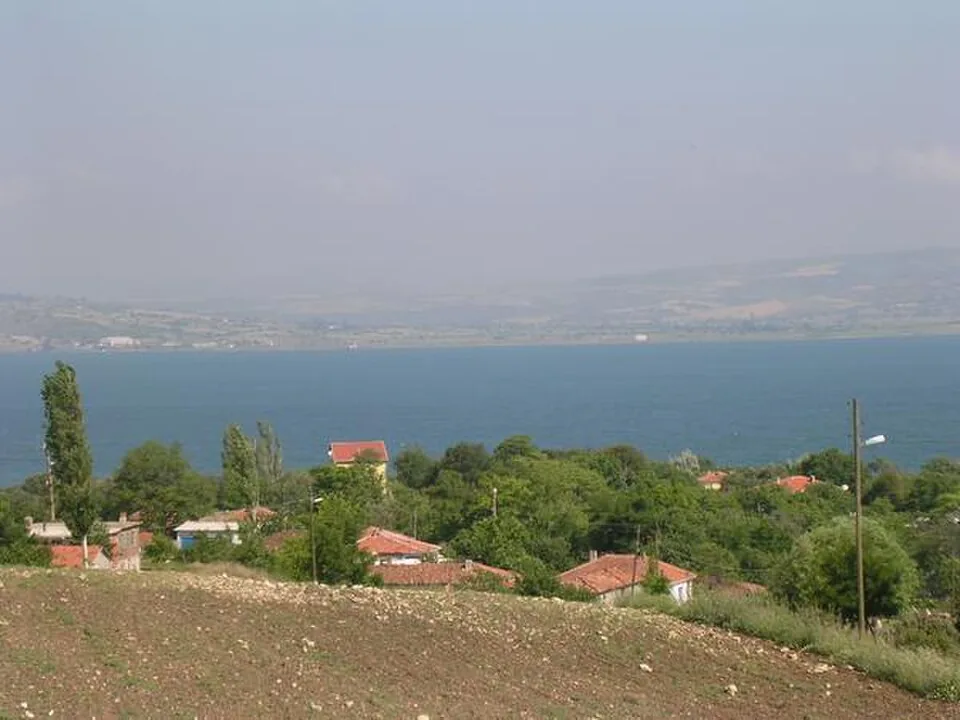
A modern view across the Hellespont toward Aegospotami, the setting of Lysander's decisive naval victory in 405 BCE.
Jona Lendering / Wikimedia Commons. CC0. Resized and converted to WebP. ↗CC0. License terms ↗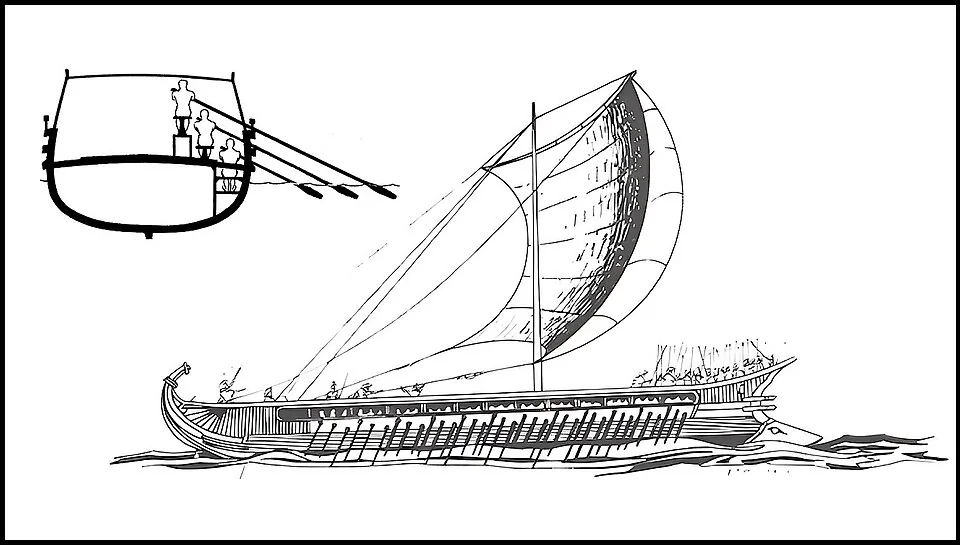
An educational reconstruction of a Greek trireme and its banks of oars. It illustrates the type of warship involved, not a specific surviving vessel from Aegospotami.
F. Mitchell / United States Military Academy; Pearson Scott Foresman; composite by GreekMaps / Wikimedia Commons. Public domain. Resized and converted to WebP. ↗Public domain. License terms ↗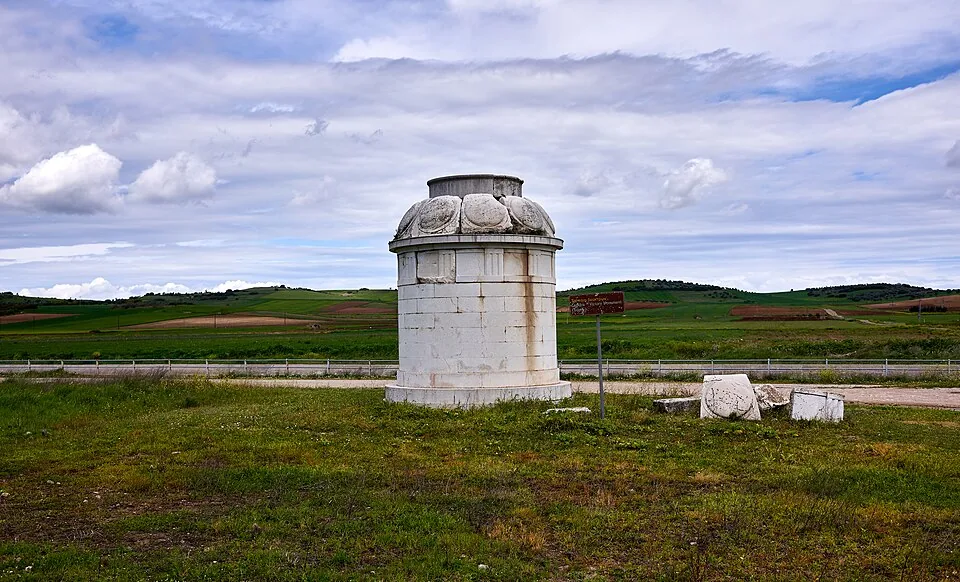
The restored Theban victory monument at Leuctra, commemorating the defeat of Sparta in 371 BCE.
George E. Koronaios / Wikimedia Commons. CC0. Resized and converted to WebP. ↗CC0. License terms ↗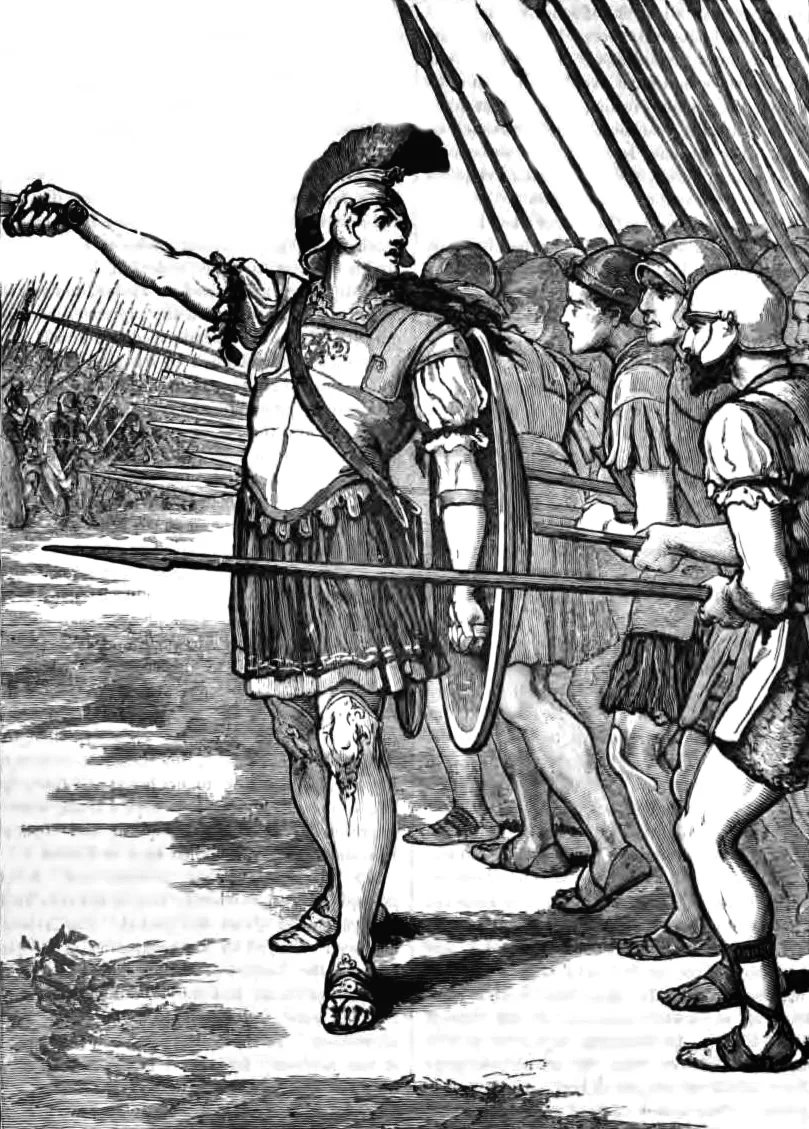
A later historical illustration of Pelopidas leading Theban troops at Leuctra. The battlefield scene and figures are imagined reconstructions.
Edmund Ollier Publication date 1882 / Wikimedia Commons. Public domain. Resized and converted to WebP. ↗Public domain. License terms ↗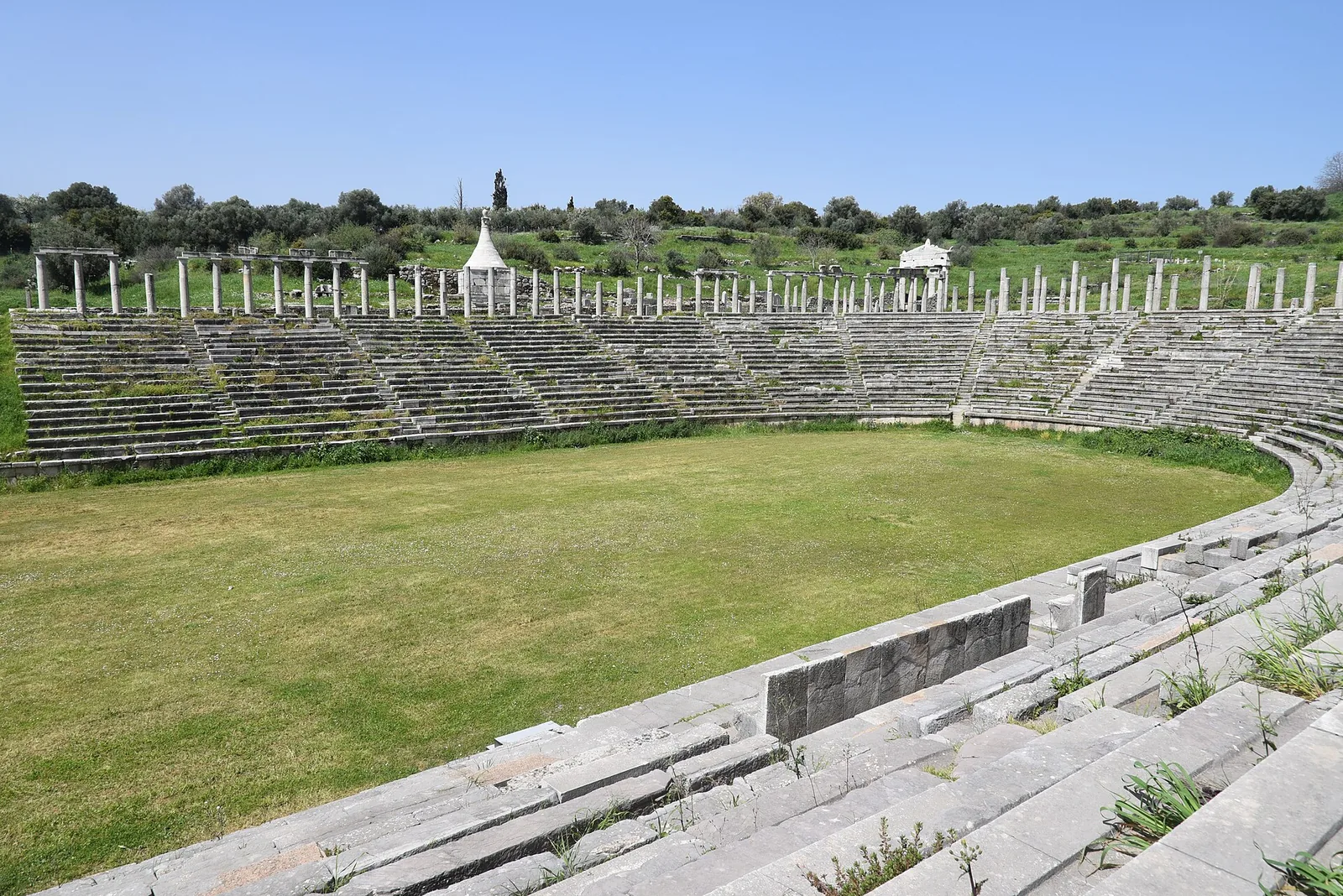
The stadium at Messene, in use from the third century BCE onward. It belongs to the city's history after Messenian independence from Sparta.
Carole Raddato from FRANKFURT, Germany / Wikimedia Commons. CC BY-SA 2.0. Resized and converted to WebP. ↗CC BY-SA 2.0. License terms ↗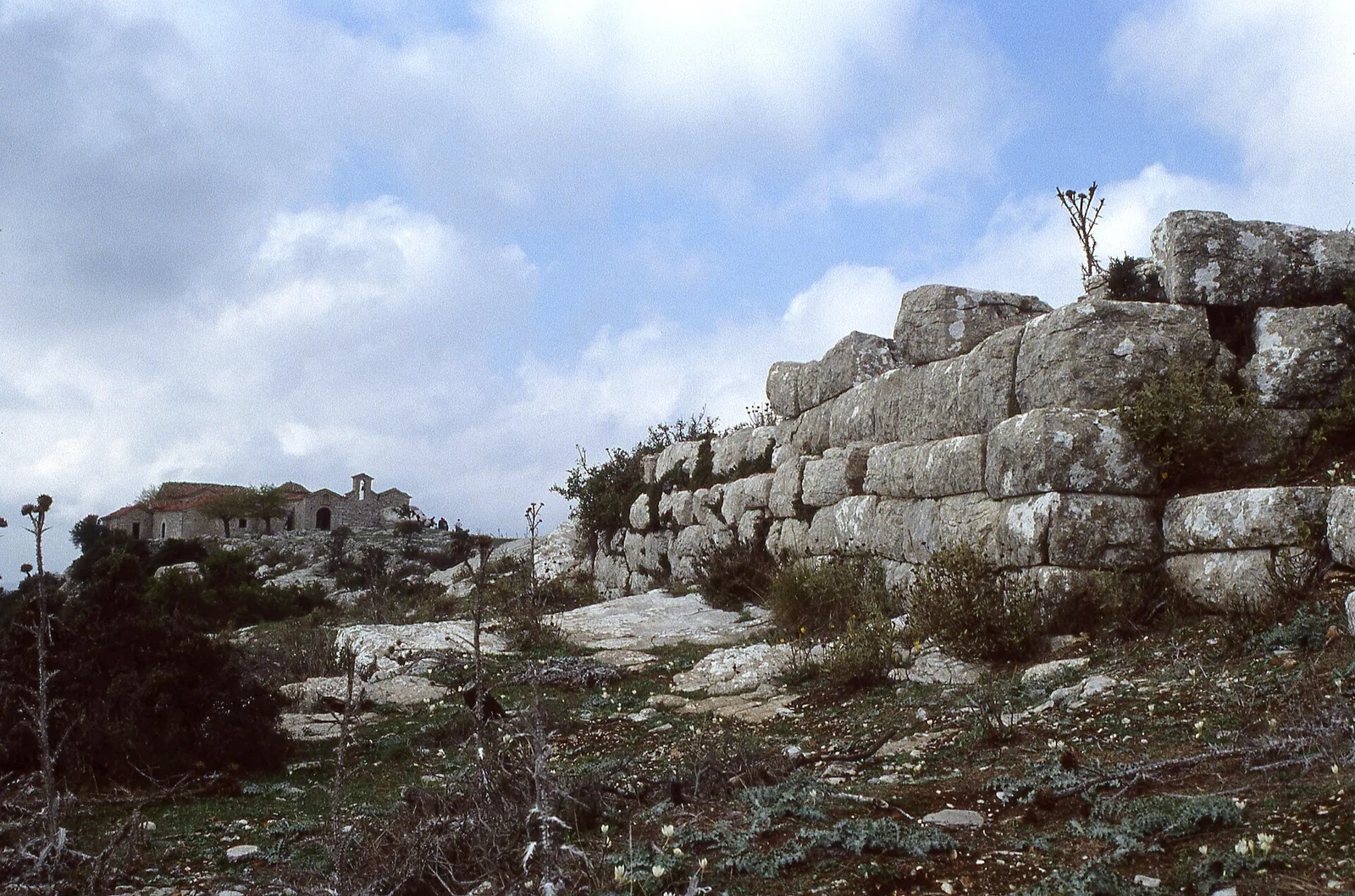
Ancient fortifications on the eastern summit of Mount Ithome, with the Old Voulkano monastery beyond. Ithome anchors the landscape of Messenian resistance and independence.
Mark Landon (photographed in 1990; digitized in 2021) / Wikimedia Commons. CC BY-SA 4.0. Resized and converted to WebP. ↗CC BY-SA 4.0. License terms ↗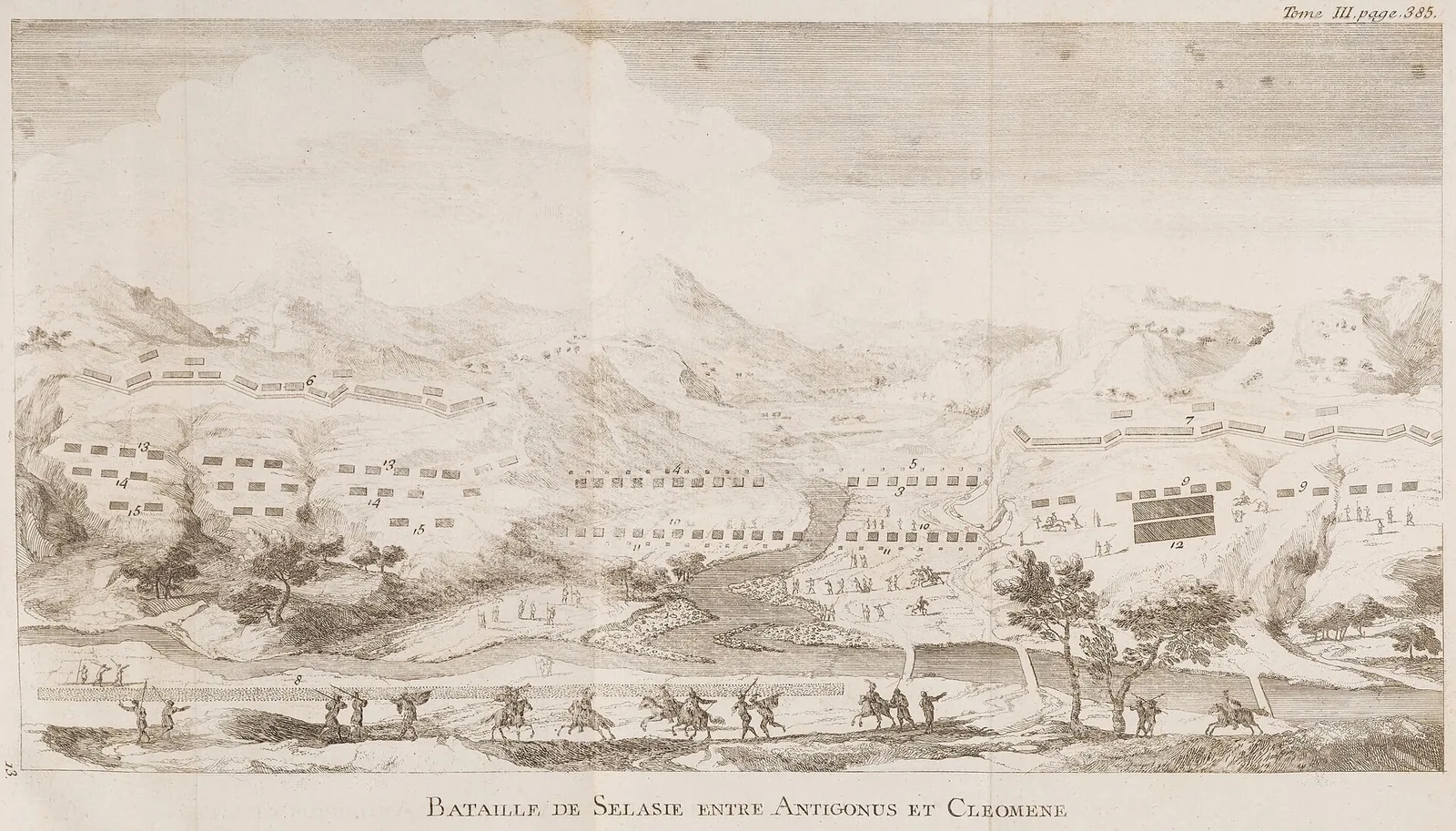
The battle of Sellasia between Antigonus and Cleomenes, illustrated for a 1728 edition of Polybius. A later imagined reconstruction of the battle.
Unknown author / Wikimedia Commons. Public domain. Resized and converted to WebP. ↗Public domain. License terms ↗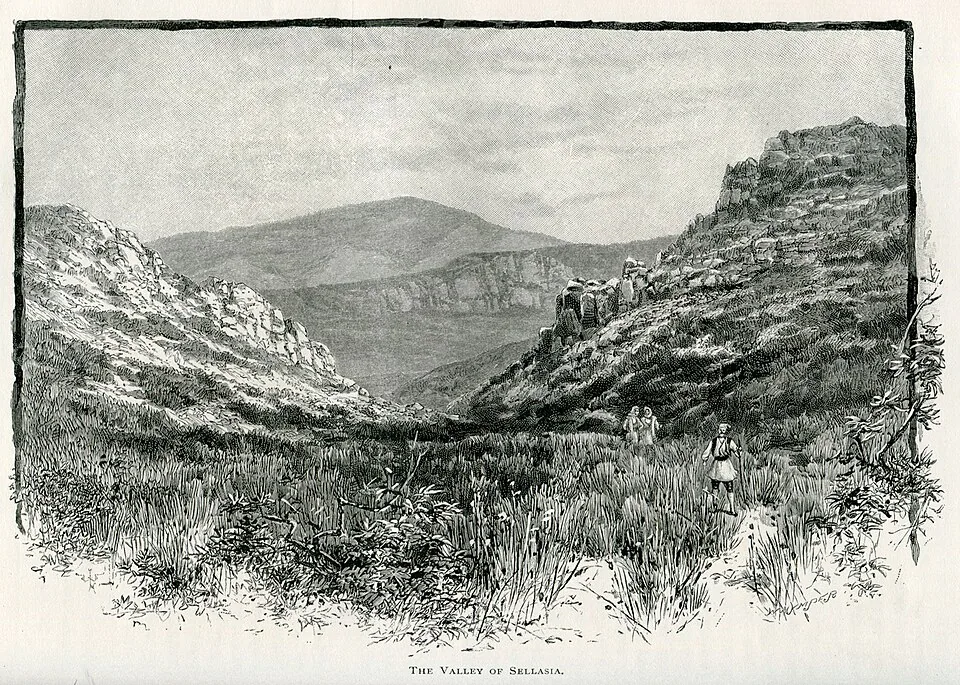
An illustration of the valley of Sellasia published in John Pentland Mahaffy's 1890 account. It records the later landscape rather than the ancient battle.
John Pentland Mahaffy / Wikimedia Commons. Public domain. Resized and converted to WebP. ↗Public domain. License terms ↗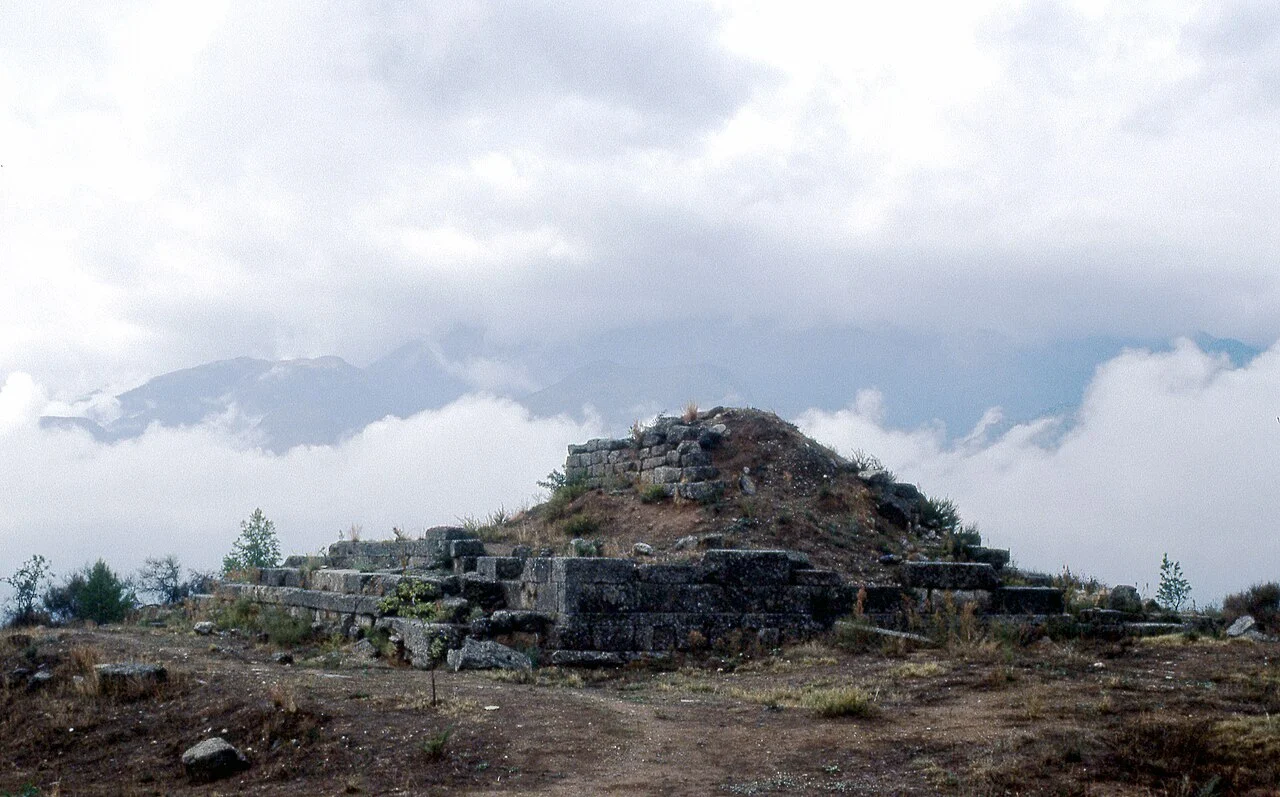
The Menelaion at Therapne, photographed in 1990. The sanctuary is not an authenticated palace or grave of Homer’s characters.
Mark Landon (photographed 1990; digitized 2021) ↗CC BY-SA 4.0. License terms ↗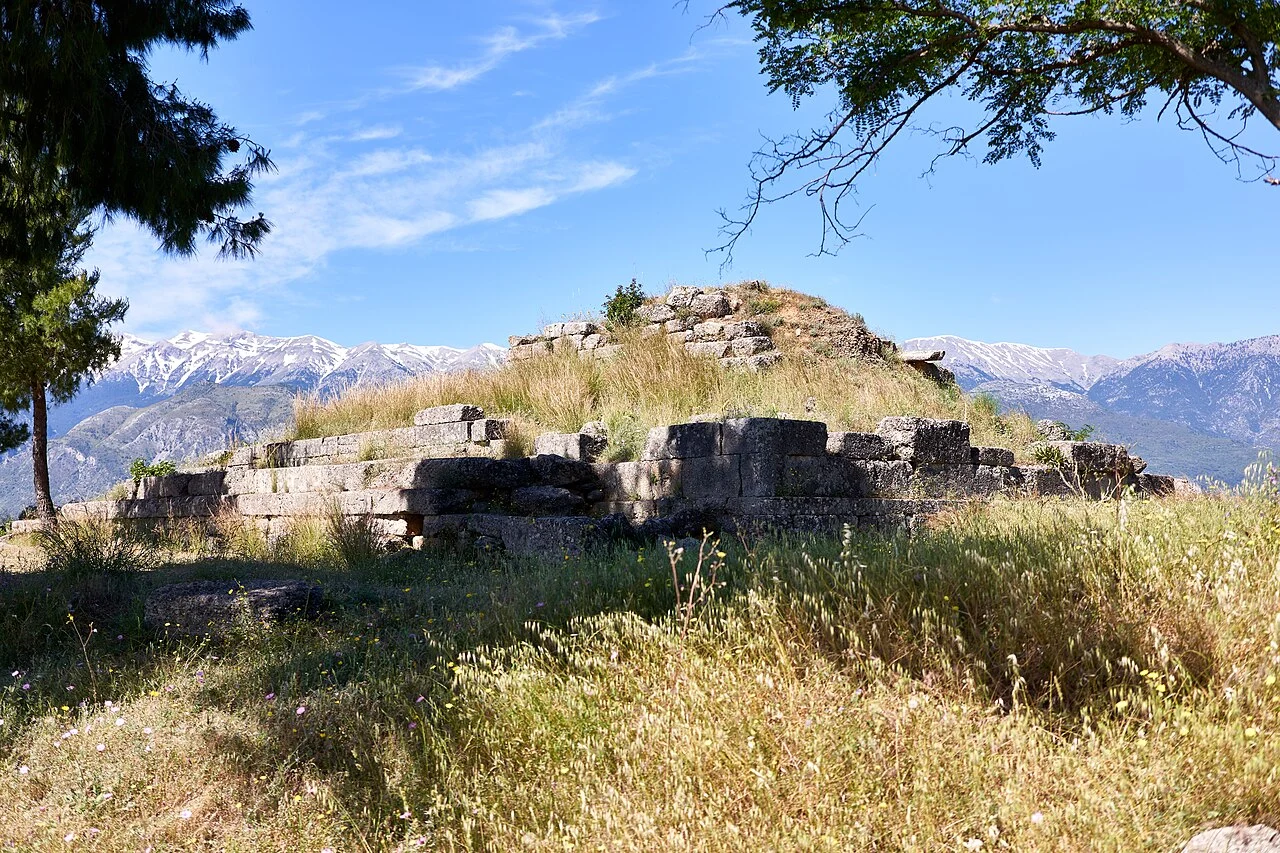
A different view of the sanctuary, photographed in 2019. Visible masonry and nearby Bronze Age remains must be distinguished.
George E. Koronaios ↗CC BY-SA 4.0. License terms ↗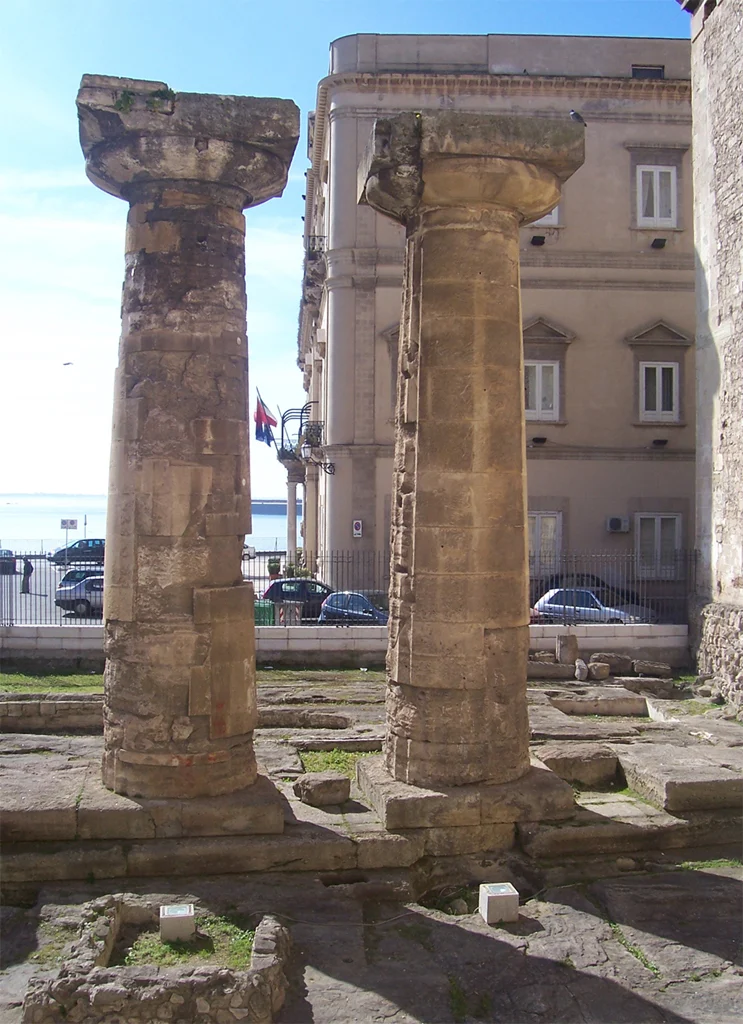
The early sixth-century BCE Doric temple remains in Piazza Castello. They postdate the traditional foundation of Taras.
Maximix, via Wikimedia Commons ↗CC BY-SA 3.0. License terms ↗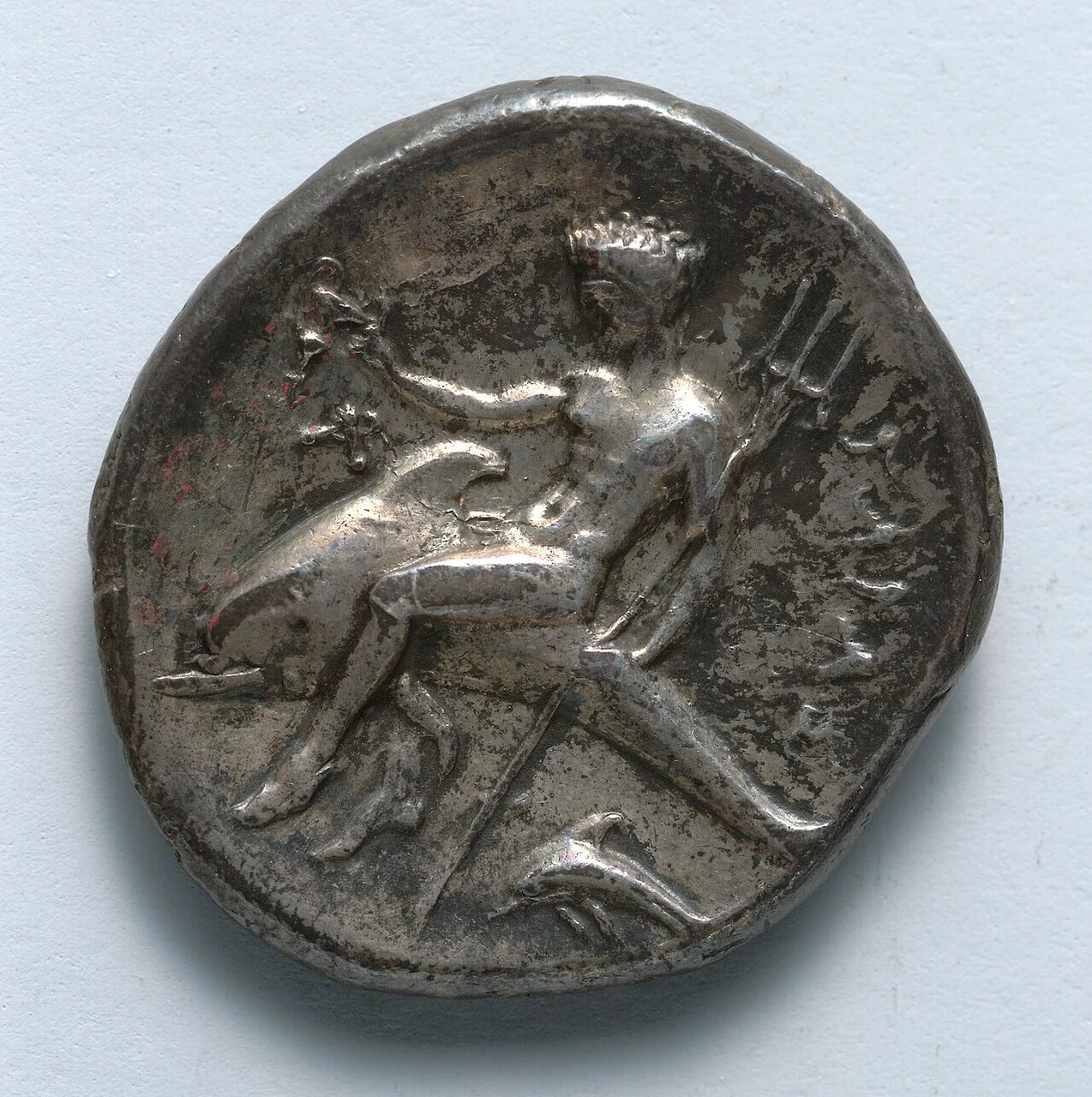
Reverse of a fourth-century BCE Tarentine silver stater: Taras on a dolphin. A mythical civic image, not a verified portrait of a historical founder. Cleveland Museum of Art, 1916.987.b.
Cleveland Museum of Art, Gift of J. H. Wade ↗CC0 1.0. License terms ↗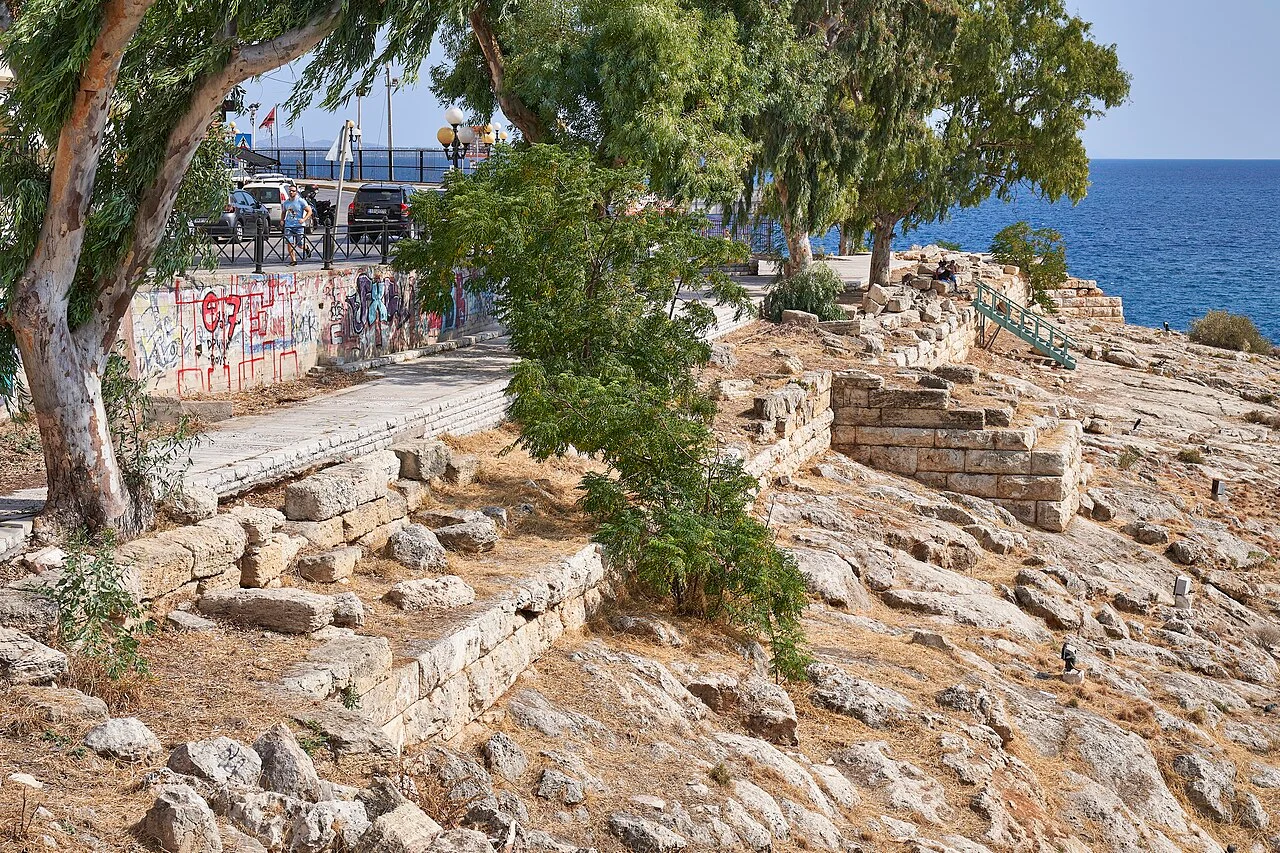
Fourth-century BCE fortification remains at Piraeus, photographed in 2021. They provide defensive context, not an identified point attacked by Sphodrias.
George E. Koronaios ↗CC BY-SA 2.0. License terms ↗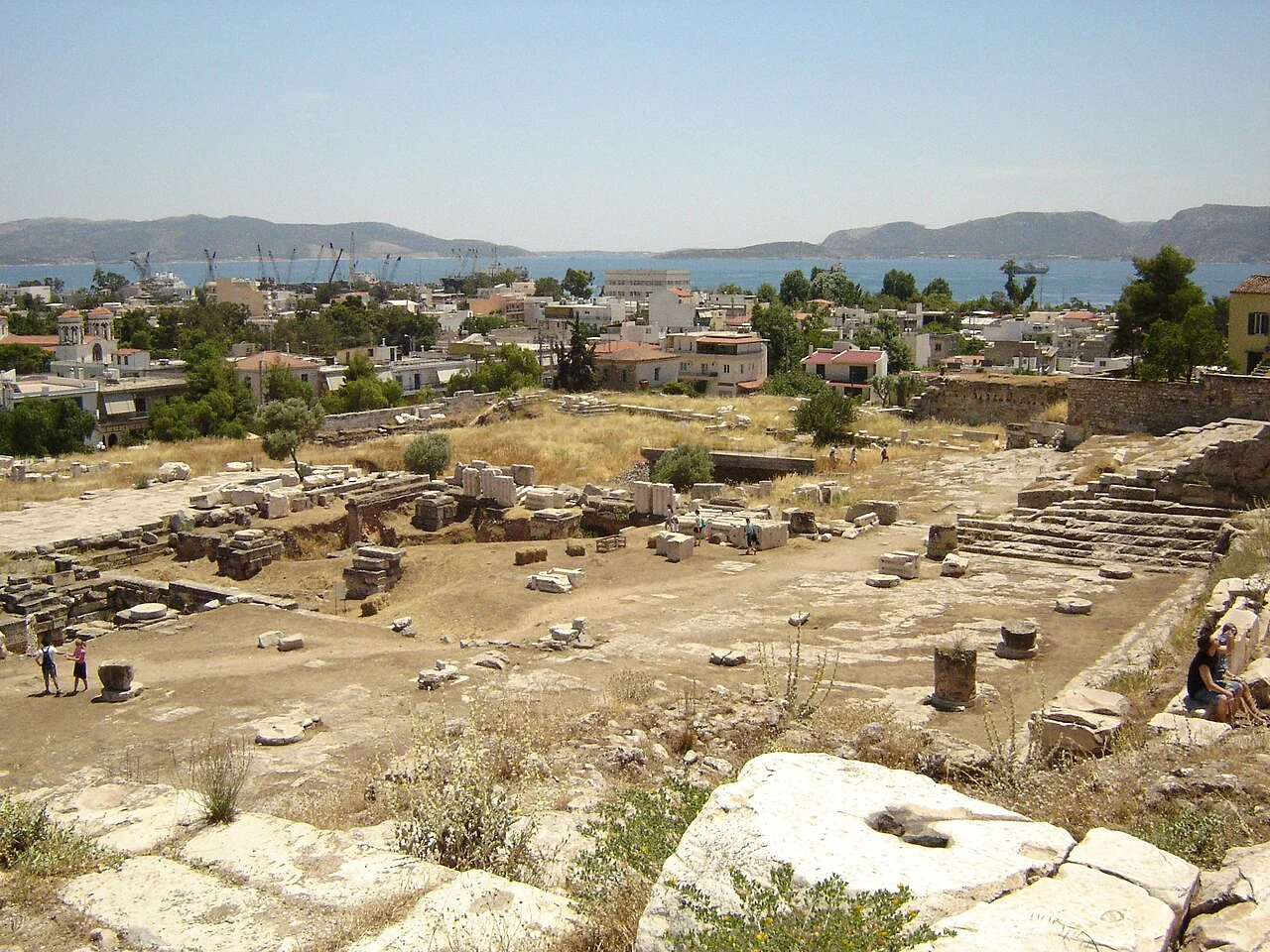
Eleusis, photographed in 2005, provides regional context near the Thriasian plain. These ruins are not identified damage from Sphodrias’s raid.
BishkekRocks ↗Public domain (author dedication). License terms ↗British School at Athens, with John Wilkes and Susan Walker. The official YouTube player is embedded on request. The video remains hosted by its publisher; it has not been downloaded or relicensed.
Coordinates are attributed to Pleiades contributors, GIS export, CC BY 3.0. Individual place records appear in the atlas. Base land geometry uses Natural Earth 1:10m, public domain, clipped to the region. Modern coastlines provide orientation, not a reconstruction of ancient shorelines.