On this page
An upbringing for citizens
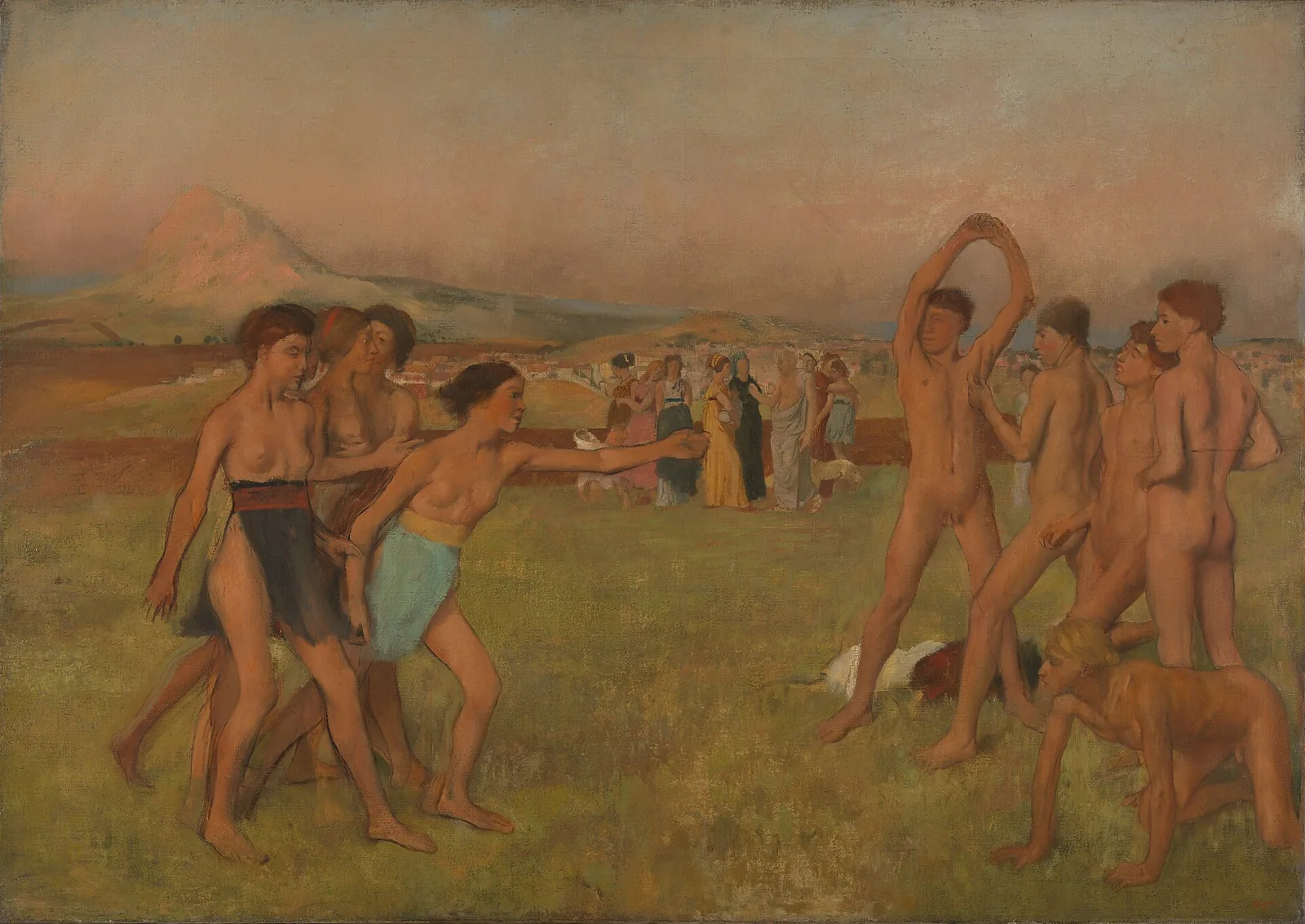
Agoge is the conventional name for the Spartan system of upbringing. It is closely associated with the preparation of boys for the citizen community, but its form and terminology changed over time. The program known from Classical testimony must be distinguished from later Hellenistic and Roman arrangements. Modern reconstructions sometimes combine evidence from these periods into an apparently fixed curriculum lasting many centuries.
Xenophon contrasts Spartan education with the private arrangements he associates with other Greeks. He describes a public official, the paidonomos, who exercised authority over boys and could enlist assistants in enforcing discipline. Other adult citizens also had supervisory roles. The result, in his admiring interpretation, was a community invested in the conduct of its young. That account explains an ideal of public responsibility while also revealing the extent to which children were exposed to adult judgment.[1][3]
Endurance and competition
The upbringing emphasized resilience, self-control, obedience, and rivalry. Xenophon discusses limited clothing, going barefoot, restrained food allowances, and the expectation that boys would acquire additional food through stealth. Punishment for being caught is explained as punishment for incompetence rather than for theft itself. These details should be read in their rhetorical setting: he wants to show a coherent design capable of producing disciplined adults.
Competition did not eliminate collective identity. Boys learned to act within groups while striving for recognition from peers and superiors. Praise, humiliation, and exclusion could make conduct socially consequential. Later writers added memorable stories of extreme endurance. The survival of such stories does not establish how often exceptional punishments occurred or whether every reported ordeal belonged to the same period. A careful account recognizes the coercive character of the system without turning every anecdote into an ordinary daily event.[1][2]
More than battlefield technique
The agoge should not be imagined simply as a modern military academy beginning in childhood. Ancient evidence also points toward music, choral activity, athletic competition, and the cultivation of concise, appropriate speech. These practices helped train participants in public behavior and collective identity. The degree and form of literacy among Spartans remain debated, but the caricature of a community entirely incapable of reading or cultural thought is not supported by its wider history.
Relationships between younger and older males were another feature discussed by ancient authors. Xenophon distinguishes admiration for character from bodily desire, while other evidence and modern interpretation complicate his idealized presentation. The subject requires attention to age, authority, and the difference between normative claims and lived relationships. It should not be reduced either to an uncritical celebration of mentorship or to a single uniform description imposed on every period of Spartan society.[1][2]
Access, change, and lasting reputation
The upbringing helped reproduce a privileged citizen body rather than offering equal access to everyone under Spartan rule. Some outsiders could participate under particular circumstances, but such cases do not make the system universally open. Completion also did not erase the economic requirements of adult citizenship. A man needed the resources and recognition necessary to maintain obligations such as common-mess membership. Training and property were connected elements in the reproduction of social standing.
Later Sparta restored and reshaped practices associated with Lycurgus, and Roman visitors encountered performances of a celebrated ancestral identity. These later institutions are historically important in their own right. They cannot be used automatically to fill gaps in Classical evidence. The agoge's enduring fame rests partly on its ability to symbolize the making of disciplined citizens. Its historical study is more demanding: it requires separating periods, examining who was included, and considering how competition, culture, care, and coercion worked together in the lives of actual children.[3][1][2]
FOLLOW THE EVIDENCE
References & further reading
- Ancient textXenophon, Constitution of the Lacedaemonians ↗
H. G. Dakyns translation, public domain. An admiring fourth-century BCE account of Spartan institutions.
- Ancient textPlutarch, Life of Lycurgus ↗
Bernadotte Perrin translation, public domain. Written centuries after Classical Sparta; anecdotes and institutional origins are not independently verified by their inclusion.
- Modern scholarshipAgōgē, Oxford Classical Dictionary ↗
Reference overview stressing conflicting sources, public and private education, and the difficulty of inferring Classical practice from Roman restorations.