On this page
Competition within the Greek world
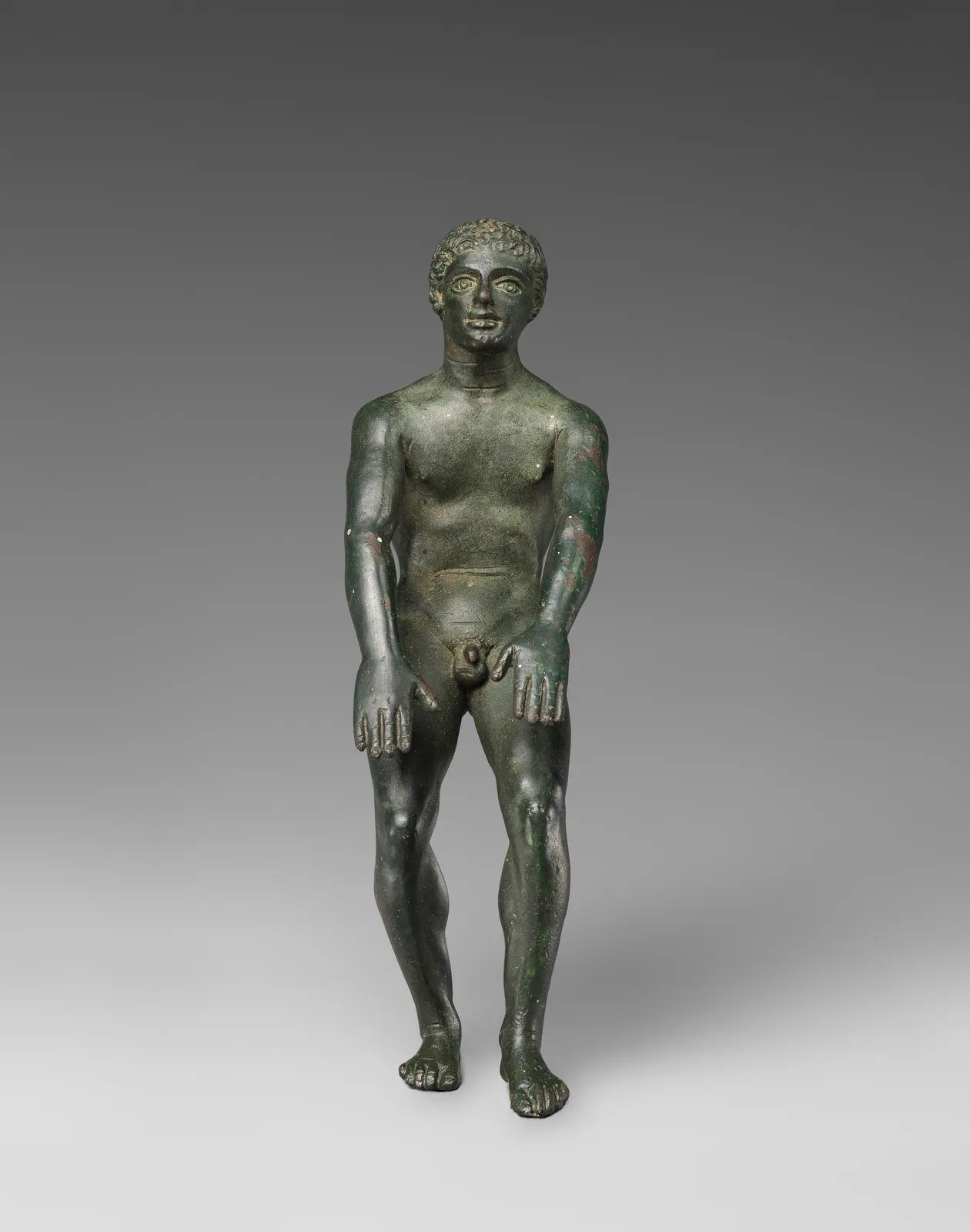
Spartans participated prominently in Greek athletic culture. Victories at major festivals brought honor to competitors, families, and communities, and could be commemorated through dedications and inscriptions. Athletics therefore linked Sparta to a wider network of sanctuaries and rivals. The city was not culturally isolated merely because later accounts emphasized distinctive domestic rules. Public competition was one way its inhabitants sought recognition beyond Laconia.
Different events demanded different resources and skills. Running, wrestling, and other bodily contests placed the competitor's performance at the center, while equestrian victory was credited to the owner of the horses or team. That distinction is essential when considering royal and female participants. An Olympic victor did not always personally perform the physical action by which the event was won.[3][4]
Training, honor, and civic usefulness
Physical activity formed part of the upbringing of citizen boys, and Xenophon also describes exercise for girls in citizen families. Athletic preparation could encourage endurance, strength, and competitive effort, but it should not be equated automatically with specialized battlefield instruction. Sporting success and military usefulness overlapped imperfectly. Ancient discussion could praise both while debating which deserved greater honor.
The poet Tyrtaeus' emphasis on courage useful to the community illustrates this tension. Individual accomplishments were not necessarily the highest civic good. A celebrated athlete could embody excellence, yet the demands of collective fighting required steadiness and cooperation under different conditions. The comparison reminds readers that Sparta's values were articulated through argument and ranking, not merely through one uncontested ideal of physical toughness.[1][4]
Victors and commemoration
Pausanias records monuments associated with Spartan athletes, including Chionis, whose running victories belonged to the Archaic period. His descriptions show how athletic memory could remain part of the civic and sacred landscape long after a competitor's lifetime. They also demonstrate the selectivity of survival: some names and achievements were preserved in durable monuments or local tradition, while many participants left little trace.
Cynisca's chariot victories offer a particularly revealing example. A royal woman could achieve the status of Olympic victor because ownership, rather than driving, determined the official winner of the event. The success depended on substantial resources and labor involved in maintaining a team. It shows a route to female public distinction without demonstrating equal access to all competitions or erasing the restrictions that shaped women's participation elsewhere in athletic culture.
At Olympia, Pausanias distinguished monuments erected for different kinds of victory and sometimes commented on their makers. His itinerary is selective rather than a complete register of competitors. This makes it useful for studying the public display of achievement, while preventing historians from treating every unmentioned athlete as evidence of absence from the games.[3][2]
Wealth, gender, and the limits of the image
Equestrian competition exposes the importance of wealth in a society associated with equality and restraint. Horses, training, transport, and skilled personnel required resources that were not evenly distributed. Athletic prestige could therefore magnify differences among families as well as provide a shared source of civic pride. The labor of people who cared for animals or supported competitors usually received less public recognition than the named victor.
A history of Spartan athletics should hold these dimensions together. Physical training was culturally important; individual achievement could bring lasting honor; public competition connected Sparta to other Greeks; and access was shaped by status, gender, and property. The surviving sources do not justify a complete numerical picture of participation across the whole population. They do establish that sport was more than a military accessory. It was a field in which people pursued distinction, communities displayed identity, and the relationship between personal success and collective values could be publicly negotiated.[4][1][3]
FOLLOW THE EVIDENCE
References & further reading
- Ancient textXenophon, Constitution of the Lacedaemonians ↗
H. G. Dakyns translation, public domain. An admiring fourth-century BCE account of Spartan institutions.
- Ancient textPausanias, Description of Greece, Book 3 ↗
The second-century CE travel account of Laconia. Its monuments and local traditions belong to the author's time and require comparison with earlier evidence.
- Ancient textPausanias, Description of Greece, Book 6.1–18 ↗
The account of Olympia's monuments and athletic dedications, including Spartan competitors and Cynisca.
- Modern scholarshipSparta's Contributions to Greek Sport ↗
Oxford Handbook chapter overview addressing athletic culture, equestrian competition, Cynisca, and the tensions between sport and military values.