On this page
Childhood before the public upbringing
Spartan children began life within households, even though the later upbringing of citizen boys became famous for its public character. Parents, relatives, and caregivers mattered. The image of the state entirely replacing family from birth is an exaggeration. Ancient writers discuss nursing, physical health, discipline, and the formation of habits, but their descriptions focus mostly on the families of citizens. They leave much less information about children growing up in helot or perioikic households.
Plutarch attributes to Lycurgus a system in which elders inspected newborns and rejected those they considered unfit. This late account has often been retold as an established, universal practice. Its historical interpretation is disputed, and it cannot justify confident claims that every Spartan infant underwent the same procedure or that archaeology has confirmed the familiar story of routine killing on Taygetus. The difference between a reported tradition and demonstrated practice is particularly important here.[2][3]
Age groups and expectations
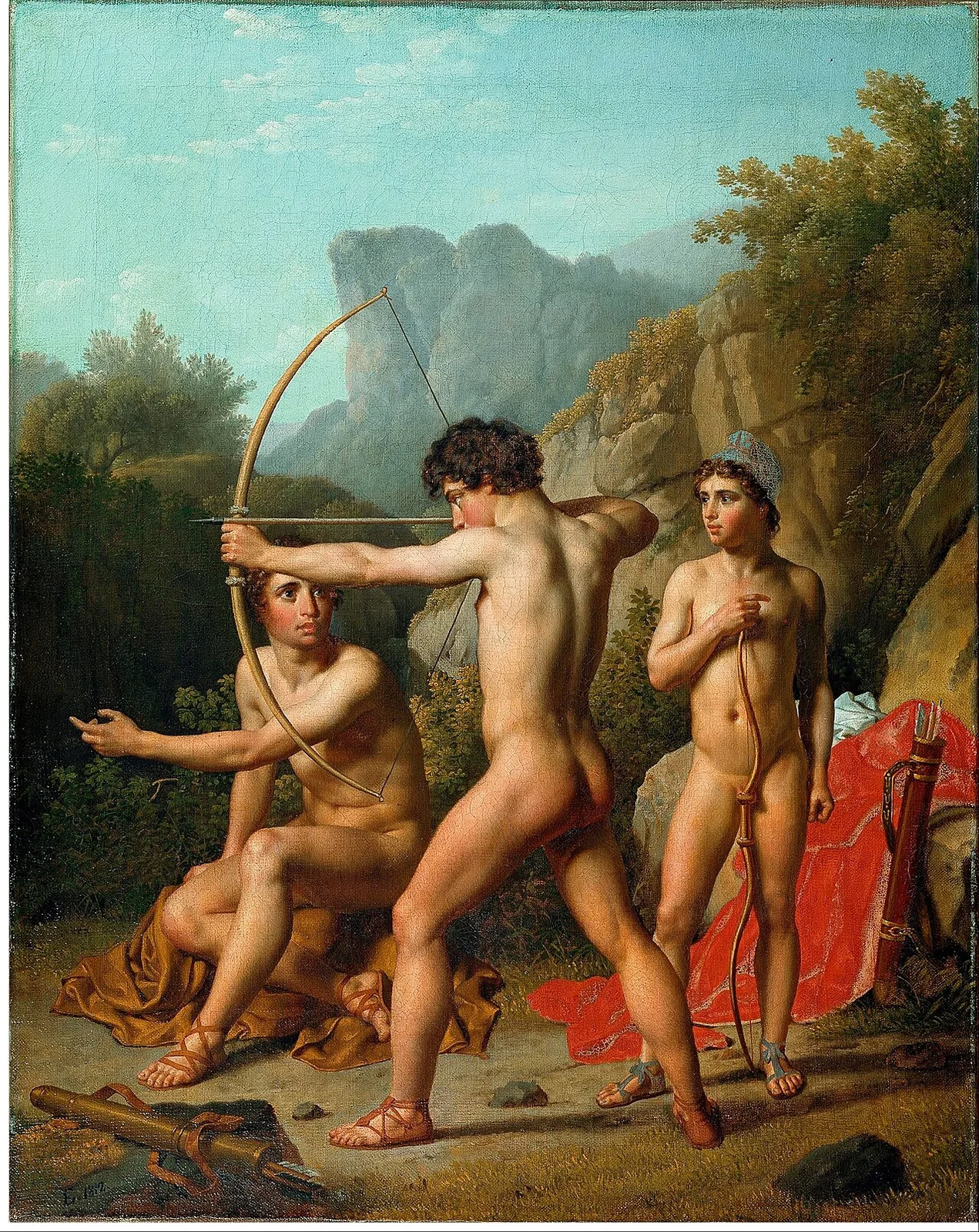
Citizen boys entered a publicly supervised upbringing traditionally associated with the age of seven. Ancient accounts describe groups, adult supervision, and an emphasis on endurance, obedience, and competition. Age distinctions structured expectations, although the precise terminology and sequence are not identical across periods. A detailed reconstruction made by combining Classical and Roman evidence can accidentally create a program that existed in neither age.
Boys were not simply miniature professional soldiers. Their formation also involved performance, social conduct, memory, and the ability to respond appropriately to older members of the community. Public praise and disapproval encouraged them to internalize expectations. The competitive setting could build solidarity while also establishing differences of reputation among peers. Education thus prepared children for membership in a civic hierarchy, rather than only for the technical act of fighting.[1][2]
Girls and the boundaries of the evidence
Xenophon describes physical exercise for girls in citizen families and explains it by reference to future motherhood. This is evidence for an ancient understanding of female upbringing, but it is also a male author's account of its purpose. Choral and religious performance provided additional settings for learning and public participation. Girls should not be assigned the boys' entire curriculum merely because both could take part in physical activity.
The surviving evidence is too uneven to write one complete schedule for every Spartan child. Boys and girls faced different expectations, and household resources mattered. So did legal status: the children of enslaved laborers inherited a very different horizon of possibilities from those of citizen families. A society could celebrate the health and training of future citizens while relying on children elsewhere in the same region to contribute to household work under conditions of dependency.[1][3]
Risk, stories, and adulthood
Ancient accounts of stealing food, endurance tests, and severe punishment contributed to Sparta's reputation. The famous boy who supposedly concealed a fox and died rather than reveal it is a moralizing anecdote in Plutarch, not a documented typical childhood event. Such stories tell us about admired behavior and the appeal of extreme examples. They need to be evaluated separately from the more general evidence for supervision, competition, and discipline.
Growing up also meant moving toward adult obligations, marriage, military service, and the judgments that determined social standing. That transition was not necessarily secured by completing a single final examination. Citizenship depended on family recognition, resources, and continuing participation in institutions. Childhood history therefore connects the household to the political community and exposes the limits of the celebrated image of equal opportunity through toughness. It asks which children could aspire to full membership, which forms of care and coercion shaped them, and whose childhood remained largely outside the attention of the surviving authors.[2][1][3]
FOLLOW THE EVIDENCE
References & further reading
- Ancient textXenophon, Constitution of the Lacedaemonians ↗
H. G. Dakyns translation, public domain. An admiring fourth-century BCE account of Spartan institutions.
- Ancient textPlutarch, Life of Lycurgus ↗
Bernadotte Perrin translation, public domain. Written centuries after Classical Sparta; anecdotes and institutional origins are not independently verified by their inclusion.
- Modern scholarshipNigel Kennell, Boys, Girls, Family, and the State at Sparta ↗
Oxford Handbook chapter on childhood and education. Publisher overview; useful further reading on the relationship between family and public upbringing.