On this page
An unexpected foothold
In 425 BCE an Athenian fleet bound for western operations stopped near Pylos on the Messenian coast. Demosthenes saw the defensive value of the headland and persuaded the expedition to fortify it. Thucydides emphasizes the role of weather, opportunity, and soldiers' improvised labor in the decision. The resulting position threatened territory controlled by Sparta and could serve as a base for raids and a refuge for people escaping Spartan domination.
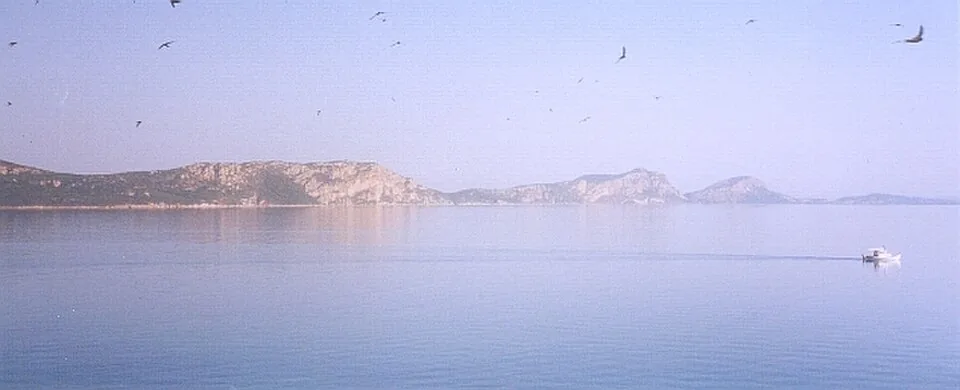
The name Pylos appears in several ancient geographical contexts. This operation concerned the headland by the bay often called Navarino today, with Sphacteria lying offshore. The encyclopedia's map marks that location rather than another site named Pylos in Elis. Modern shoreline context helps locate the operation, but the ancient harbor entrances, landing places, and distances described by Thucydides still require careful topographical interpretation rather than uncritical transfer onto a present-day map.[1][3]
A blockade reverses the situation
Spartan forces tried to remove the Athenian foothold by land and sea. Brasidas urged a forceful landing and was wounded during the attempt. The defenders held, and an Athenian naval success then changed the balance around the bay. A Lacedaemonian detachment stationed on Sphacteria found itself isolated. Men placed on the island to help control the approaches had become a vulnerable group whose fate could influence negotiations far beyond the local battlefield.
Sparta sought an armistice and sent envoys to Athens. The negotiations failed, and the blockade continued. Supplying the men on the island proved difficult but not impossible: Thucydides describes hazardous efforts to bring food through. The Athenians also struggled with shortages and the practical demands of maintaining the operation. The episode was not a simple story of effortless naval superiority. Both sides had to manage exposure, fatigue, weather, and the uncertain duration of the siege.[1]
The assault and surrender
Cleon became involved after a contentious debate at Athens and joined Demosthenes for the final operation. Fire on the island had reduced vegetation and made movement more manageable. Athenian forces used light troops and missile attacks to harass the defenders, avoiding a straightforward contest between heavy infantry lines. The Lacedaemonians could not easily bring these opponents to decisive close combat, and their position became increasingly difficult as attacks continued.
A Messenian detachment helped reach a position behind the remaining defenders. Facing encirclement, the surviving force surrendered after seeking guidance from Spartan authorities. Thucydides records 292 prisoners, including about 120 Spartiates. The distinction matters: a Lacedaemonian force contained men who were not full Spartan citizens. Ancient figures should still be treated as reported totals, but the basic event is secure. Men widely expected to die rather than surrender had chosen captivity.[1][3]
Prisoners, fugitives, and reputation
Athens used the prisoners as leverage, threatening their lives if Spartan forces renewed invasions of Attica. Their value came from both the scarcity of full citizens and the political importance of their families. Sphacteria therefore altered strategic calculations despite involving fewer soldiers than many major battles. It also damaged a reputation that itself had military value: opponents could now imagine conditions under which Spartan discipline and endurance might fail to secure either victory or death.
The Athenian base at Pylos remained troublesome because Messenians could raid nearby territory and encourage helot flight. Their knowledge of language and landscape connected the operation to the earlier revolt at Ithome and the settlement of exiles at Naupactus. The story belongs to the history of resistance as well as to Athenian strategy. It demonstrates how light troops, sea power, local knowledge, and the actions of subordinated people could overturn expectations built around the superiority of Spartan hoplites.[1][2]
FOLLOW THE EVIDENCE
References & further reading
- Ancient textThucydides, History of the Peloponnesian War ↗
Richard Crawley translation, public domain. A contemporary source for the late fifth-century BCE conflict, with retrospective accounts of earlier events.
- Ancient textPausanias, Description of Greece 4.20–36 ↗
W. H. S. Jones translation, public domain. Later Messenian history, exile, liberation, and the independent city.
- Modern scholarshipLivius: Sphacteria, 425 BCE ↗
Historical overview of the Pylos operation and the surrender on the offshore island.