On this page
A land west of Taygetus
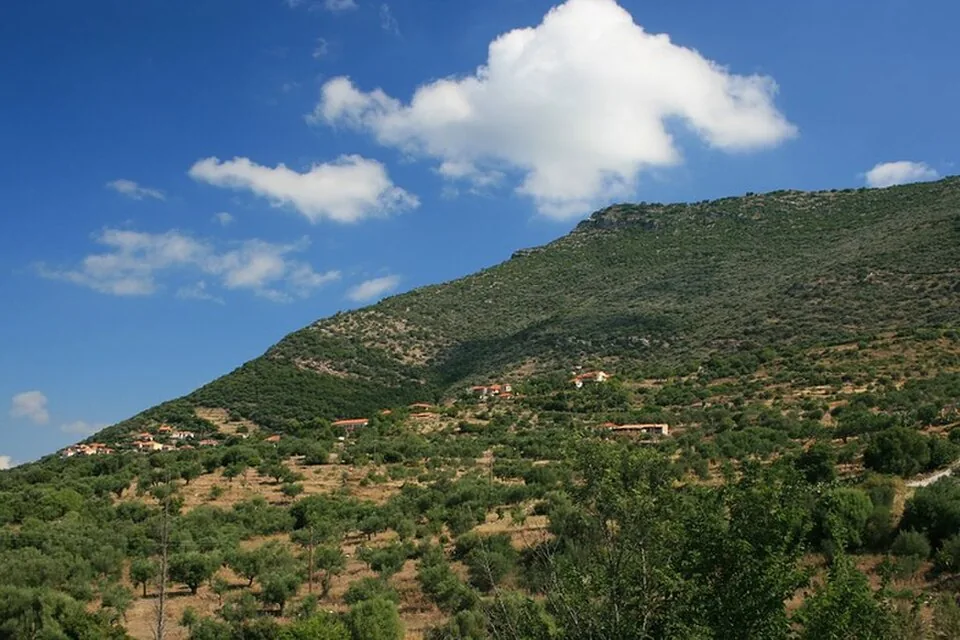
Messenia lies in the southwestern Peloponnese, west of the mountains separating it from the Spartan plain. Its agricultural resources made control of the region economically important. For a long part of Spartan history, domination of this territory contributed to the support of citizen households. Messenia should nevertheless be understood as a lived region with settlements, sanctuaries, and varied populations, not merely as a storehouse supplying a neighboring state.
The name of a region, the identity of its inhabitants, and the organization of a political community need not develop at the same pace. Later accounts often describe a unified Messenian people struggling against Sparta across centuries. These accounts preserve important traditions, but they also reflect the purposes of communities that remembered conquest and celebrated freedom. Historians must distinguish what can be established about an early conflict from what later generations made that conflict mean.[1][3]
Conquest and unfreedom
Sparta's acquisition of Messenian territory is conventionally associated with the Messenian Wars of the Archaic period. Their exact dates, sequence, and social consequences are difficult to reconstruct. Pausanias supplies a detailed narrative, but he wrote many centuries after the events and drew on traditions that were already shaped by poetry and political memory. His account is evidence for remembered history as well as a possible guide to earlier struggles.
Many inhabitants of the dominated region were subjected to helotage. Agricultural labor and extracted produce linked them to Spartan landholders and to the institutions of the citizen community. The relationship involved unfreedom and coercion, even where laborers had families or some control over everyday cultivation. Such features should not be confused with equal bargaining power. Nor can every community in Messenia automatically be assigned an identical status throughout the period of Spartan rule.[1][2]
Resistance and collective memory
The revolt following the great earthquake in Laconia during the 460s BCE revealed the instability of Spartan domination. Thucydides connects the rebels at Ithome with Messenian identity and describes the prolonged conflict and its aftermath. When the defenders eventually left, the Athenians settled them at Naupactus. That community remained important in later warfare against Sparta. Displacement did not simply erase political identity; it could provide a new setting in which identity was expressed.
The experiences of revolt, exile, and return helped give meaning to Messenian claims. Stories of earlier heroes and resistance could link people living in different places. Scholars debate how far this collective identity continued unchanged from the Archaic period and how far it was strengthened or reconfigured by subsequent events. The question is not whether suffering under domination was real. It is how communities assembled a shared account of their past from unevenly preserved experiences.[2][3]
Independence and its consequences
After the defeat of Sparta at Leuctra in 371 BCE, the campaigns of Epaminondas and his allies made a fundamental rearrangement of the southern Peloponnese possible. The establishment of independent Messene in 369 BCE gave Messenian freedom a strongly defended urban center. Fortifications, civic space, and religious traditions helped present the new community as both a political reality and the recovery of an older homeland.
For Sparta, the loss was more than a reverse in prestige. It removed control over territory and labor that had supported the state's position. For the people of Messenia, freedom opened possibilities for political organization without dissolving all internal distinctions or conflicts. The new city also invested in its past, locating civic identity within accounts of heroes, conquest, and resistance. Messenian history therefore belongs within an encyclopedia of Sparta on its own terms: it explains both the foundations of Spartan power and the lives of people who challenged that power.[4][3]
FOLLOW THE EVIDENCE
References & further reading
- Ancient textPausanias, Description of Greece, Book 4 ↗
Messenian traditions, warfare, and remembered subjection. The long interval between events and their narration requires caution.
- Ancient textThucydides, History of the Peloponnesian War ↗
Richard Crawley translation, public domain. A contemporary source for the late fifth-century BCE conflict, with retrospective accounts of earlier events.
- Modern scholarshipNino Luraghi, Becoming Messenian ↗
Journal of Hellenic Studies article; the publisher's abstract summarizes an argument about the formation of Messenian identity.
- Ancient textPausanias, Description of Greece 4.20–36 ↗
W. H. S. Jones translation, public domain. Later Messenian history, exile, liberation, and the independent city.