On this page
The common table and black broth
Common-mess contributions included staple foods such as barley, wine, cheese, and figs in the later descriptions. These items situate the meals within the agricultural and pastoral economy of the region. Additional provisions could come from hunting, sacrifice, or contributions by individuals. An institution praised for moderation did not necessarily serve an identical menu every day, and ancient accounts should not be treated as a complete surviving recipe collection.
Black broth became the most famous Spartan dish. Later tradition associates it with pork and blood, but anecdotes about its taste often serve as jokes about Spartan austerity. The story that only someone who lived the Spartan life could appreciate it is a cultural judgment, not nutritional analysis. Reconstructing an authentic exact recipe from those stories goes beyond the evidence. The dish is best discussed as both a reported food and an emblem through which outsiders imagined Spartan habits.[2][1]
Dress, endurance, and display
Xenophon describes limited clothing and barefoot movement in the upbringing of boys, explaining these practices as training in endurance. Adult dress and military appearance belonged to different settings. He associates the army with crimson garments and discusses the care given to appearance before battle. Such testimony helps explain why later images of Sparta emphasize a distinctive martial look, but it does not prove an uninterrupted uniform standard covering every soldier over several centuries.
Garments were made and maintained through labor. Wool had to be processed, cloth woven, and clothing repaired. Accounts centered on the men who wore the garments can make those tasks invisible. Materials and quality also had economic implications. Even where simple appearance was admired, households could differ greatly in resources. Rules about display may have constrained certain visible forms of wealth without removing property inequality or the desire for recognition.[1][2]
Objects and the wider economy
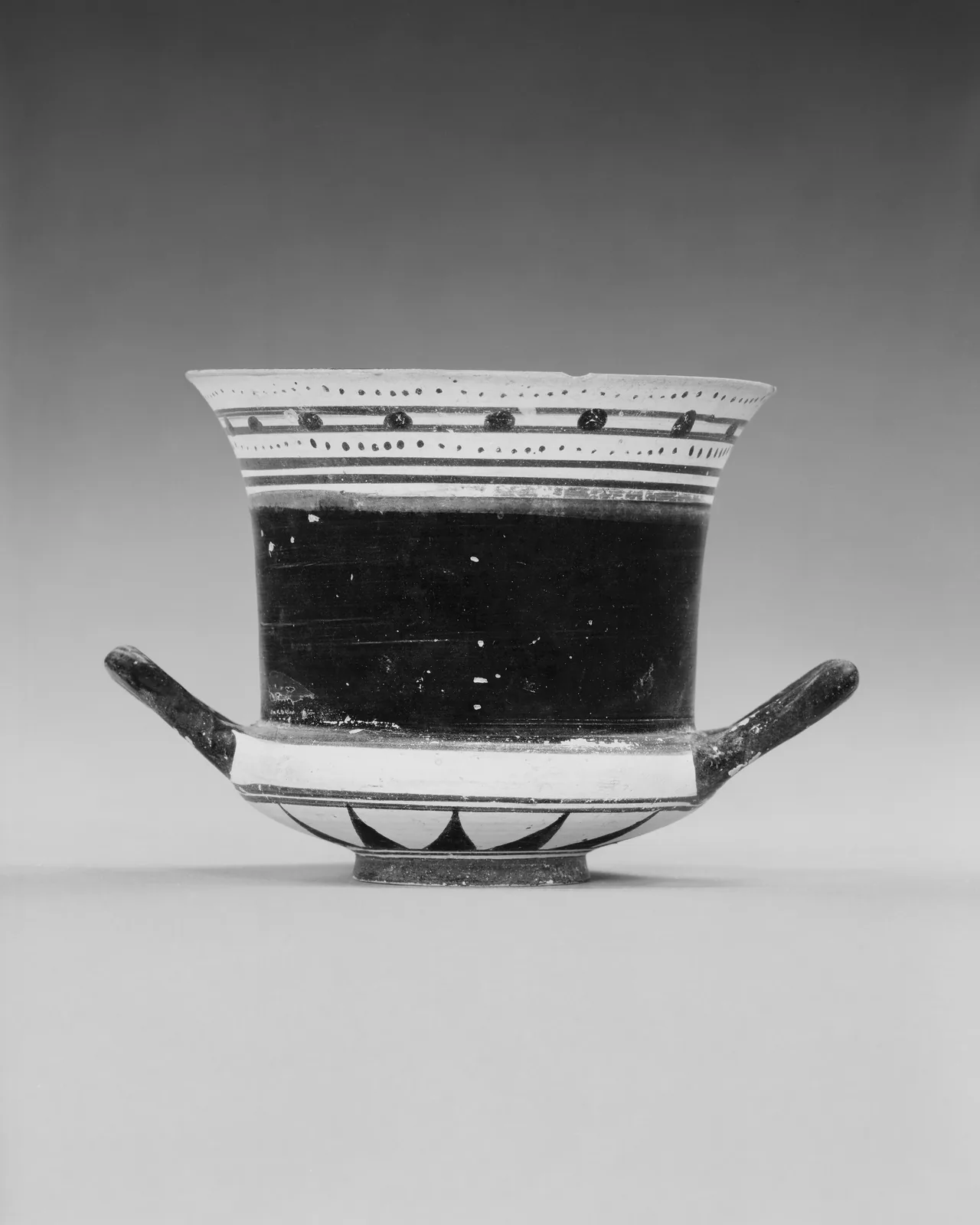
Surviving Laconian vessels complicate the assumption that the region produced only rough, utilitarian goods. Decorated drinking cups show that craftsmanship and visual pleasure had a place in its history. A finely painted cup does not reveal the legal status of every user, nor does it prove that all common meals resembled elite drinking parties elsewhere. It does demonstrate that Sparta's wider material world cannot be reconstructed solely from literary praise of plain living.
Diet and dress also connect the citizen community to agriculture, trade, and dependent labor. Grain production, animal husbandry, access to wine, and the manufacture of cloth all required people and resources beyond the dining group or battlefield. The most useful account therefore moves between symbols and practical systems. Black broth and crimson cloaks explain something about Sparta's reputation; the labor that produced meals and garments explains something about how Spartan life was actually sustained. Both belong in the history, provided they are not mistaken for the same kind of evidence.[3][1]
FOLLOW THE EVIDENCE
References & further reading
- Ancient textXenophon, Constitution of the Lacedaemonians ↗
H. G. Dakyns translation, public domain. An admiring fourth-century BCE account of Spartan institutions.
- Ancient textPlutarch, Life of Lycurgus ↗
Bernadotte Perrin translation, public domain. Written centuries after Classical Sparta; anecdotes and institutional origins are not independently verified by their inclusion.
- ArchaeologyThe Metropolitan Museum of Art: Art and Craft in Archaic Sparta ↗
Museum essay on Laconian pottery, metalwork, carving, and sculpture, with collection examples.