On this page
The people around Sparta
Perioikoi literally suggests people living around a center. In Spartan history the term refers to free inhabitants of dependent communities in Laconia and, during Spartan control, parts of Messenia. They were not helots, and they were not full members of the Spartan citizen assembly. Ancient authors could include them with Spartiates under the broader name Lacedaemonians, especially when discussing armies. That usage makes careful reading of troop descriptions particularly important.
Their communities possessed local identities and were sometimes described as poleis. It is too simple to imagine them as indistinguishable villages administered exactly like modern municipal districts. The relationship between local institutions and Spartan authority has generated substantial scholarly debate. Some matters of community life could be handled locally, while the wider state's military and external affairs remained dominated by Sparta. The combination of freedom and political subordination cannot be captured by a single modern label.[3][1]
Settlements and economic life
Perioikic settlements occupied varied environments, including inland valleys, coastal districts, and places important for routes and resources. Their inhabitants farmed and participated in production and exchange. Craftspeople and traders helped provide goods needed by the citizen center and the wider region. However, the common claim that every craft was exclusively perioikic goes beyond what the evidence can establish. Objects rarely identify the exact legal status of their makers.
Local wealth also varied. A free community was not necessarily a community of uniformly modest households. Some inhabitants could possess substantial resources and the leisure or connections needed for military prominence. Differences of property and local standing complicate a simple three-tier diagram of Spartans, perioikoi, and helots. Such a diagram is a useful introduction to legal distinctions, but it does not describe all the economic and social differences within each group.
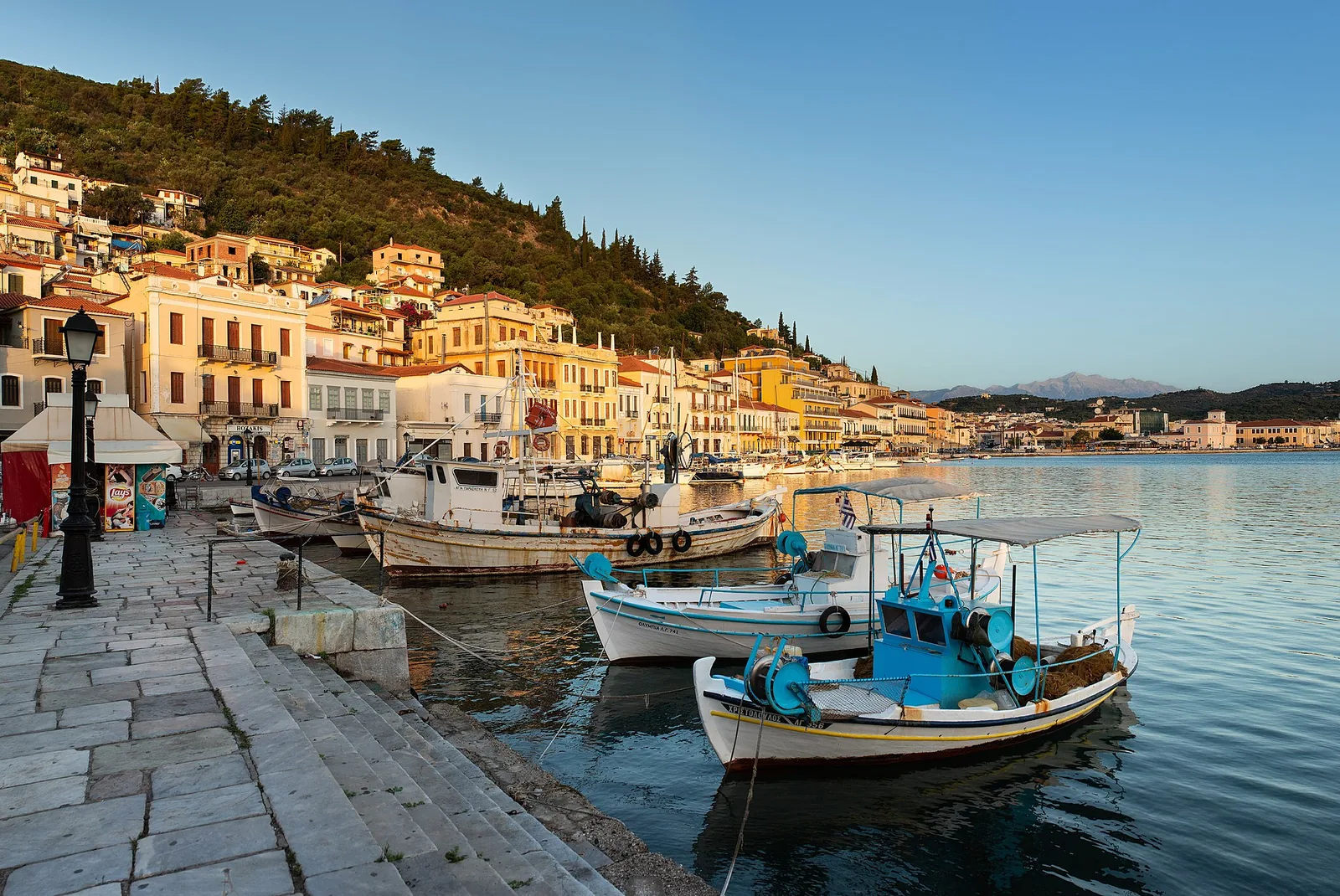
Coastal centers such as Gythium make that geographical and economic diversity especially visible in Pausanias' itinerary.[3][1]
Local religion and historical change
Pausanias' tour of Laconia records sanctuaries and traditions distributed across many communities. Although his Roman-era landscape cannot simply be projected into the Classical period, it helps demonstrate the region's religious diversity. Local cults gave inhabitants attachments that were not reducible to obedience to Sparta. Shared festivals and wider networks could connect communities without erasing their own sacred places and remembered histories.
The status and organization of dependent communities changed as Spartan power contracted and Hellenistic and Roman authorities intervened. It is therefore misleading to assume that a label appearing in one period always carried identical rights and obligations in another. Studying the perioikoi shifts the focus from a narrow citizen center to a regional political community. It also explains a practical fact about Spartan power: a state famous for the discipline of a small elite relied on the sustained participation of many other free people.[2][3]
FOLLOW THE EVIDENCE
References & further reading
- Ancient textXenophon, Hellenica ↗
H. G. Dakyns translation, public domain. Covers the later Peloponnesian War and Greek affairs down to 362 BCE.
- Ancient textPausanias, Description of Greece, Book 3 ↗
The second-century CE travel account of Laconia. Its monuments and local traditions belong to the author's time and require comparison with earlier evidence.
- Modern scholarshipThe Perioikoi: A Social, Economic and Military Study of the Other Lacedaemonians ↗
University of Liverpool research repository thesis on the communities often overshadowed by the Spartan citizen center.