On this page
A king within a royal family
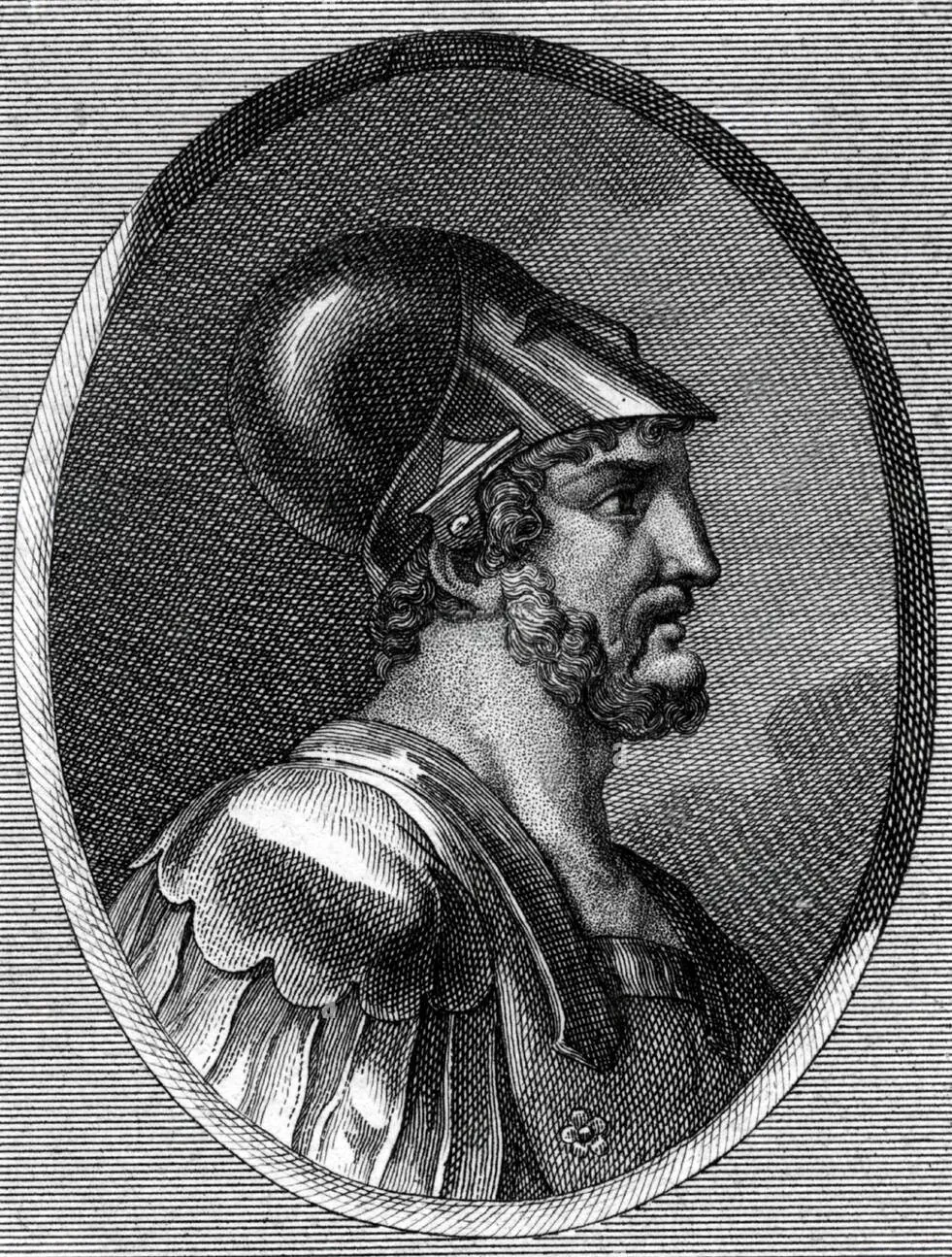
Leonidas belonged to the Agiad dynasty, one of Sparta's two royal houses. His father was Anaxandridas II, and his elder half-brother Cleomenes I preceded him as king. The complicated family history preserved by Herodotus includes competing expectations about succession and the career of another brother, Dorieus. Leonidas was therefore not simply a soldier elevated by battlefield merit. His position rested on hereditary claims operating within a political system that also contained magistrates and a citizen assembly.
He became king around the beginning of the 490s or late 490s BCE; modern chronologies differ on the precise accession year. His marriage to Gorgo, Cleomenes' daughter, joined branches of the same royal family. Their son Pleistarchus survived him and inherited the kingship while still young. These relationships are more securely grounded than attempts to reconstruct Leonidas' childhood, personality, or an individual training history from general descriptions of Spartan upbringing.[2][4]
The coalition confronting Xerxes
In 480 BCE the Persian king Xerxes invaded Greece with a large land army and fleet. Several Greek communities organized resistance, while others remained neutral or supported Persia. Leonidas commanded the land force sent to Thermopylae, where a narrow passage between mountain and sea offered an opportunity to reduce the invaders' numerical advantage. The land position formed part of a wider defense coordinated with the Greek fleet near Artemisium.
Leonidas brought three hundred Spartiates, selected according to Herodotus from men with living sons, but the army was much larger than this citizen contingent. It included other Peloponnesians, Thespians, Thebans, Phocians, and Locrians at different stages of the defense. Religious observances and the expectation of further mobilization appear in Herodotus' explanation of the advance force. Reducing the encounter to three hundred men against an empire removes the allies whose participation made the position possible.[1]
The final defense
After initial frontal attacks failed, Persian troops used a mountain route to approach behind the defenders. Herodotus attributes their knowledge of it to Ephialtes, a local informant. Once the danger became clear, much of the Greek force withdrew or was dismissed. Leonidas remained with his Spartans and other troops, notably the Thespians. The circumstances surrounding the remaining Thebans are disputed, partly because Herodotus' account reflects hostile judgments about Theban loyalty.
Leonidas was killed during the final fighting. Herodotus relates a struggle over his body and Xerxes' subsequent mistreatment of it, presenting the king's death within a strongly commemorative narrative. He also discusses an oracle that linked Sparta's survival to the death of a king. Historians cannot recover Leonidas' private reasoning from that tradition. Tactical necessity, concern for an orderly withdrawal, civic expectations, and religious interpretation are possibilities that should not be collapsed into one certain motive.[1]
A remembered death and its limits
Thermopylae was a Persian victory, not the end of the invasion. Its later significance depended on the resistance that continued at Salamis and on the following year's land victory at Plataea. Leonidas' death became an especially effective example of endurance and obligation because a defeated force could be commemorated through the choices attributed to its commander. That commemorative success does not make every famous saying attached to him contemporary testimony.
His historical importance also belongs to Spartan kingship. Kings commanded armies and performed religious duties, but they did not rule without colleagues, elders, ephors, or political accountability. Leonidas' successor required a regent, and it was Pausanias who commanded the coalition at Plataea. Following these connections restores the institutions and people around the celebrated individual. Leonidas remains central to the story of 480 BCE, while the surviving evidence permits only a limited biography beyond it.[3][1]
FOLLOW THE EVIDENCE
References & further reading
- Ancient textHerodotus, Histories 7.175–239 ↗
A. D. Godley translation, public domain. The Thermopylae narrative and the account of Gorgo interpreting Demaratus' message.
- Ancient textHerodotus, Histories 5.28–54 ↗
A. D. Godley translation, public domain. Spartan royal ancestry and Aristagoras' visit, including the story of the young Gorgo.
- Ancient textHerodotus, Histories 6.56–60 ↗
Public-domain translation of the passage on the privileges, religious duties, and funerary honors of Spartan kings.
- Modern scholarshipLivius: Leonidas ↗
Jona Lendering's historical overview, with links to the ancient evidence.